Table of Contents Show
Hard water affects over 85 percent of residential homes, delivering high concentrations of dissolved calcium and magnesium through everyday supply lines. While water remains clear at the tap, these invisible minerals create endless household problems. Mineral scale chokes plumbing lines, coats water heater elements, ruins expensive appliances, and leaves stubborn film on shower glass and fixtures.
Installing a whole-home water softening system eliminates hardness minerals at the point of entry before water enters interior supply pipes. Homeowners considering professional water softener installation in Carmel reduce hardness minerals entering the home’s supply lines, creating a protective barrier for residential pipes, fixtures, and appliances. Removing dissolved minerals preserves plumbing infrastructure, lowers energy consumption, and improves daily cleaning performance across the entire house.
Quick Verdict: Hard water containing dissolved calcium and magnesium creates destructive mineral scale inside pipes, water heaters, and household appliances. Installing an ion-exchange water softener eliminates these minerals at the point of entry. Whole-home soft water prevents costly plumbing repairs, cuts soap and detergent consumption by up to 50 percent, reduces water heating energy bills by up to 24 percent, and extends appliance operating life.
Hard Water Chemistry: How Calcium and Magnesium Damage Plumbing Systems
Water hardness measures the concentration of dissolved alkaline minerals, focusing on calcium (Ca²⁺) and magnesium (Mg²⁺) ions. According to official classification benchmarks from the U.S. Geological Survey (USGS) water hardness scale, water containing more than 7 grains per gallon (GPG) or 120 milligrams per liter (mg/L) ranks as hard, while levels exceeding 10.5 GPG rank as very hard.
When un-softened water flows through supply lines, ambient pressure changes and temperature shifts force dissolved minerals out of solution. Calcium carbonate precipitates onto internal pipe walls, forming hard dense layers known as limescale. Over years of continuous water use, limescale narrows interior pipe diameters, restricting flow rates and causing water pressure drops at faucets and showerheads.
Inside galvanized iron or brass pipe fittings, scale deposits create isolated corrosion cells beneath mineral crusts, accelerating pinhole leaks and structural pipe failure. Understanding how incoming water interacts with residential supply networks helps homeowners protect their infrastructure; for a complete breakdown of supply line mechanics, consult our guide on how residential home plumbing systems operate.
Protecting Water Heaters: Thermal Scale and Energy Penalties
Water heaters suffer the most severe damage from hard water because heat accelerates mineral precipitation. As water temperature rises inside a water heater, calcium carbonate drops out of solution, settling at the bottom of standard tank units or clinging to internal heat exchanger walls in tankless models.
In standard tank water heaters, sediment accumulates into a dense insulating blanket over bottom burner assemblies or electric heating elements. A 3/8-inch layer of mineral scale forces the burner to consume up to 48 percent more fuel or electricity to heat water through the sediment barrier. This thermal isolation overheats tank bottom plates, weakening steel welds, scorching glass linings, and causing early tank rupture.
Tankless water heaters face matching risks. High-temperature narrow copper heat exchanger channels clog when exposed to hard water, restricting water velocity and triggering thermal overload errors. Softened water eliminates mineral accumulation inside heating chambers, maintaining factory energy efficiency ratings and doubling equipment operating lifespans. Homeowners managing heating equipment can review our guide on water heater maintenance and anode rod inspection steps to prevent corrosion.
Extending the Operating Lifespan of Household Appliances
Residential appliances that utilize water represent major financial investments. Dishwashers, clothes washers, coffee makers, ice machines, and humidifiers process thousands of gallons of water across their operational lifetimes. When un-softened water flows through internal valves, solenoids, and heating elements, mineral deposits form stubborn scale layers.
In dishwashers, mineral crusts clog rotating spray arm jets, reduce wash arm rotation speed, and coat internal heating elements, leaving dishes covered in cloudy white film. In clothes washers, hard water minerals coat internal water inlet valves, leading to valve seal failures and slow tub filling cycles.
Soft water prevents mineral crusting on internal appliance components, lowering service call frequencies and protecting delicate motor seals. Homeowners looking to extend clothes washer performance can follow our step-by-step checklist covering washing machine maintenance and hose inspection tips to prevent leaks.
System Performance Comparison: Hard Water vs. Softened Water
Evaluating how raw hard water compares against softened water across primary home infrastructure highlights clear performance differences:
| Household System / Appliance | Un-Softened Hard Water Impact | Softened Water Impact | Financial & Operational Benefit |
|---|---|---|---|
| Plumbing Lines & Fixtures | Limescale restricts pipe diameters; pinpoint leaks form under mineral crusts. | Supply lines remain clear of scale; water pressure stays at factory spec. | Prevents premature pipe replacement and emergency re-piping expenses. |
| Water Heaters (Tank & Tankless) | 3/8-inch scale buildup causes 48% energy loss; heat exchangers clog. | Heating elements stay clean; heat transfer rates remain optimal. | Saves up to $150–$300 each year on gas or electric water heating bills. |
| Dishwashers & Glassware | Cloudy film coats glassware; spray arm nozzles clog with calcium. | Dishes dry spot-free; wash arms rotate at full pressure. | Cuts dishwasher detergent consumption by 50%; eliminates spot rinses. |
| Washing Machines & Laundry | Detergent curds stiffen clothing fabrics; internal inlet valves corrode. | Detergent dissolves 100 percent; fabrics remain soft and retain original color. | Extends fabric wear life by 30%; reduces laundry soap purchases. |
| Showers & Bathroom Tile | Insoluble soap scum clings to glass doors, ceramic tile, and grout lines. | Soaps rinse clean without residue; zero stubborn mineral spots. | Cuts bathroom cleaning time in half; eliminates harsh acid cleansers. |
Soap Chemistry: Reducing Cleaning Product Usage by 50 Percent
Hard water minerals interfere with soap chemistry. Calcium and magnesium ions bond with fatty acid molecules in soaps and detergents, neutralizing cleaning surfactants before they can dissolve oils or dirt. This chemical reaction forms an insoluble precipitate known as soap curd or soap scum.
To overcome mineral resistance in hard water, homeowners add excess detergent, shampoo, and body wash during daily chores. Soft water removes dissolved calcium and magnesium ions, allowing cleansing surfactants to form rich lathers with minimal product.
Testing by independent laboratory groups confirms that soft water allows households to cut detergent and soap consumption by 50 percent while achieving equal or superior cleaning performance. Over twelve months, a family of four saves substantial money on laundry detergent, dishwasher pods, hand soap, shampoo, and household surface spray cleansers.
Bathroom Maintenance: Eliminating Soap Scum and Fixture Stains
Scrubbing bathroom tiles, glass shower enclosures, porcelain sinks, and chrome faucets consumes significant weekend cleaning hours. In hard water homes, mineral crusts and soap scum bond to non-porous bathroom surfaces, requiring harsh acidic cleansers, pumice stones, and aggressive physical scrubbing.
Because softened water contains zero calcium or magnesium ions, soap curd cannot form. Bath water drains clean without leaving sticky residue along tub basins, while shower droplets dry clear without depositing white calcium spots on glass enclosures. Transitioning to soft water reduces bathroom scrubbing frequency, protects polished fixture plating, and keeps tub surrounds looking immaculate.
Homeowners seeking efficient bathroom drain maintenance routines can review our step-by-step guide on cleaning plumbing pipes and drain traps to prevent standing water.
Personal Care Benefits: Skin Hydration and Soft Textiles
Hard water affects personal comfort during daily showers and baths. When soap mixes with calcium ions, insoluble soap curd settles onto skin and hair, clogging skin pores and stripping natural moisturizing oils. This film leaves skin feeling tight, dry, and itchy, while hair becomes dull, brittle, and difficult to style.
Soft water rinses soap clean from skin pores, allowing natural lipid barriers to lock in moisture without synthetic lotion applications. Hair washed in soft water retains natural luster, softness, and volume, requiring less conditioner and hair styling product.
Textiles benefit from soft water washing cycles. In un-softened water, mineral deposits lodge deep inside woven cotton and synthetic fibers, acting like microscopic sandpaper. Over repeated wash cycles, trapped minerals break down fabric fibers, dulling bright shirt colors and making bath towels feel rough. Soft water washing preserves textile fiber flexibility, keeps white linens bright, and extends garment wear life.
Ion Exchange Chemistry: How Modern Water Softeners Work
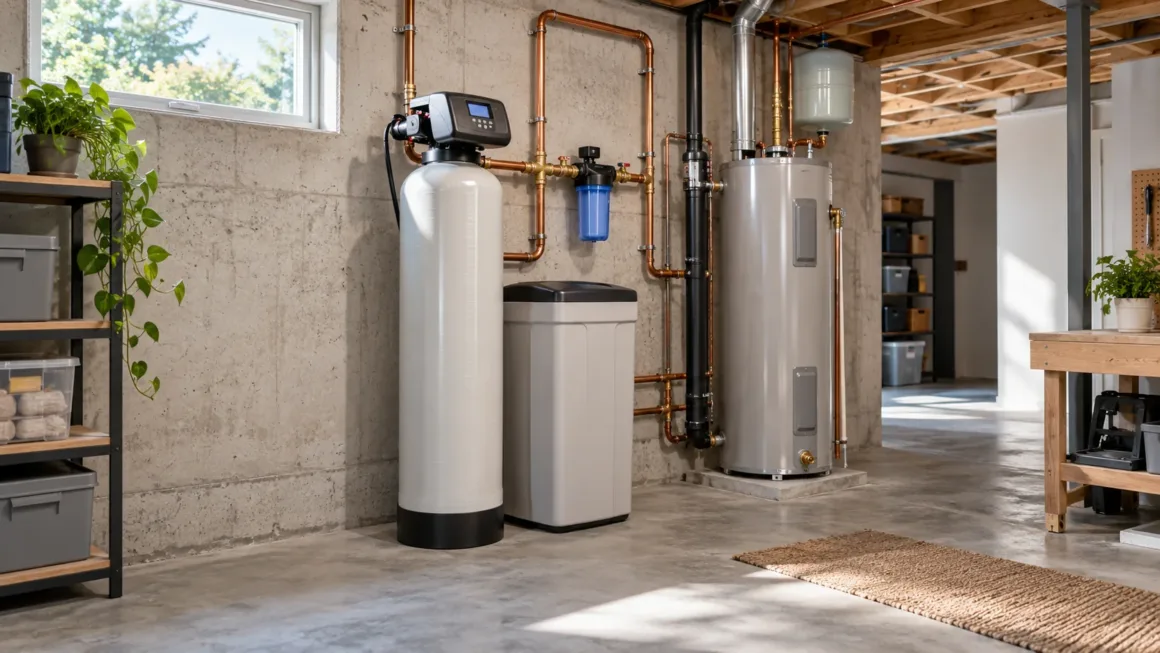
A standard whole-home water softener utilizes the principle of ion exchange to remove hardness minerals. Inside the primary mineral tank sits a bed of synthetic resin beads manufactured from polystyrene. These resin beads carry a negative electrical charge and hold weakly bonded sodium or potassium ions.
As raw hard water flows down through the resin bed, positively charged calcium and magnesium ions carry a stronger electrical charge than sodium. The resin beads attract and hold the calcium and magnesium ions, releasing sodium ions into the water stream in exact chemical proportion. The water exiting the tank contains zero hardness minerals.
Once the resin bed reaches mineral saturation, the control valve initiates an automatic regeneration cycle. The system draws concentrated salt brine from an adjacent brine tank, flushing the resin bed. High sodium concentration forces calcium and magnesium ions off the resin beads, discharging the mineral rinse down the drain and recharging the resin bed for active service.
To ensure long-term structural safety and reliable performance, choose systems certified under Water Quality Association (WQA) Gold Seal standards. These industry benchmarks verify that vessel materials withstand household water pressure and deliver rated mineral removal capacities. Homeowners evaluating total water management options can explore our overview on how to soften hard water across different home setups.
5 Sizing and Maintenance Guidelines for Homeowners
Selecting the correct water softener size and maintaining salt brine quality ensures consistent soft water output across all household fixtures.
- Calculate Daily Grain Capacity Requirements: Multiply total household occupants by average daily water consumption (75 gallons per person) and incoming water hardness in GPG. A four-person household using water at 10 GPG hardness requires 3,000 grains of daily removal capacity (4 x 75 x 10 = 3,000 grains per day). Multiply by 7 days to choose a standard system rated for 24,000 to 32,000 grains between regeneration cycles.
- Maintain Adequate Brine Tank Salt Levels: Check the brine tank once a month. Keep salt pellet levels at least half full and 3 inches above the water level. Use high-purity evaporated salt pellets to prevent dirt buildup and salt bridging inside the tank.
- Prevent Salt Bridges and Mush Lines: In high humidity environments, salt pellets can crust together into a hollow dome known as a salt bridge. Break up salt bridges using a broom handle, and scoop out salt mush at the tank bottom during annual cleanings.
- Clean the Ion Exchange Resin Bed: Iron and manganese trace minerals coat resin beads over time, reducing mineral exchange capacity. Pour specialized resin cleaner into the brine well once a year to strip iron deposits from resin surfaces.
- Verify Drain Line Clearances: Inspect the regeneration discharge line twice a year. Maintain a 2-inch vertical air gap between the drain tube tip and household drain standpipes to prevent back-siphonage into drinking water lines.
Frequently Asked Questions
What are the main signs that my home has hard water?
Common signs include white crusty scale buildup on faucets and showerheads, cloudy film on clean dishes, stiff bath towels, low water pressure from pipe clogging, dry skin after showers, and poor soap lathering.
Does a water softener increase monthly sodium levels in drinking water?
Water softeners add a small amount of sodium during ion exchange. For water with 10 grains per gallon hardness, softening adds roughly 30 milligrams of sodium per 8-ounce glass of water—less than the sodium content in a single slice of white bread.
How long does a whole-home water softener system last?
A high-quality whole-home water softener lasts 15 to 20 years when maintained with high-purity salt pellets and annual resin bed cleaning.
Will a water softener remove existing scale from inside plumbing pipes?
Yes. Over time, soft water dissolves existing calcium carbonate scale deposits inside copper, iron, and PEX plumbing lines, restoring pipe diameters and water flow rates.
Author & Editorial Review
Author: Perla Irish serves as Content Manager at DreamlandsDesign. Drawing on experience across residential plumbing systems, home maintenance, and mechanical upgrades, she creates practical property management guides for homeowners.
Editorial Review: This guide was reviewed by the DreamlandsDesign editorial team for plumbing accuracy, chemistry precision, and practical utility. All recommendations align with established plumbing codes and water treatment engineering standards.