Yards can be a gold-mine for rodents if a few little things are done wrong. This article will cover some of the steps you can take towards keeping those sneaky little foragers out of your yard, and out of your home.
Firstly, there are a few easy ways to determine whether you’re dealing with mice or rats.
If you’re quick enough to catch a glimpse of one, you can look for a few features that can help distinguish between rat vs mouse:
- Mice are smaller, with a long slightly hairy tail. Including the tail, they typically measure around 5.5-7.5 inches long. They have a pointed snout with larger ears.
- Rats are much larger animals, up to 18 inches long with a hairless tail that’s shorter relative to its body. Their snouts are blunter than a mouse’s, and they have smaller ears.
Read Also:
- Getting Back the Privacy in Your Yard: 8 Ways to Do It Aesthetically
- Natural Insect Control for Small Garden Pests – How to Keep Them Out
- 5 Ways to Make Your Backyard a Safer Place for Your Family
- The Different Types of Trees You Need to Avoid at All Costs
- Four Reasons You Should Not Put Off Rodent Control
- How to Keep Wasps Out of Your Yard This Summer
- How to Completely Revamp Your Yard
If the culprit is as yet unseen, you may be able to find droppings around the place. A mouse’s droppings are immediately identifiable by their “pointed” end, while a rat’s are blunt and smooth.
If you can get the local rodents to stay away from your yard, there’s a good chance they’ll be staying away from your home as well.
If they do take up residence outside your house, they multiply extremely quickly, and they will always be on the lookout for better, more welcoming accommodations, most likely indoors when the colder months approach.
The first thing to do is to check your fence. Is it sturdy with no holes? If you aren’t sure whether or not a rodent could fit through a particular hole, it’s best to assume it can.
An average-sized rat can fit through a gap no larger than a quarter, and for a mouse, a dime. You need to be vigilant when checking for gaps and fill them.
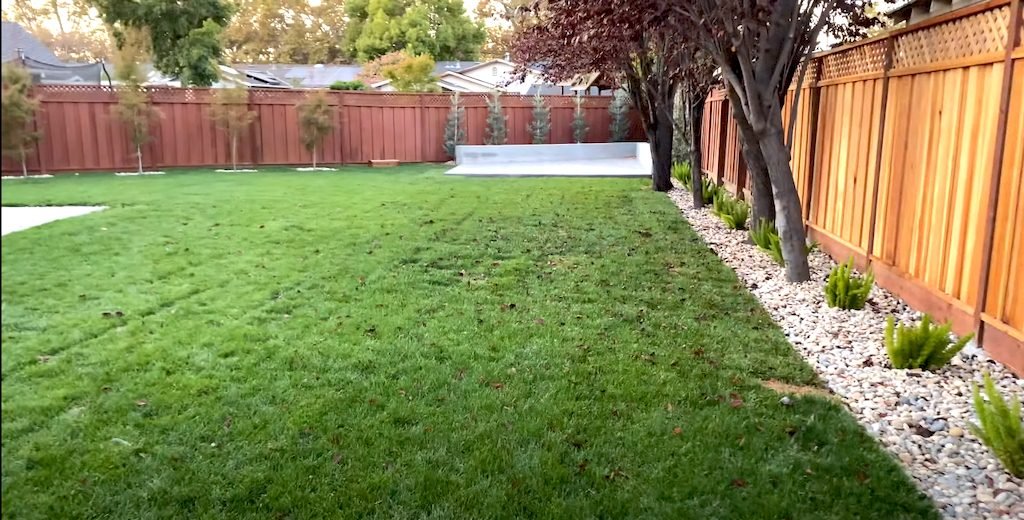
Another thing to consider is burrowing. Rodents are keen diggers! Given the chance, they are very capable of burrowing right underneath your fence and entering your yard this way.
To solve this, you may want to lay down some kind of impervious foundation such as concrete or stone, to eliminate any possibility of them digging underneath. If you plan to go ahead with this rather large undertaking, make sure there are no gaps between the foundation and the bottom of the fence.
Another (far cheaper) solution is to use hardware cloth. Attach the hardware cloth to the bottom of your fence and extend it out underneath the ground for about a foot from the fence.
This will create a horizontal barrier against any rodents, but it will still allow for vegetation to grow up and for water to drain through.
Bear in mind the wire mesh needs to have a fairly dense grid, in order to stop a small mouse from wriggling through the holes. You can also use this for other parts of your yard and property too.
Any open vents and other ways into the house that can’t be totally filled in can be rodent-proofed with hardware cloth.
Rodents need shelter, so one of the best ways to keep them out of your yard and away from your property is to eliminate as many hiding places as you can.
Are there piles of leaves that stay in the garden for long periods of time? Are there branches on the ground or long grass? All of these things can act as a convenient hidey-hole for mice and rats.
Make sure to keep your lawn mowed, move any debris off the ground, and make sure not to keep garbage bags anywhere near your house, preferably in a covered storage compartment.
As well as burrowing, mice and rats are excellent climbers. You may be lucky enough to live next to a beautiful tall tree, which may be growing close to your roof or other openings, and this could be a perfect opportunity for any adventurous mice to make their entrance. Consider pruning it back; you have to make it as hard for them as possible.
Lastly, if you do have a rodent problem, consider whether additions such as bird feeders and bird-baths might be unintentionally catering to rodents.
If your yard does have somewhere to hide, as well as somewhere to eat and drink that’s accessible for a rodent, it has all the makings of a great place to stay. It’s probably best to remove them at least until you’re certain the infestation has passed.
For more information on the prevention and removal of rodents, learn more at www.attic-rat.com.