Table of Contents Show
A (PCB) printed circuit board is a type of electronic equipment used in the manufacture of electronic systems.
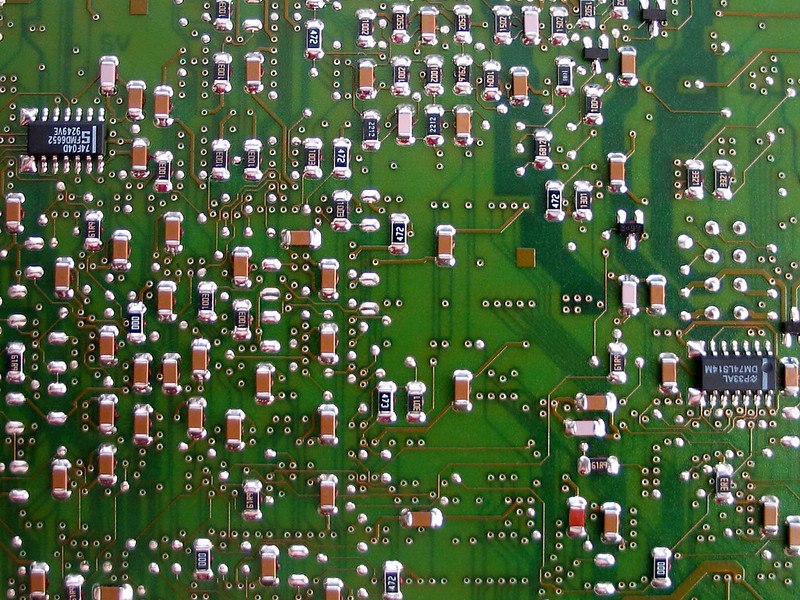
It includes logic gates, transistors, capacitors, and resistors in a single piece of material that can be soldered together. Printed circuit boards are also used for housing computer chips and other electronic components.
What is PCB?
A PCB or PC board, a printed circuit board, is a non-conductive material used in electronics with conductive pipes imprinted or etched away. Parts are scaled to the board, and the paths indirectly join the components to assemble a functional circuit or PCB assembly.
How Many Types of PCB Materials Are There?
Metal, copper, aluminum, and iron are three significant PCB materials. Primarily used is copper.
What is the Difference Between a PCB and a PCBA?
A PCBA is a printed circuit board with all elements needed for a given application. A PCB still needs to be implemented, while a PCBA is primed for flexible printed circuit board manufacturers.
Different Types of the Printed Circuit Boards
- Single Layer
- Double Layer
- Multilayer
- Rigid
- Flexible
- Rigid-Flexible
Single Layer
This single-sided PCB has a single tier of basis material or substrate. One of its ends is coated in a slim tier of copper, either because copper is an excellent electrical conductor or because of a protective solder cap covering the top end of the copper layer.
Generally, a metal mask is used on the head of the copper layer, and a silkscreened finish is placed on top to identify elements on the board. This printed circuit board is made of different electronic materials and circuits on only a single side.
Double Layer
A double-sided printed circuit board contains two copper layers of equal thickness on each side of one substrate layer.
Electrical elements on double-sided PC boards can be combined using sockets or soldering. Boards are equipped with holes and permit threaded connections on both surfaces. The sides are soldered with electronic components.
This type of circuit board is employed to plug into circuits on either the front or the back by using one of two wiring techniques: through-hole and surface-mount technology.
Through-hole technology differs from surface-mount technology in that it utilizes electrical wiring instead of small connections fastened directly to the circuit board.
3d printed circuit board technology makes it possible for numerous systems to be conducted on a smaller board, which runs the system more rapidly than separate-point-through-hole technology.
Multilayer
PCBs are multilayer and hence contain two copper layers. PCB layouts include layers other than those seen on basic layouts. These layers increase the density and flexibility of PCB designs, and extra top & bottom layers are added.
Designers on multilayer printed circuit boards can produce highly solid and extensive designs with the aid of many layers in the circuit board.
Rigid
A rigid board is essentially an adhesive PCB that has fiberglass included in it. The fiberglass minimizes the flexibility in the circuit board when you install it. Rigid (PCBs) printed circuit boards are often used in electronic machines with moving elements.
Flexible: These kinds of PCBs function on a flexible base, such as plastics. The particular flexibility of these PCB boards plays a significant role in electronic instruments where elasticity is essential.
Rigid-Flexible
The combination technology of flexible and rigid circuit boards is called Rigid-flex circuit boards.
The rigid-flex circuit board is made of an inflexible board that is connected to a supple circuit board. Rigid-flex boards can be better complicated if more complex circuitry is necessary.
In conclusion, printed circuit boards (PCBs) are famous for manufacturers because they are easy to work with and provide various options for connecting different device parts.
However, there are a few things to keep in mind when ordering PCBs, including the type of PCB you order, the brand name of the PCB manufacturer, and the size of your PCB project.