• Home Improvement
    • DIY
    • Remodeling
    • Woodworking
    • Home Design
      • Furniture
      • Organize
      • Tips
      • Decor
        • Interior
        • Exterior
    • Design Ideas
      • Bathroom
      • Bedroom
      • Dining Room
      • Living Room
      • Kitchen
  • Gardening
    • Backyard
    • Front Yard
    • Landscaping
  • Building Staircase
  • Categories
    • Home Improvement
    • Decor
    • Gardening
    • Woodworking
    • Lifestyle
    • Green Living
    • Real Estate
Dream Lands Design
  • Home Improvement
    • DIY
    • Remodeling
    • Woodworking
    • Home Design
      • Furniture
      • Organize
      • Tips
      • Decor
        • Interior
        • Exterior
    • Design Ideas
      • Bathroom
      • Bedroom
      • Dining Room
      • Living Room
      • Kitchen
  • Gardening
    • Backyard
    • Front Yard
    • Landscaping
  • Building Staircase
  • Categories
    • Home Improvement
    • Decor
    • Gardening
    • Woodworking
    • Lifestyle
    • Green Living
    • Real Estate
Featured image - Signs You Have Dirty Air inside Your Home and How to Fix It

Signs You Have Dirty Air inside Your Home and How to Fix It

  • Perla Irish
  • June 15, 2020
Total
7
Shares
0
0
7
0
0
Table of Contents Show
  1. How Do You Know You Have Dirty Air Inside?
    1. Check for Allergies
    2. Odd Smells
    3. Need to Constantly Clean Surfaces
  2. How Do You Fix It?
    1. Install High-Efficiency Particulate Air (HEPA) Filter
    2. Check Your Air Ducts
    3. Make Use of Cooking Vents
    4. Buy Indoor Plants
    5. Control the Humidity
  3. Conclusion

Being too comfortable in the realms of our own home might lead us to disregard the quality of air indoors. However, it is also important to remember that airborne pollutants and contaminants outdoors could also be entering your own home.

Improving the air quality inside your home is as important as wanting clean air outdoors. This article will discuss the signs that you have dirty air inside your home and provide ways on how to fix it.

image - Signs You Have Dirty Air inside Your Home and How to Fix It
Signs You Have Dirty Air inside Your Home and How to Fix It

How Do You Know You Have Dirty Air Inside?

The first thing you need to do is check if you have poor air quality indoors. Here are some ways on how you can spot dirty air indoors.


Read Also:

  • When Do You Need to Do Air Duct Cleaning? Look Out for the Telltale Signs
  • 5 HVAC Maintenance Tips to Make Your Central AC Last for Years
  • How to Get Rid of Allergies Caused by Allergens in the Home
  • 4 Common Things That Go Wrong in HVACs
  • What Factors Affect Indoor Air Quality?

  1. Check for Allergies

One of the most obvious clues that you have dirty air inside your home is if you or any members of your family are getting allergic episodes. Allergies could be a reaction to the contaminants and air pollutants inside your home.

Usually, these allergies will be caused by dust or other irritants indoors. Some symptoms of an allergic reaction include sneezing, coughing, headaches, congestion, and watery eyes.

  1. Odd Smells

Be aware of your surroundings even if it’s in your own home.

Sometimes, even a faint smell of something odd is already a sign that you have dirty air inside your home and your 16x25x1 Air Filter might need replacement. So, watch out for weird smells.

  1. Need to Constantly Clean Surfaces

If after just cleaning, you already see dust forming, then this is a sign that your air conditioning system might already be spewing pollutants.

Constantly dusty surfaces despite regular cleaning is a clear sign that your air is full of pollutants.

Dust that appears out of nowhere even though your windows and doors are closed is a sign that you might want to make the necessary measures to clean your internal air.

How Do You Fix It?

Now that you know the signs to watch out for, here are some ways on how you can fix it.
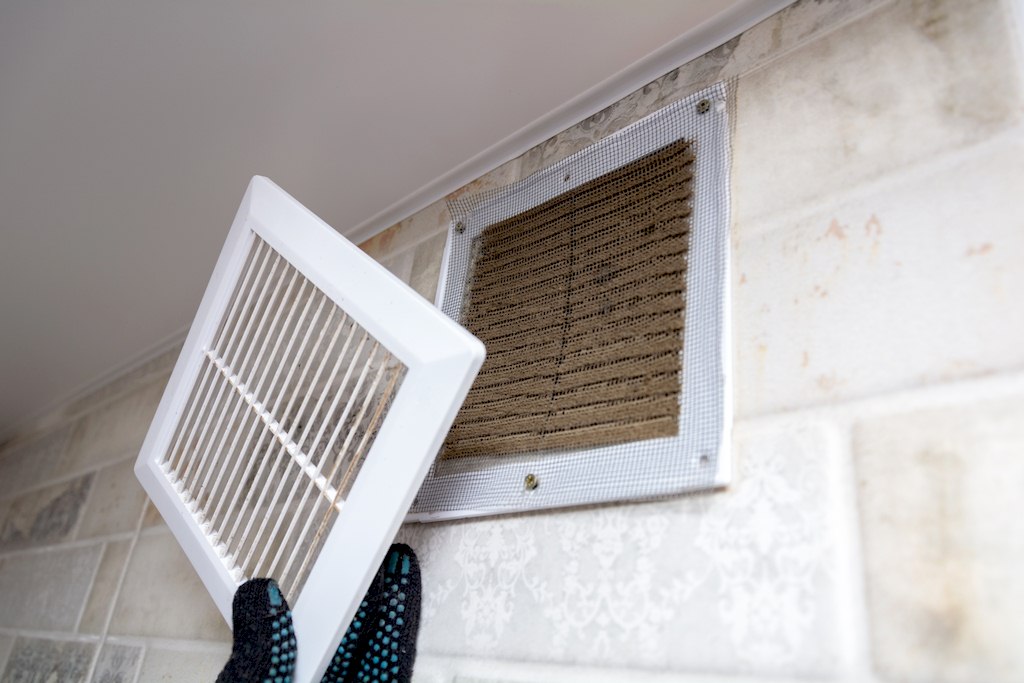
image - How to Fix Dirty Air inside Your Home

  1. Install High-Efficiency Particulate Air (HEPA) Filter

One way to make sure that your air conditioner will be effective in preventing dirty air from coming into your home is to install a HEPA filter in your HVAC system.

This way, your air conditioner can filter out dust and other harmful particles from entering your home when it’s turned on.

As a safer alternative, you can also get stand-alone HEPA air cleaners to ensure higher air quality. However, since it uses a fan, it can be a bit noisy.

  1. Check Your Air Ducts

Dirty air ducts can be the cause of the bad quality of indoor air.

Since air ducts are responsible for the distribution of cold and hot air, contaminants easily spread from one room to another if it is not cleaned regularly.

Air ducts that aren’t cleaned regularly will build up mold and dust, which may result in a high reduction of indoor air quality.

  1. Make Use of Cooking Vents

Another way to fix this is to install cooking vents. Many of the pollutants indoors are caused by what’s happening in your kitchen.

Harmful contaminants, such as nitrogen dioxide and carbon monoxide, are being released by your gas stove whenever it’s on.

The same goes for electric burners as well. So, since you can’t prevent yourself from cooking, make use of cooking vents to absorb the harmful contaminants.

  1. Buy Indoor Plants

Plants are the earth’s natural air filters. To improve the quality of air in your own home, it will also be helpful to have some indoor plants.

Ferns and Monstera leafed plants are good indoor plants that can also help with the quality of air.

In addition, you can also plant large palm trees outside your home to filter the air coming into your home through your windows.

  1. Control the Humidity

Humidity and moist surfaces are breeding grounds for mold and mildew.

To prevent mold from growing and eventually contaminating indoors your air quality, you may buy a humidifier and set it up inside your home to maintain humidity levels.

This is important because even your air conditioners can gather molds if your home is too humid.

Conclusion

Pay attention to your surroundings even if you are in your own home. By doing this, you will see if the air quality inside your home is clean or unclean.

If your home has dirty air circulating, you need to take things in control and make amends. You must take the necessary steps to ensure your indoor air is clean by installing filters and other tips listed above.

Total
7
Shares
Share 0
Tweet 0
Pin it 7
Share 0
Share 0
Previous Article
Featured image - AC Maintenance: 11 DIY Air Conditioning Cleaning Tips You Must Know

AC Maintenance: 11 DIY Air Conditioning Cleaning Tips You Must Know

  • Perla Irish
  • June 14, 2020
View Post
Next Article
Featured image - 5 Sustainable Cost-Saving Ideas for Your Household

5 Sustainable Cost-Saving Ideas for Your Household

  • Perla Irish
  • June 15, 2020
View Post

Subscribe

Subscribe now to our newsletter

You May Also Like
Uneven concrete driveway with a sunken slab outside a modern suburban home
View Post

Uneven Concrete: Why It Happens, Why It Matters, and What Leveling and Lifting Can Do About It

  • August 4, 2026
Employees preparing a commercial office move by packing workstations, labeling equipment, and organizing IT infrastructure before relocation
View Post

What Every Business Should Know Before Planning a Commercial Move

  • August 3, 2026
Modern bedroom with a smoke air purifier improving indoor air quality during a wildfire smoke event outside the home.
View Post

Smoke in the Air: Choosing an Air Purifier That Actually Makes a Difference

  • August 1, 2026
Modern bedroom with an air purifier beside the bed to improve indoor air quality for better sleep
View Post

Why the Air You Breathe While You Sleep Matters More Than You Think

  • August 1, 2026
Side-by-side comparison of a traditional tank water heater and a tankless water heater installed in residential homes.
View Post

Tankless vs. Traditional Water Heaters: Which Is Right for Your Home?

  • July 31, 2026
Outdoor plumbing faucet and residential sump pump system protecting a home from water damage
View Post

Protecting Your Home’s Plumbing From Water Damage: Sump Pumps and Outdoor Plumbing Basics 

  • July 30, 2026
Comparison of electric, gas, pellet, and wood-burning fireplaces for homeowners
View Post

A Homeowner’s Guide to Types of Fireplaces: Gas, Electric, Pellet, and Wood

  • July 30, 2026
Cracked asphalt driveway showing alligator cracking and surface deterioration caused by aging and weather exposure
View Post

5 Common Causes of Asphalt Cracks in Driveways and How to Prevent Them

  • July 28, 2026
  • About
  • Privacy Policy
  • Terms of Use
  • Disclosure
  • Sitemap
  • Contact Us

Input your search keywords and press Enter.