Table of Contents Show
Every home decorator faces the same quiet disappointment: a fiddle-leaf fig dropping its final leaf in a windowless hallway, or a lush Boston fern crisping on a high display shelf despite careful weekly watering. Living foliage demands precise foot-candles of natural light, stable ambient humidity, and regular soil monitoring—conditions that windowless powder rooms, north-facing entryways, and frequent travel schedules fail to provide. Integrating high-grade artificial plants resolves the tension between botanical design goals and daily maintenance limits, adding deep green tones, architectural height, and organic texture without soil care or light requirements.
Precision manufacturing using 3D leaf-molding and polyurethane coatings has transformed faux greenery. Neon-green plastic stems with visible mold seams belong to the past. Modern premium botanicals replicate exact leaf veining, variable surface sheen, stem scarring, and natural tactile weight. This comprehensive guide details polymer material grades, strategic placement math, routine maintenance schedules, and interior styling methods to make artificial greenery look completely authentic in any living space.
Quick Verdict: Commercial-grade artificial plants deliver a permanent greenery solution for low-light rooms, rental properties, high ceiling ledges, and allergy-sensitive homes. Select matte 3D-molded polyethylene (PE) or real-touch latex over cheap fabric, shape wired branches with asymmetrical curves, and maintain a monthly dusting routine to protect realistic leaf textures for decades.
Pros & Cons of Artificial Greenery at a Glance
| Design Feature | Pros | Cons |
|---|---|---|
| Visual Appearance | Delivers vibrant, photo-ready foliage and structural height across every season. | Surface dust buildup or harsh direct spotlighting exposes synthetic material. |
| Maintenance Demands | Requires zero watering, soil fertilizing, repotting, or gnat pest management. | Demands routine surface dusting and occasional deep washing to maintain realism. |
| Placement Flexibility | Thrives in windowless basements, dark corridors, and high ceiling soffits. | Standard interior polymers yellow or embrittle under unshaded exterior UV exposure. |
| Financial Value | Single upfront purchase with a multi-year functional life cycle. | High-end real-touch latex and large statement trees carry higher initial price tags. |
| Household Safety | Eliminates pollen allergens, toxic plant sap, and spilled soil messes. | Does not increase ambient indoor oxygen or filter airborne volatile organic compounds. |
Faux Plant Materials 101: Comparing PE, PVC, Silk & Real-Touch Latex
Selecting the correct material determines whether artificial greenery passes close physical inspection or looks obviously fake. Manufacturers formulate distinct synthetic polymers and textiles to match specific botanical species:
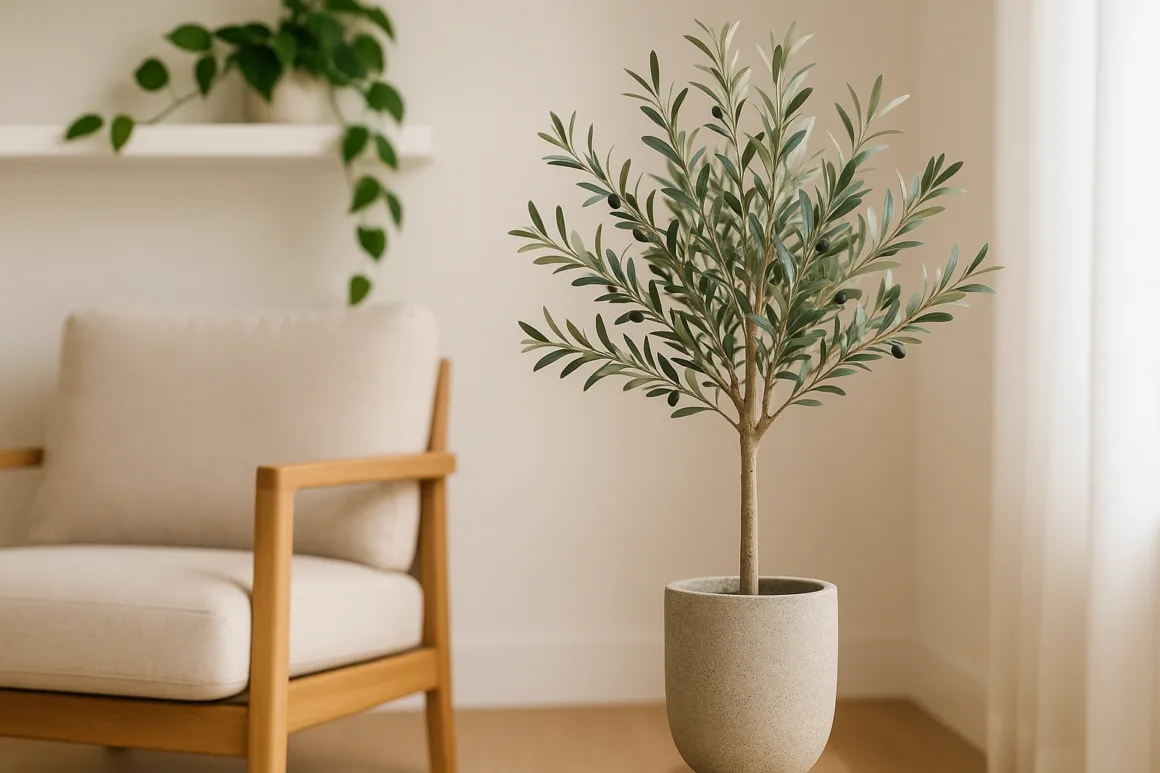
- PE (Polyethylene): Produced using 3D injection molds cast directly from living plant specimens. PE replicates micro-textured leaf veining, variable stem thickness, and realistic matte finishes. It delivers unmatched realism for large statement plants, including olive trees, bird of paradise, and fiddle-leaf figs.
- PVC (Polyvinyl Chloride): A dense, semi-rigid sheet polymer used for budget-friendly palms, snake plants, and needle ferns. While PVC holds sharp structural shapes, lower-cost formulations display a reflective plastic sheen under direct overhead lighting.
- Silk & Woven Fabrics: Fine woven textiles printed with botanical dyes. Fabric offers delicate leaf flex and soft tonal gradients, making it suitable for tabletop arrangements, faux orchids, and trailing ivy. Keep silk arrangements away from high-humidity bathrooms to prevent dye bleeding and edge fraying.
- “Real-Touch” Latex & Polyurethane (PU): Premium foliage coated with liquid latex or molded PU over steel-reinforced wire stems. This process recreates the exact fleshy thickness, structural spring, and cool tactile feel of living rubber trees, monsteras, and succulents.
Safety, Durability & Material Quality Labels to Check
Review material specification labels before purchasing artificial greenery for specific sunlit or outdoor residential locations:
- UV-Stabilized (ISO 4892-3 Standard): Polymers blended with ultraviolet light blockers prevent yellowing, material embrittlement, and color fading when placed near south-facing windows, covered porches, or sunny patios.
- Flame Retardant (NFPA 701 Certified): Inherent flame retardant (IFR) chemicals integrated into the polymer matrix during molding provide fire safety near mantels, heat vents, or recessed lighting fixtures.
- Low-VOC & Non-Toxic Dyes: Quality brands use solvent-free pigments that pass off-gassing tests, ensuring new plastic plants release zero harsh chemical odors in enclosed bedrooms.
Placement Strategy: Styling Faux Where Living Plants Plausibly Grow
Plausible placement forms the foundation of convincing faux botanical styling. Placing a sun-hungry Mediterranean olive tree in a windowless basement storage nook instantly signals a synthetic display. Position plants where living cultivars would naturally survive.
Indoor Placement Guidelines
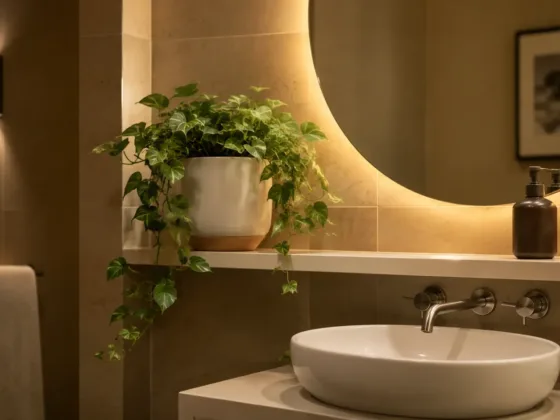
Align specific artificial varieties with the light profiles of their natural counterparts. Set shade-tolerant maidenhair ferns and pothos vines on bathroom shelving, stand tall fiddle-leaf figs or monsteras beside window frames, and trail ivy along high bookcase ledges. Always anchor faux trunks in heavy stone, ceramic, or terracotta planters filled with sand or concrete, then top-dress the base with real preserved sheet moss, river pebbles, or coarse bark to hide nursery pots completely. If you wish to mix live potted plants into your sunny rooms, explore our guide to buy plants online with free delivery for reliable home delivery options.
Outdoor & Patio Styling
Restrict exterior artificial foliage to covered porches, protected entryways, or deep overhangs. Use explicitly outdoor-rated UV-PE polymers, weight planters with heavy gravel to prevent tipping in windstorms, and rotate pots twice a year to equalize sunlight exposure. For additional porch and patio inspiration, see our design breakdown on unique garden decor styles for your backyard renovation.
7 Interior Designer Rules for Making Faux Plants Look Real
Professional decorators use specific hand-shaping techniques to convert flat, box-packed artificial plants into fluid organic features:
- Prioritize Leafy Species Over Flowers: Foliage plants (olive, rubber plant, pothos, monstera, ficus) achieve higher visual realism than artificial silk blooms, which reveal synthetic materials more easily.
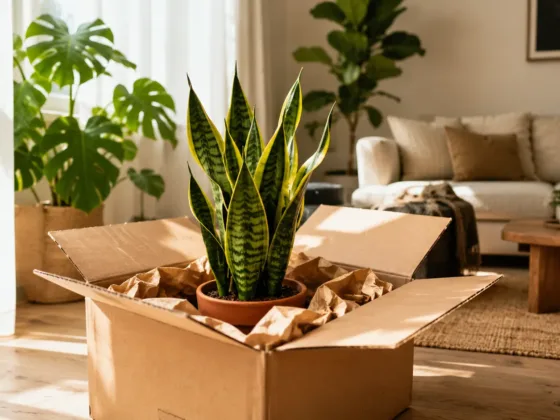
- Shape and Splay Every Stem: Never leave a new artificial plant in its stiff shipping position. Bend internal wires outward, arch lower branches slightly downward, and introduce natural asymmetry—real plants never grow in perfect geometric symmetry.
- Select Muted, Matte Tones: Choose varieties featuring varied green shading, pale leaf undersides, and brown stem sheath details. Avoid uniform, glossy bright-green plastics.
- Upgrade Planter Scale: Factory nursery pots are intentionally undersized to reduce shipping volumes. Transfer your artificial plant into a heavy decorative pot 2 to 4 inches larger in diameter to establish proper visual balance.
- Apply Authentic Base Dressings: Cover plastic bases or foam inserts with a 2-inch top layer of real dried moss, dark pea gravel, shredded bark, or actual potting soil.
- Group in Asymmetrical Odd Clusters: Arrange plant containers in groups of three or five, pairing tall upright specimens with broad-leaf plants and trailing vines to build visual depth.
- Maintain Strict Dust Control: Dust accumulation creates a telltale gray sheen that reveals artificial materials immediately. Monthly cleaning protects realism.

Care & Cleaning: 5 Step-by-Step Maintenance Methods
Artificial greenery replaces daily watering and fertilizing with a simple surface cleaning routine. Airborne dust and kitchen grease dull natural leaf details over time. Apply these five practical cleaning techniques:
- Weekly Microfiber Dusting: Wipe upper and lower leaf surfaces with a clean, dry microfiber cloth or electrostatic duster to remove loose particles before they settle.
- Cool-Air Blow Drying: Use a handheld hairdryer set strictly to “cool” (or compressed air cans) to clear trapped dust from dense fern fronds, moss bases, and tight stem joints.
- Low-Suction Vacuuming: Clean sturdy PVC palms and tall snake plants using a vacuum cleaner equipped with a soft dusting brush attachment on low power.
- Mild Soapy Water Wipe (PE & PVC): Dampen a soft cloth in lukewarm water mixed with two drops of mild liquid dish soap. Gently wipe down individual plastic leaves, then dry thoroughly with a soft towel to prevent water spots.
- Diluted Vinegar Refresh (Fabric & Silk): Lightly mist fabric leaves with a 50/50 solution of distilled water and white vinegar. Allow it to air dry without soaking the fabric or weakening glued stem joints.
Mixing Faux, Dried & Living Greenery for Depth
Blending artificial greenery with living potted plants and preserved botanicals creates an authentic, layered interior space. Place living plants on bright windowsills where they thrive, while positioning artificial greenery in dark corners or high architectural ledges where watering is difficult. Intermingle preserved pampas grass, dried eucalyptus, or real palm fronds into faux arrangements to add rich tactile contrast. For care methods when pruning living houseplants alongside faux pieces, read our guide on how to deal with overgrown plants.
Frequently Asked Questions
Are artificial plants considered out of style in modern home decor?
No. Precision manufacturing using 3D PE leaf-molding and real-touch latex produces highly realistic foliage that integrates seamlessly into contemporary interior design when styled in proper ceramic planters with natural top-dressing.
Can artificial plants be used on outdoor patios and porches?
Yes, provided you choose UV-stabilized PE or PVC materials. Outdoor artificial plants should be placed on covered porches or shaded balconies to protect them from direct sun fading and heavy rain.
How long do high-quality artificial plants last indoors?
With routine monthly dusting and occasional spot cleaning, indoor artificial plants retain their color, shape, and structural integrity for 5 to 10 years or longer.
Are faux plants safe for households with cats and dogs?
Yes. Artificial plants do not contain toxic sap or require chemical fertilizers, making them completely safe for pets. However, ensure small decorative gravel base toppings are secured away from curious animals.
Author & Editorial Review
Author: Perla Irish serves as Content Manager at DreamlandsDesign. Drawing on extensive experience across home improvement, residential design, and indoor botanical styling, she translates complex polymer engineering standards into practical, reliable decorating guidance for homeowners.
Editorial Review: This guide was audited by the DreamlandsDesign editorial team to verify polymer specification accuracy, UV testing compliance, and design utility. Every section aligns with current residential interior styling standards.