Table of Contents Show
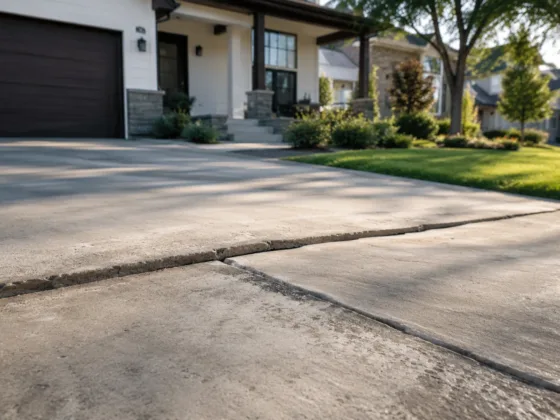
Concrete slabs are part of most structures because the material is long-lasting, highly durable, and low-maintenance. However, concrete slabs can develop problems too. Some of the common concrete slab issues include cracking and curling.
Luckily, a list is available of the best garage floor coatings that can help guide you if you are looking to apply a coating. A concrete flooring contractor would tell you that there are various options when it comes to repairing such concrete floors and subfloors.
Below is a look at some of the most common surface repair options for concrete floors and subfloors.
Routing and Sealing
Routing and sealing is the ideal method for fixing concrete ceilings and floors. The method works by isolating the non-structural crack thereby eliminating the risk of further damage. Routing and sealing methods are also applicable when repairing concrete walls.
In this method, the crack is enlarged by creating a large v-shaped trough and then filling it using a suitable sealant. The trough created should be twice as wide as it is deep thereby allowing the sealant to withstand as well as a mold into any future movement.
Routing and sealing methods can be used to repair both large and fine cracks. The most effective use of this method is to seal concrete surface cracks where water stands thereby preventing the moisture from passing through the concrete.
Gravity Filling
There are gravity filling machines that make this method very easy to execute when repairing concrete floors and subfloors. Moreover, gravity filling machines require minimum maintenance to do the work.
This method can be used to seal cracks of between 0.03 and 2mm in width. The lower the viscosity of the filler, the higher the effectiveness of filling fine concrete surface cracks.
Self-Leveling Treatments
Self-leveling treatments are effective enough to correct a range of concrete floor issues including leveling concrete floors with deep damage and fixing uneven concrete surfaces. This method can be divided into two major groups. These are:
- Underlayments
- Toppings
Underlayments
Underlayments are applied on the subfloor to smoothen it out before other floor coverings are applied on the subfloor.
Toppings
Just as the name suggests, toppings are the top most addition to the concrete floor. Toppings serve as the actual finished floor with no need for additional covering for the floor.
Self-leveling treatments provide a durable and highly dense concrete floor with most self-levelers reaching up to ¼ to 1 inch with the ability to be feathered into the existing floor. The self-leveling concrete can also be colored with tints or dyes to provide a stylish finish to the floor.
Water Leakage Repairs
Water leakage repairs are significantly different compared to other concrete repair methods and as such, they are treated differently. Also, fixing a concrete crack with leaks is not an easy affair.
Before fixing a concrete crack involving water leakage, it is important to first determine the extent of the damage as well as the cause of the leaks.
There are two ways of fixing a concrete slab with water leakage. These are:
- Resin injection
- Adding reinforcement
These two methods can be done in combination or separately. Below is an explanation of what each of these methods entails.
Resin Injection
Resin injection is an expensive way of fixing delaminated or cracked concrete. The method can also be used to repair joints and cracks to avoid water leakage.
Adding Reinforcement
There are different types of resins for every purpose, For instance, epoxy resins are used when sealing relatively dry and dormant cracks, while methacrylic and polyurethanes seal cracks and joints that are dirty, very wet, or leak water.
Polyurethanes and methacrylic can also be used to stop the movement of concrete cracks thereby preventing further damage to the concrete surface.
These two concrete reinforcements require a certain level of knowledge such as knowledge of specific mixing procedures and knowledge in handling the steel pumping equipment used. Methacrylic is effective in sealing tiny leaking cracks due to its low viscosity.
The above concrete floor and subfloor repair methods help fix the concrete floor issue before it escalates. These methods help further delamination of the concrete floor. Ensure you pick the method that best suits your concrete surface issues before fixing the problem.