Table of Contents Show
A ceiling joist is an essential part of the house that you do not see daily. It maintains the house’s structure, supports the roof and the ceiling, and acts as the attic’s floor.
Without the ceiling joist, the top would weigh all its weight on the house’s wall, thereby weakening it.
Do all roofs need ceiling joists? Not all types of roofs require ceiling joists, with a single roof being an example. Single roofs are made for small spaces and are not heavy. This article will provide you with detailed information on ceiling joists.
Types Of Ceiling Joists
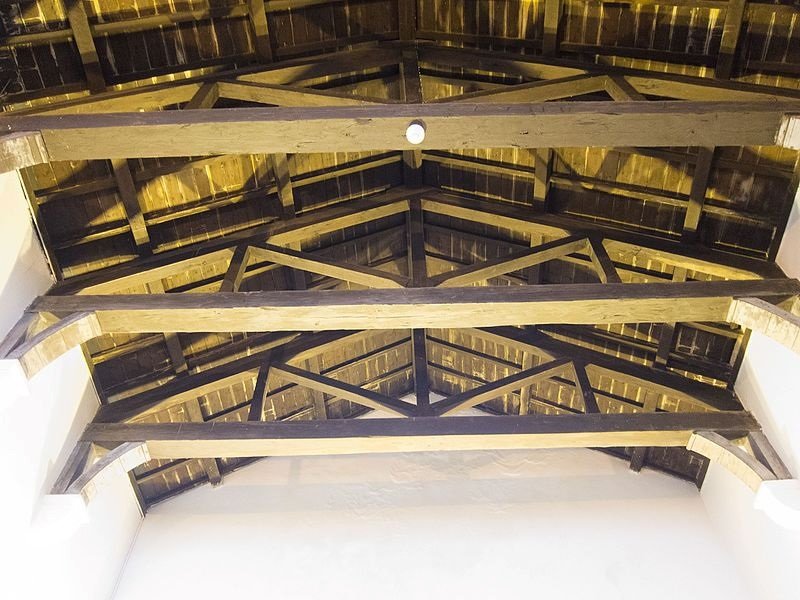
Exposed ceiling and hidden ceiling are the two types of ceiling joists. You can see an exposed ceiling, and its purpose is to increase the home’s curb appeal. It also gives the house a rustic feel. Consult experts that offer roofing Lubbock services for more information.
A hidden ceiling is not visible because contractors install it under the ceiling boards. This is the most common type of ceiling joist, and it fits all house structures. Although the exposed ceiling joist adds aesthetics to the house, the hidden ceiling is more energy-efficient.
Materials That Make Ceiling Joists
Two common materials make ceiling joists: solid timber and plasterboard. Timber ceiling joists are mainly attached to the wall plates along with the brickwork. Alternatively, contractors fix them to joist hangers and attach them to the walls.
Plasterboard ceiling joists have a coat of plaster finishing. Nowadays, most contractors use prefabricated roof trusses that have rafters and joists. These are triangular-shaped, and you can see them on the roof.
People commonly mistake joists for beams and rafters. A beam supports the joist, and a rafter supports the roof deck, and it is used to place tiles. Rafters are the sloping parts of the roof that are not common in all tops.
Read Also:
Differentiating Joists, Beams, And Rafters
These three are structural roof types that lift the weight off of the roof, and you can use them interchangeably. Beams carry heavier loads than joists, so they are bigger. However, they support the joists, and they extend from one side of the wall to the other.
Joists are smaller because they carry less weight. They are many and run across your roof in the same direction. Joists reduce the strain your roof would get from weight, and they are essential because too much weight can strain your walls and cause a shift.
Rafters are slightly different from joists and beams because they support the roof deck. Rafters also support any other loads on the roof like tiles, shingles, and fiber cement.
Finding the Ceiling Joists on Your Roof
Sometimes joists are installed in hidden places that you cannot see when you look up the roof. However, locating them is not difficult.
You can use a flashlight or buy a stud finder to find them easily. If you are trying to find your joists, these tips will help.
Using a Flashlight
Step 1
You can easily find the ceiling joists using a flashlight if you are keen enough. Stand on a ladder and hold the light at an obtuse angle towards the ceiling. Looking into the paintwork, spot the dimples.
Any point with the dimple is the location of the nail that supports the ceiling board to the joists. Next, use the measuring tape to find the other beams.
The ceiling joists are placed at a certain distance from each other, so a measuring tape will help you locate the rest.
Step 2
You can only use your tape measure if you know that the joists are placed 16 or 24 inches apart. If not, measure a right angle across your roof, with a distance of 16 inches from the first nail you found.
Hammer a nail into the 16-inch mark and see if it goes into the roof. If it resists, this confirms that the next joist is there. Next, try measuring 24 inches if the 16 inches one fails.
If you still can’t find the joist, this is because you could be measuring wrongly, so turn the tape in different directions.
Using a Stud Finder
Step 1
You should first calibrate your stud finder; you can do this by using the manual it came with.
Then, hold the stud finder on the ceiling board a few inches from the expected point to have a joist. This way, the stud finder can quickly locate the joist’s density.
Step 2
Use a tape and measure 16 inches from the wall. Place the stud finder over the end of the 16 inches and see whether it lights. Try also 24 inches apart and see if it lights. If it does, that is where the joist is.
Exposed Joists Have Pros and Cons
Most homes do not have exposed joists because they cannot make them appealing to increase curb appeal.
Most of them will close up the ceiling because the joists are mostly unpainted and unfinished wood. However, some homeowners paint their joists to add aesthetics to the home.
The exposed joists leave wires and vents that are mostly enclosed in the attics visible. You can also not install a colorful ceiling if you want to have exposed beams.
This means that any wiring and pipes that run under the top will be visible. Attic insulation helps keep the home cool and warm, and if there is no attic, there won’t be insulation.
Besides the downsides, having exposed joists reduces the cost of construction. You won’t install a ceiling, so you save on the cost of installing one. Your roof also looks unique, unlike the other standard white types of rooftops.
Final Words
Ceiling joists help the walls to carry the weight of the roof. Without them, the walls would weaken due to the roof’s weight, making them vulnerable. However, some roofs carry less weight and will not need ceiling joists.