• Home Improvement
    • DIY
    • Remodeling
    • Woodworking
    • Home Design
      • Furniture
      • Organize
      • Tips
      • Decor
        • Interior
        • Exterior
    • Design Ideas
      • Bathroom
      • Bedroom
      • Dining Room
      • Living Room
      • Kitchen
  • Gardening
    • Backyard
    • Front Yard
    • Landscaping
  • Building Staircase
  • Categories
    • Home Improvement
    • Decor
    • Gardening
    • Woodworking
    • Lifestyle
    • Green Living
    • Real Estate
Dream Lands Design
  • Home Improvement
    • DIY
    • Remodeling
    • Woodworking
    • Home Design
      • Furniture
      • Organize
      • Tips
      • Decor
        • Interior
        • Exterior
    • Design Ideas
      • Bathroom
      • Bedroom
      • Dining Room
      • Living Room
      • Kitchen
  • Gardening
    • Backyard
    • Front Yard
    • Landscaping
  • Building Staircase
  • Categories
    • Home Improvement
    • Decor
    • Gardening
    • Woodworking
    • Lifestyle
    • Green Living
    • Real Estate
Featured of Fabric-covered Buildings

Everything You Need to Know About Fabric-covered Buildings

  • Perla Irish
  • March 28, 2019
Total
4
Shares
0
0
4
0
0
Table of Contents Show
  1. Canvas & Fabric-covered Building Types
  2. They are Versatile
  3. Fabric-covered Buildings are Highly Durable
  4. Fabric-covered Buildings are Energy-efficient
  5. Easy to Install

You can find Absolutely Fabric-covered Buildings in Western Canada and its territories as well as the United States. With more than two decades of constructing fabric-covered buildings, the company has sold and installed a large assortment of such structures throughout the years.

The company installed the fabric-covered structures for a diverse set of industrial applications including agriculture, warehousing, entertainment, aviation, industrial oil and gas, and canopy-covered trade expos. Such structures are so versatile that their applications seem limitless.

Everything You Need to Know About Fabric-covered Buildings

If you’re considering a similar structure for your own business, the following shows everything you need to know about fabric-covered buildings.

Canvas & Fabric-covered Building Types

Do not let the terms used to refer to canvas- and fabric-covered buildings confuse you. Here are some of them:

  • Canopy buildings
  • Fabric shelters
  • Fabric tension buildings
  • Tension membrane buildings
  • Clear-span fabric buildings
  • Cover-all structures
  • Tensile fabric structures
  • Fabric membrane buildings

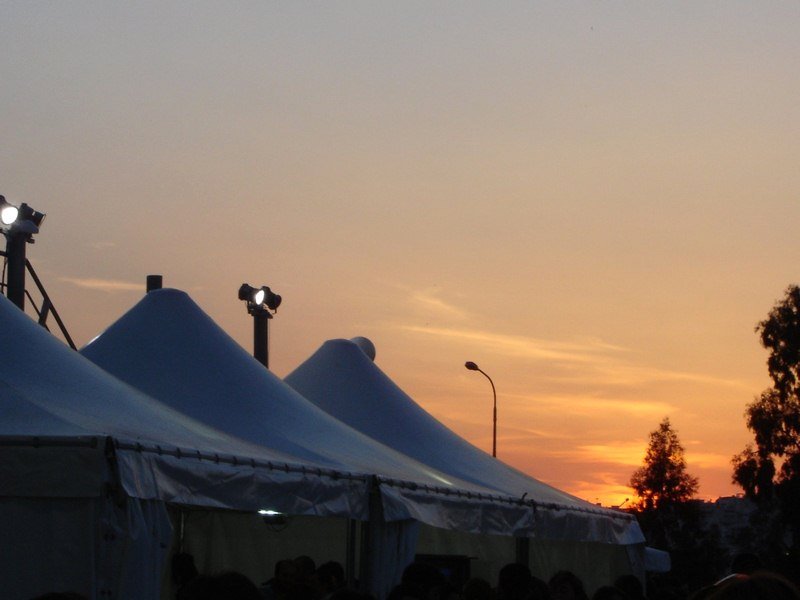
The names above all pertain to buildings that have a rigid frame made of steel or high-grade aluminum and is covered by a high tensile and weather-resistant fabric.

They are Versatile
Versatile
Versatile

The versatility of such buildings cannot be over-emphasized. The buildings are highly customizable to suit a wide range of applications to cover an area of several hundred square feet or even more. The buildings can be installed on different terrains, in varying shapes with offset peaks, different column heights and mono-slope roofs.

Fabric-covered Buildings are Highly Durable

It is easy for some to conclude that a building with fabric as covering will be flimsy. However, the opposite is true for tensile fabric structures. In fact, the architectural fabric used for the structures is made to outlast traditional building materials.

The fabric can last for several decades even with heavy industrial use. Its weather-resistant surface makes corrosion a non-issue.

The steel frame that holds up the canopy is also highly customizable and rigid enough to support additional loads. Companies can design their own steel frame to accommodate add-ons such as conveyors, HVAC systems, cranes, hangar doors, lighting equipment and fire sprinkler systems.

Fabric-covered Buildings are Energy-efficient

Energy-efficient
Energy-efficient

The power required to heat or cool a fabric-covered building is significantly lower than a traditional concrete structure. The high-tensile fabrics are naturally non-conductive, which means that regulating the temperature indoors will be easier and more efficient.

The fabrics are also translucent allowing more light to illuminate the structure during the day, which further offsets the energy requirements of the building.

Easy to Install

Fabric buildings can be set-up much faster than traditional structures. Although most fabric-covered structures are permanent, you can specifically order one that is portable. This makes it ideal for businesses and any other endeavor that requires the structure to move often from one place to another.

There are many advantages to using fabric-covered buildings. Apart from the lower operating cost, the maintenance requirements for such structures are minimal. You can reach out to established installers of fabric-covered buildings to customize one to suit your requirements.

Total
4
Shares
Share 0
Tweet 0
Pin it 4
Share 0
Share 0
Previous Article
Featured of Building a Smart Home

How to Build Your Own Smart Home

  • Perla Irish
  • March 28, 2019
View Post
Next Article
Featured of Knowing a Bit More About Lawns and Taking Care of It

Knowing a Bit More About Lawns and Taking Care of It

  • Perla Irish
  • March 29, 2019
View Post

Subscribe

Subscribe now to our newsletter

You May Also Like
limescale buildup on bathroom faucet caused by hard water
View Post

How to Soften Hard Water (What Works—and What Doesn’t)

  • April 7, 2026
vertical crack in residential brick wall near house foundation
View Post

Cracked Brick Wall: What You Can Fix — and What’s Structural

  • April 7, 2026
electrical panel with circuit breakers in a residential home showing common electrical system setup
View Post

Common Electrical Issues Homeowners Overlook (and Why They Matter Long-Term)

  • April 6, 2026
A slightly used home toolbox with basic tools and a flashlight on a wooden floor in a living room
View Post

Power Tools You’ll Actually Find in a Real Home Toolbox (And When They Matter)

  • March 17, 2026
comfortable home office workspace with desk near window and natural lighting
View Post

How to Create a Comfortable Home Office That Supports Everyday Work

  • March 9, 2026
Modern household appliances including refrigerator, washer, dryer, and dishwasher inside a contemporary home interior
View Post

How Modern Home Appliances Changed Daily Life in Today’s Homes

  • March 7, 2026
Installed sump pump system in residential basement concrete floor basin
View Post

Sump Pump Maintenance Checklist: How to Keep Your System Ready Before the Next Storm

  • February 28, 2026
Wall-mounted ductless mini split air conditioner in a modern living room
View Post

Maintenance Practices That Extend Ductless Heating and Air System Life

  • February 14, 2026

Leave a Reply Cancel reply

Your email address will not be published. Required fields are marked *

  • About
  • Privacy Policy
  • Terms of Use
  • Disclosure
  • Sitemap
  • Contact Us

Input your search keywords and press Enter.