• Home Improvement
    • DIY
    • Remodeling
    • Woodworking
    • Home Design
      • Furniture
      • Organize
      • Tips
      • Decor
        • Interior
        • Exterior
    • Design Ideas
      • Bathroom
      • Bedroom
      • Dining Room
      • Living Room
      • Kitchen
  • Gardening
    • Backyard
    • Front Yard
    • Landscaping
  • Building Staircase
  • Categories
    • Home Improvement
    • Decor
    • Gardening
    • Woodworking
    • Lifestyle
    • Green Living
    • Real Estate
Dream Lands Design
  • Home Improvement
    • DIY
    • Remodeling
    • Woodworking
    • Home Design
      • Furniture
      • Organize
      • Tips
      • Decor
        • Interior
        • Exterior
    • Design Ideas
      • Bathroom
      • Bedroom
      • Dining Room
      • Living Room
      • Kitchen
  • Gardening
    • Backyard
    • Front Yard
    • Landscaping
  • Building Staircase
  • Categories
    • Home Improvement
    • Decor
    • Gardening
    • Woodworking
    • Lifestyle
    • Green Living
    • Real Estate
featured image - How to Install Vinyl Plank Flooring

How to Install Vinyl Plank Flooring

  • Perla Irish
  • September 2, 2021
Total
5
Shares
0
0
5
0
0

When it comes to the various types of flooring available, there are some that are easier to install than others.

For instance, the work involved in a hardwood flooring installation is far more complicated and involved than that of, say, vinyl plank flooring.

While each flooring product brings with it its own distinct advantages and disadvantages, they do also vary in the difficulty of the installation.

Luckily, today we will be looking at the much less involved installation process of vinyl plank flooring.

This material offers advantages like lower cost, easier installation, and a wealth of colors and styles to choose from. But what is it about vinyl plank flooring that makes it so easy to install?

image - How to Install Vinyl Plank Flooring
How to Install Vinyl Plank Flooring

The Installation Advantage of Vinyl Plank Flooring

The main advantage of the material during installation is its design. Each edge of a plank has a special connection mechanism that makes linking multiple planks super easy.

It may look a little tricky at first, but as long as you remember to connect the long edge first, you’ll soon find yourself proficient in the process.

But we are getting a bit ahead of ourselves. Before we can start laying our vinyl plank flooring, we must first install our vapor barrier or underlayment.

This is a ready-made material available for purchase from your local hardware store (along with the tools and materials you’ll need for the vinyl plank installation) and can offer several benefits. While not all underlayments will have these features, most will:

  • Act as a vapor barrier to prevent moisture from seeping up from the ground
  • Act as a thermal barrier to retain heat during winter and let it flow freely during summer
  • Act as a protective layer for your flooring to prevent scratching, damage, and premature wear

How to Install Underlayment

Before you install your floor’s underlayment, ensure you are working with a level surface.

This will reduce the likelihood of wear spots and other issues. You can use self-leveling materials and a bubble level to repair and find any uneven areas.
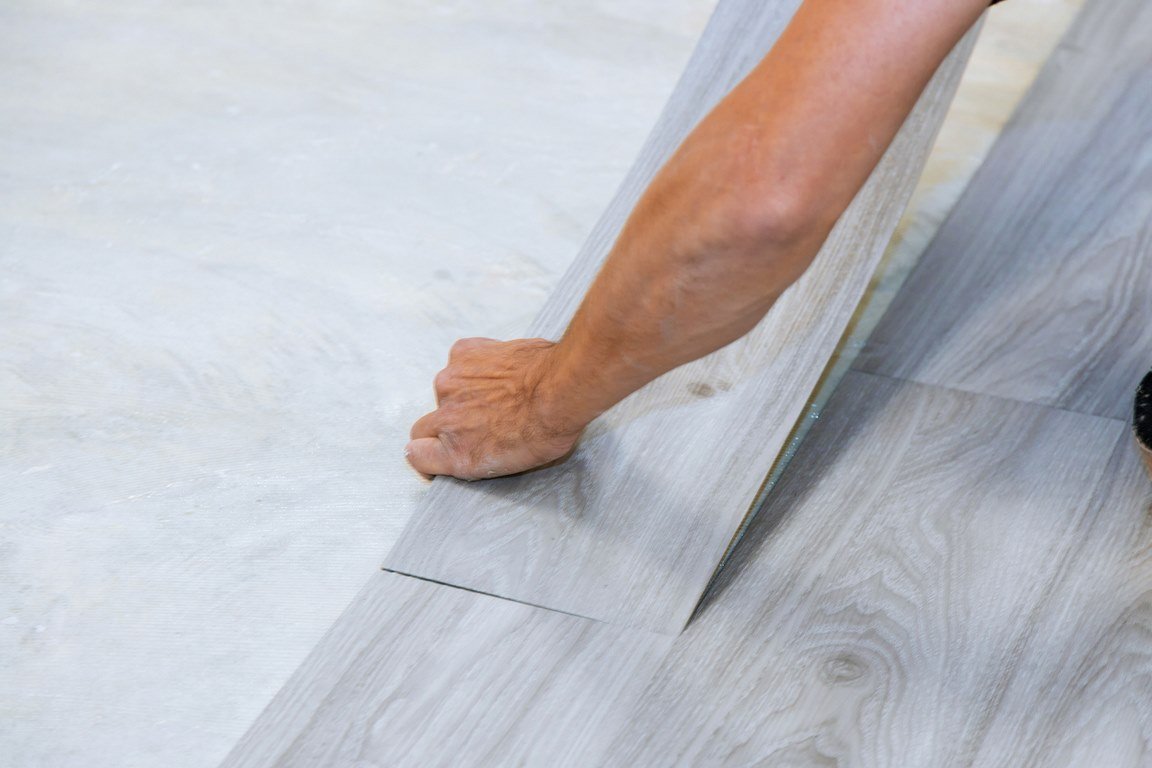
image - How to Install Underlayment

Once you are sure your floor is level, the next step is cleaning the ground to remove any debris.

Now you can lay your underlayment. This is a relatively simple process of unfolding the material across the length of your room.

You will likely have to cut the mats to size, which can be done by marking the spot where they touch the wall and cutting away the excess material.


Read Also:

  • 10 Home Flooring Ideas That Will Completely Change the Look of Your Home
  • Pointers to Consider Before Finally Buying Vinyl Flooring
  • All you need to Know About SPC Vinyl Plank Flooring
  • The Pros and Cons of Different Flooring Types

How to Install Vinyl Plank Flooring

The installation process for vinyl plank flooring will vary depending on the manufacturer and product that you are installing, but they all follow the same general process.

The first thing to keep in mind is that the long side of the plank should run along the long side of the room.

Ideally, the first length should also run along an exterior wall, as these are more likely to be straight.

Then, simply lay your first set of planks. You will have to ensure they link up and lock together correctly at their matching sides.

When you are ready to move to the next row of planks, ensure you follow any manufacturer instructions regarding minimum distances between rows, as this will help ensure a stable and sturdy flooring system.

Repeat this process throughout the entirety of the room, and use a custom-cut piece of scrap material to cover the exposed edge under the doorway.

Remember, your most accurate information will come from the manufacturer’s instructions of your specific product, so be sure to use the included instructions for maximum effect and a great finished product.

Total
5
Shares
Share 0
Tweet 0
Pin it 5
Share 0
Share 0
Previous Article
featured image - How to Become a Licensed Electrician

How to Become a Licensed Electrician

  • Perla Irish
  • September 2, 2021
View Post
Next Article
featured image - Important Benefits of Copper and Lead Roofing

Important Benefits of Copper and Lead Roofing

  • Perla Irish
  • September 2, 2021
View Post

Subscribe

Subscribe now to our newsletter

You May Also Like
Wall-mounted ductless mini split air conditioner in a modern living room
View Post

Maintenance Practices That Extend Ductless Heating and Air System Life

  • February 14, 2026
Ceiling HVAC air vents integrated into a quiet residential living room
View Post

How HVAC Systems Actually Work (and Why They Often Feel Inefficient at Home)

  • February 4, 2026
Wall-mounted home thermostat and HVAC air vent in a quiet residential hallway
View Post

Understanding Home HVAC Systems: What Actually Matters, What Doesn’t, and When to Act

  • February 4, 2026
Air conditioner integrated into a calm residential living space during daytime
View Post

Why Your Air Conditioner Is Not Blowing Cold Air (And What That Usually Means)

  • January 31, 2026
Wall-mounted air conditioner in a quiet living room during daytime
View Post

Leaving the Air Conditioner On All Day: When It Helps, When It Quietly Backfires

  • January 31, 2026
Shower water flow in a bathroom affected by hard water
View Post

How to Soften Hard Water for Showering and Bathing

  • January 19, 2026
Soft daylight showing mild hard water residue on a residential window
View Post

A Calmer Way to Deal With Hard Water Stains on Windows

  • January 2, 2026
Chrome and nickel finishes shown in real home lighting, highlighting reflective chrome and softer nickel surfaces
View Post

Chrome vs. Nickel Finishes: What Works Best in Real Homes

  • December 31, 2025
  • About
  • Privacy Policy
  • Terms of Use
  • Disclosure
  • Sitemap
  • Contact Us

Input your search keywords and press Enter.