Table of Contents Show
Small balconies often fall into one of two extremes: left completely unused, or filled with too many decorative ideas at once. Both outcomes usually stem from the same issue—treating the balcony as a display space rather than a functional extension of the home.
When space is limited, decoration works best when it supports comfort, movement, and daily use. The goal isn’t to add more, but to choose carefully.
Start by Defining What the Balcony Is For
Before thinking about décor, it helps to be honest about how the balcony will actually be used. A space meant for morning coffee needs different decisions than one intended for reading or evening downtime.
Once a primary purpose is clear, decorative choices naturally become more restrained. Anything that doesn’t support that use becomes optional rather than essential.
Limit Furniture to What You Can Use Comfortably
Overdecorating often starts with furniture that is visually appealing but impractical at a small scale. Bulky chairs, oversized tables, or multiple seating types quickly reduce usable floor space.
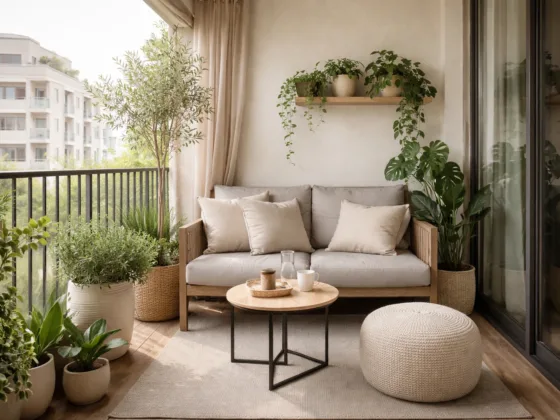
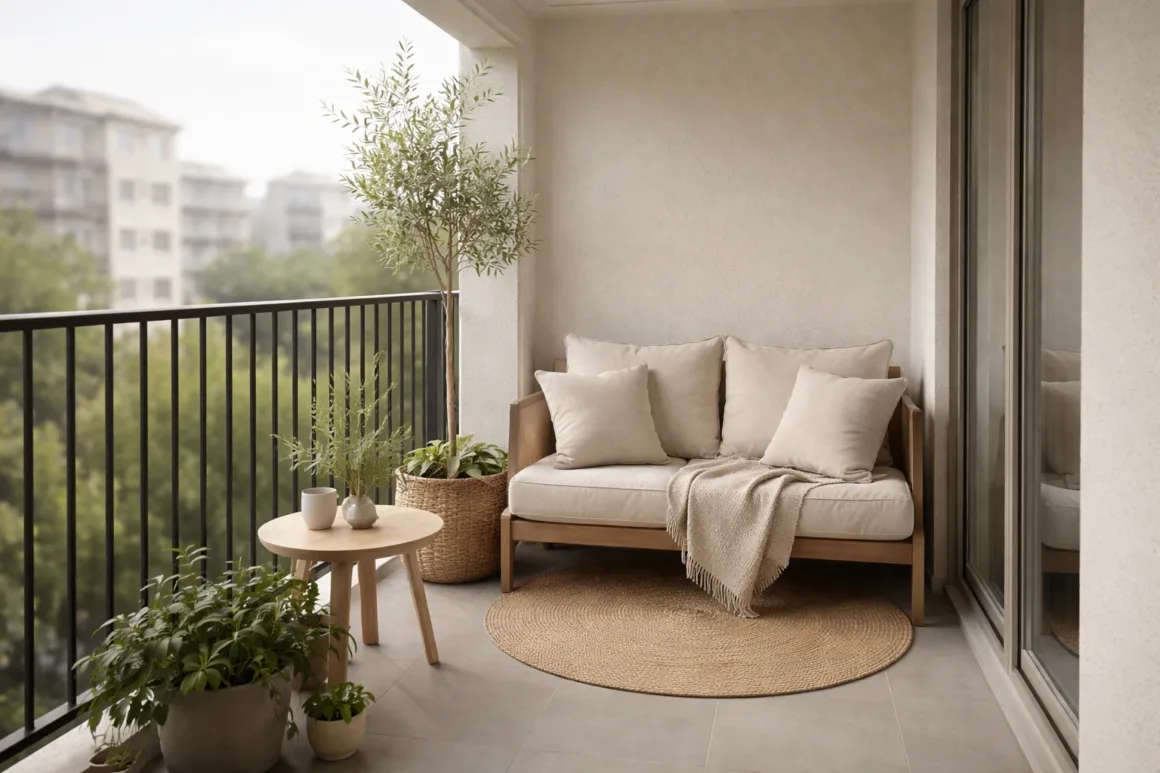
In most small balconies, one primary seating element is enough. A compact chair, a narrow bench, or a slim bistro setup usually provides comfort without visual congestion.
Use Soft Elements Sparingly, Not Everywhere
Cushions, throws, and outdoor rugs add warmth, but layering too many soft elements can make a balcony feel cluttered rather than cosy. Texture works best when it’s intentional.
Choosing one or two soft accents—rather than repeating them across every surface—helps maintain visual balance while still improving comfort.
Let Plants Frame the Space, Not Fill It
Greenery is often the first decorative instinct for balconies, but more plants don’t always mean a better result. Too many pots can restrict movement and create maintenance issues.
A smaller number of well-placed plants—especially vertical or corner-focused—tends to soften the space without overwhelming it.
Avoid Turning the Balcony Into a Storage Display
Decorative baskets, lanterns, and accent pieces can quickly blur into visual clutter when every item is visible. In small balconies, open storage often feels heavier than intended.
When storage is necessary, concealed or dual-purpose solutions help keep decorative intent clear and controlled.
Leave Some Space Unused on Purpose
One of the most effective ways to avoid overdecorating is to intentionally leave areas empty. Visual breathing room makes even modest décor choices feel deliberate rather than crowded.
An uncluttered corner or clear floor area often improves comfort more than adding another decorative element. In small outdoor spaces, restraint often creates more comfort than decoration ever could.
How This Fits Into Broader Balcony Upgrades
Decor restraint becomes easier when the balcony’s functional upgrades—such as seating, lighting, and layout—are already working well. A broader look at practical, low-effort improvements can be found in simple balcony upgrades, which focuses on usability before decoration.
Author & Editorial Review
Author: Perla Irish is a design and home improvement writer covering interior materials, everyday home decisions, safety-aware planning, and real-world performance.
Editorial Review: This article was reviewed by the DreamlandsDesign editorial team for clarity, accuracy, balanced explanations, safety awareness, real-world usability, and long-term relevance. Content is evaluated to ensure balanced explanations, clear intent, and alignment with Google Helpful Content and E-E-A-T quality standards.
Last updated: January 2026