• Home Improvement
    • DIY
    • Remodeling
    • Woodworking
    • Home Design
      • Furniture
      • Organize
      • Tips
      • Decor
        • Interior
        • Exterior
    • Design Ideas
      • Bathroom
      • Bedroom
      • Dining Room
      • Living Room
      • Kitchen
  • Gardening
    • Backyard
    • Front Yard
    • Landscaping
  • Building Staircase
  • Categories
    • Home Improvement
    • Decor
    • Gardening
    • Woodworking
    • Lifestyle
    • Green Living
    • Real Estate
Dream Lands Design
  • Home Improvement
    • DIY
    • Remodeling
    • Woodworking
    • Home Design
      • Furniture
      • Organize
      • Tips
      • Decor
        • Interior
        • Exterior
    • Design Ideas
      • Bathroom
      • Bedroom
      • Dining Room
      • Living Room
      • Kitchen
  • Gardening
    • Backyard
    • Front Yard
    • Landscaping
  • Building Staircase
  • Categories
    • Home Improvement
    • Decor
    • Gardening
    • Woodworking
    • Lifestyle
    • Green Living
    • Real Estate
featured image - How to Prevent Cracks in Brick Walls?

How to Prevent Cracks in Brick Walls?

  • Perla Irish
  • September 15, 2021
Total
2
Shares
0
0
2
0
0

Only stringent building materials and techniques that do not compromise the quality and durability of brickwork can prevent cracks.

Cracks in brick masonry are most commonly caused by building not allowing these brick masonry units to move freely as they should.

Temperature and other forces cause the brick masonry to move, which helps to prevent cracks. As a result, the majority of the steps outlined below are recommendations from brick contractors for allowing the desired movement in brick masonry.
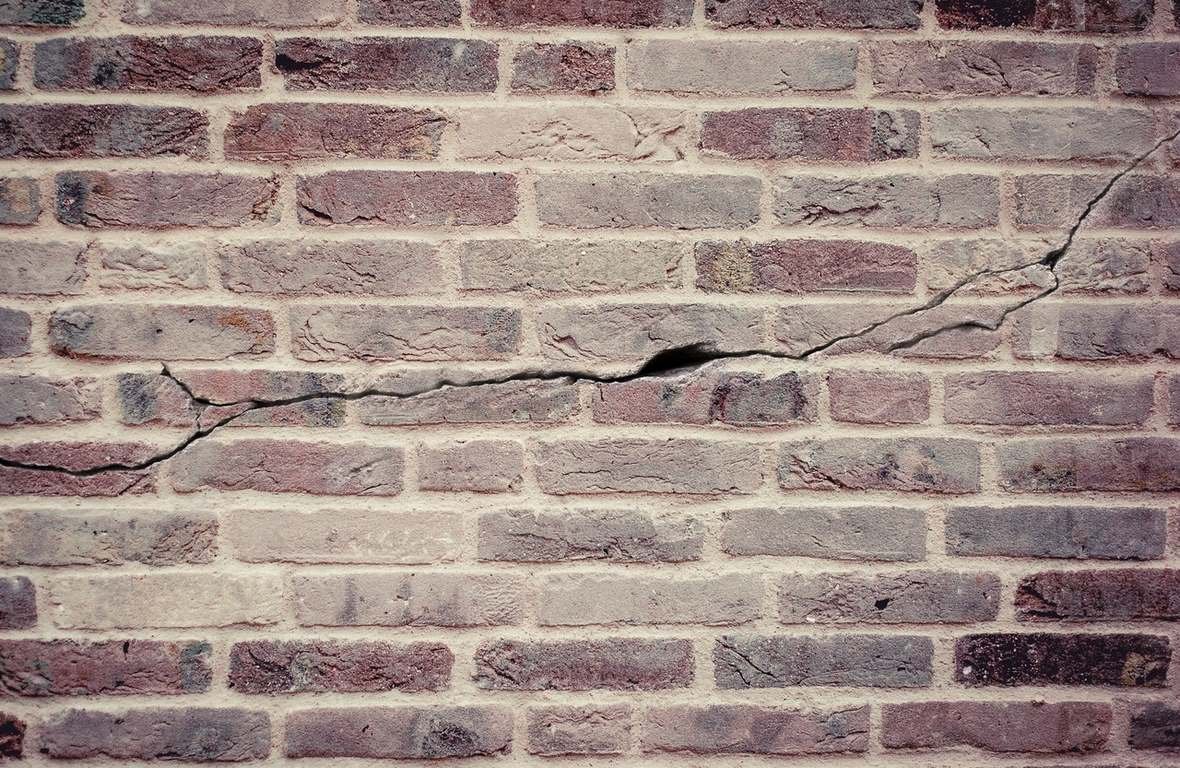
image - How to Prevent Cracks in Brick Walls?
How to Prevent Cracks in Brick Walls?

How to Prevent Cracks in Brick Walls?

  • Fill the expansion joint with a highly compressible material, preferably molded foam or neoprene pad, leaving a continuous unobstructed opening through the brick wythe.

When you use expansion joints in your brickwork, you’ll be able to divide your bricks into little pieces, each of which will act independently of the others. To weatherproof the junction, a sealant and backer rod is utilized in the front.

Changes in moisture, temperature, creep, and/or settlement, whether horizontally or vertically, will cause brick cracking, which will be reduced by the expansion joints.

  • To avoid the creation of cracks, masonry bricks/blocks should be immersed in a mortar that is substantially weaker than the mix used to make blocks.

A dense (strong) mortar tends to make a wall overly rigid, reducing the effects of tiny movements caused by moisture and temperature fluctuations, resulting in brick/block breaking.

  • Examine the walls and foundation. Check the foundation and external walls after a severe weather storm or a seismic event.

Examine the beams and joists in the crawl space, attic, and basement to determine whether they are load-bearing.

To know which indicators of deterioration are prevalent, keep in mind the material you’re working with, whether it’s solid masonry, non-structural brick, or stone veneer.


Read Also:

  • Understanding How Retaining Walls Actually Work in Practice
  • DIY Wall Decor, How to Decorate Walls With Wallcovering
  • Wall Improvement: What To Put On All Those Walls?
  • All That You Want to Know About Retaining Walls
  • How to Damp Proof Walls

  • Ensure that fixes and services do not obstruct the movement of slip planes’ or joints’ performance.

Any fittings and fixings should not be tied across the joints, and finishes should be broken at the slip and joint planes.

External walls with openings may require movement joints at more regular intervals, or the masonry above and below the opening may need to be reinforced to prevent movement.

  • In constructions that support the brick Wythe on shelf angles, provide horizontal expansion joints under each shelf angle.

“Horizontal expansion joints are often required if the brick Wythe is sustained on a shelf angle attached to the frame or utilized as infill within the frame,” according to BIA Technical Note 18A.

Placing horizontal expansion joints beneath shelf angles allows for vertical expansion of the brickwork below as well as displacement of the shelf angle and the structure it needs to attach to.

Conclusion

Problems with foundations almost inevitably worsen over time. The longer you wait to have it repaired, the more likely it will extend to other portions of your home’s foundation.

Taking the time to address your underlying issues early on will save you a lot of time and money in the long run. Brickwork contractors can give you peace of mind or discover how they might solve your situation.

They customize all services to match both your needs and your budget. They can certainly assist you if you have possible foundation difficulties, such as cracks in your brick walls.


Total
2
Shares
Share 0
Tweet 0
Pin it 2
Share 0
Share 0
Previous Article
featured image - What Crafts Do People Like to Do in Recent Times

What Crafts Do People Like to Do in Recent Times?

  • Perla Irish
  • September 15, 2021
View Post
Next Article
featured image - How Safe are Tiny Houses Really?

How Safe are Tiny Houses Really?

  • Perla Irish
  • September 15, 2021
View Post

Subscribe

Subscribe now to our newsletter

You May Also Like
Landscaping measuring tape resting on crushed granite aggregate spread over a prepped garden path base
View Post

How to Estimate Gravel and Aggregate for Home Landscaping Projects Without Overordering

  • September 14, 2026
A clean pickup truck bed coated with a textured black spray-in bed liner filled with contractor tools and lumber
View Post

Why Spray-In Bed Liners Make Sense for Hard-Working Pickup Trucks

  • September 11, 2026
Close-up of heavy-duty industrial lift components and steel guide rails inside a commercial elevator hoistway
View Post

Why Quality Lift Components Matter for Safety, Reliability and Performance

  • September 3, 2026
An organized modern workshop with a high ceiling unit heater mounted near the ceiling
View Post

How to Properly Size Unit Heaters for Garages, Workshops & Commercial Spaces

  • August 31, 2026
A clear glass window sill with a potted eucalyptus plant and a view of a sunlit backyard garden
View Post

Practical Solutions for the Most Annoying Window Cleaning Problems

  • August 19, 2026
Classic double-brick older Ontario home showing winter energy efficiency and cozy indoor lighting
View Post

Improving Home Comfort and Energy Efficiency in Older Ontario Homes: A Technical Retrofit Guide

  • August 14, 2026
Uneven concrete driveway with a sunken slab outside a modern suburban home
View Post

Uneven Concrete: Why It Happens, Why It Matters, and What Leveling and Lifting Can Do About It

  • August 4, 2026
Employees preparing a commercial office move by packing workstations, labeling equipment, and organizing IT infrastructure before relocation
View Post

What Every Business Should Know Before Planning a Commercial Move

  • August 3, 2026
  • About
  • Privacy Policy
  • Terms of Use
  • Disclosure
  • Sitemap
  • Contact Us

Input your search keywords and press Enter.