Table of Contents Show
Most home maintenance tasks don’t require a workshop full of equipment. In reality, everyday repairs and adjustments are usually handled with a small, reliable set of tools — provided they’re chosen with purpose, not impulse.
This guide looks at the essential components of a basic home tool set from a practical, real-world perspective. Rather than listing tools as “must-buys,” it focuses on what each tool is commonly used for, where its limits are, and why thoughtful selection matters for everyday household safety.
Scope note: This article covers tools for routine household maintenance and light DIY only. It does not address professional trade work, specialist construction tasks, or advanced electrical or structural repairs.
A Practical Way to Think About Home Tools
A basic home tool set should support common tasks such as tightening fittings, making small adjustments, assembling furniture, or carrying out light repairs. More tools do not automatically make a home safer or more capable — in fact, unfamiliar or rarely used tools can introduce new risks.
The goal is coverage, not completeness: having the right tool available when a simple job arises, without encouraging overconfidence or unnecessary complexity.
Core Tools Most Homes Benefit From
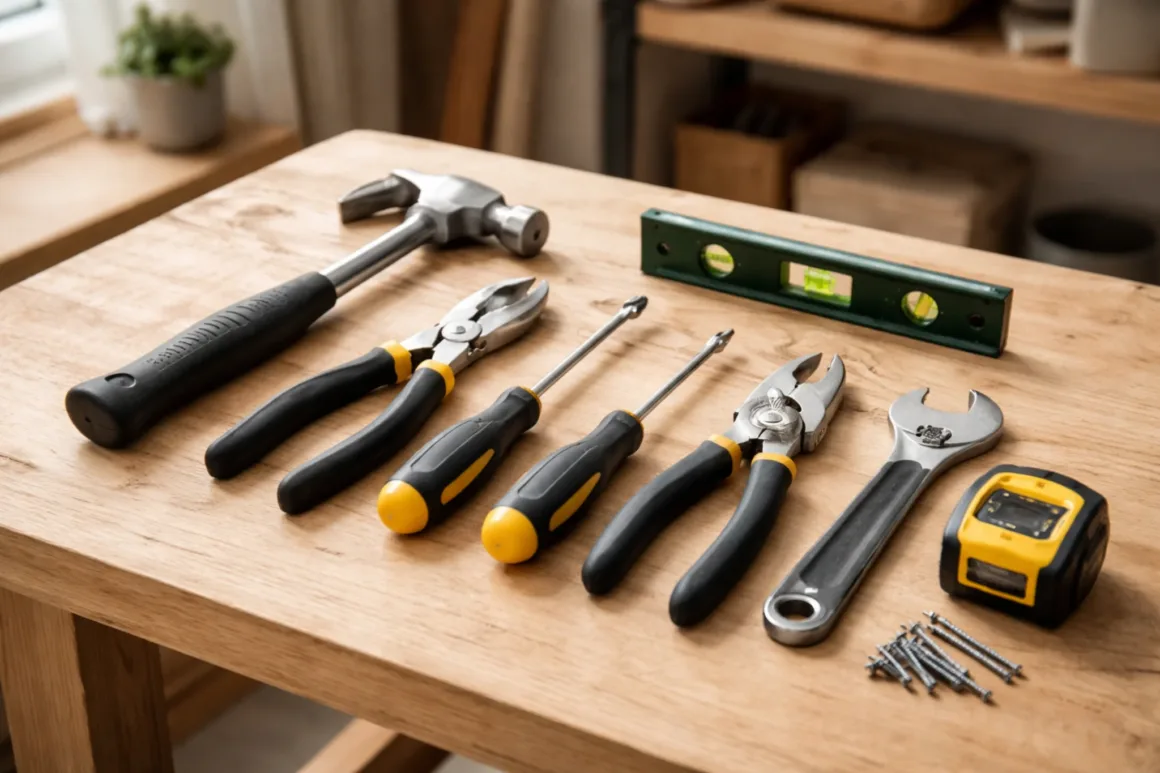
While every household is different, the following tools tend to form a reliable foundation for everyday maintenance when used appropriately.
Screwdrivers
A small selection of flathead and Phillips screwdrivers covers a wide range of household tasks, from tightening loose handles to assembling flat-pack furniture. Multi-bit drivers can reduce clutter, but individual drivers often offer better control.
Using the correct size and type matters: mismatched drivers increase the risk of stripped screws and slipping, which can lead to minor injuries.
Hammer
A lightweight claw hammer is typically sufficient for basic tasks such as hanging pictures or removing small nails. Heavier framing hammers are rarely necessary for household use and can be harder to control.
Grip comfort and balance are more important than force for most home applications.
Adjustable Wrench
An adjustable wrench provides flexibility for dealing with different bolt and nut sizes, particularly in plumbing or appliance adjustments. It should be adjusted snugly to avoid slipping under pressure.
For frequent use, fixed-size spanners can offer better grip, but an adjustable wrench remains practical for general home kits.
Tape Measure
Accurate measuring prevents many common DIY mistakes, from misaligned shelves to poorly fitting furniture. A compact tape measure that locks securely is usually sufficient.
Clear markings and easy retraction improve usability and reduce frustration during quick tasks.
Utility Knife
Utility knives are useful for opening packaging, trimming materials, or light cutting tasks. Retractable blades and proper storage are essential to reduce accidental cuts.
Dull blades increase risk by requiring more force; replacing blades regularly is a simple safety habit.
Pliers
A basic set of combination pliers supports gripping, bending, and light cutting. They are particularly useful where fingers alone lack leverage.
As with other hand tools, control and fit matter more than strength.
Level
A small spirit level helps ensure shelves, frames, and fixtures are installed evenly. This is especially helpful for tasks that appear “almost right” by eye but feel off once installed.
Tools That Deserve Extra Caution
Some common household tools require more consideration because misuse can increase risk, even during simple jobs.
- Cutting tools, which require controlled handling and storage
- Striking tools, where misalignment can cause glancing blows
- Tools used at height, which introduce balance and stability concerns
For tasks that involve reaching overhead or working above floor level, reviewing general ladder safety guidance for everyday DIY helps clarify when additional precautions — or alternative approaches — are more appropriate.
What a Basic Tool Set Is Not
A basic home tool set is not a substitute for professional equipment, training, or experience. Tasks involving electrical systems, structural changes, or complex installations often require qualified professionals.
Recognising these boundaries is as important as owning the tools themselves.
Final Thoughts
A well-chosen basic tool set supports everyday home care without encouraging unnecessary risk. Focusing on versatile tools, proper handling, and clear boundaries helps homeowners address small issues confidently while knowing when to step back.
In most cases, safety comes not from having more tools, but from using a few familiar ones thoughtfully and within their intended limits.
Disclosure: This article may include contextual references to products, services, or providers for general informational purposes. All content is written independently and reflects editorial judgment focused on clarity, safety, and real-world relevance.
Author & Editorial Review
- Author: Perla Irish — Design and home improvement writer covering interior materials, everyday home decisions, safety-aware planning, and real-world performance.
- Editorial Review: This article was reviewed by the DreamlandsDesign editorial team focusing on clarity, accuracy, balanced explanations, safety awareness, real-world usability, and long-term relevance.
Last updated: January 2026