Table of Contents Show
Japanese Home Improvement — Using themes is a great way to start home improvement on your property! After all, it can affect property value.
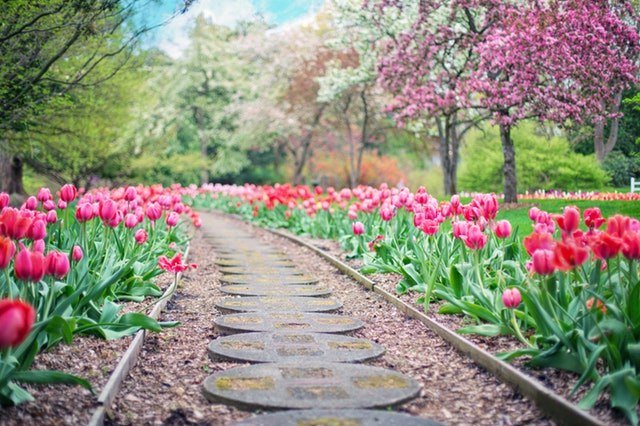
Go Japanese for Home Improvement!
Since the cherry blossoms have officially bloomed in Japan, the theme is Japan. If you had ever witnessed a Japanese style garden, you would remember being in awe of its sheer beauty. And, you can have it in your back garden! However, it is recommended you start with a blank slate as you may need to do some landscaping.
So, read on further for more ideas.
Heavy Landscaping
When it comes to your garden, it can be difficult in knowing where to start. Landscaping is a heavy feature for your Japanese garden. After all, to obtain a Japanese style garden you have to arrange everything carefully from the pathways to the placement of Japanese ornaments. This involves lifting up heavy rocks to make way for pathways and even digging to make a pond.
Winding Stone Paths
Although there is a structure in the garden, you can be playful with your surroundings. You can do this by adding stone paths, which is a necessity in Japanese gardens. However, as Japanese gardens try to mimic a life of an individual, the stone paths tend to be winding and never straightforward. You can highlight the points of interest in your gardens such as the bench for rest or the optimal view of the pond.
For stone paths ideas, consider stepping stones in grassy territories or on top of concrete paths. For paths that cut through your pond, you can also consider flat riverbed stones. Focus on using as granite and slate, as it can add a more natural look to the garden.
Read Also:
- How a Trained Plasterer Will Help to Improve Exterior as Well as the Interior of Your Home?
- 4 Home Improvement Projects You Need to Complete Before Winter
- Home Improvement Ideas to Increase the Value of Your House
- 8 Simple Ways to Improve Your Home’s Curb Appeal
- Important Reasons to Finally Renovate your House
Vignettes
Often, Japanese-style gardens evoke a sense of mystery, because they adopt the view of “miegakure“, which is translated to hide and reveal.
This can amplify the sensory experience of the garden, and which is normally adopted through winding stone paths and bamboo fences.
So, you can keep specific parts of your garden concealed until the visitor can experience it at its optimum viewpoint.
Japanese Style Plants
You do not need an abundance of plants to create a Japanese garden as less is more.
Adding trees such as cherry blossoms at the back, and a pruned maple tree would add more authenticity to your garden. This way you can a variety of shades in your garden throughout different times of the year.
For instance, you can have pink blossoms blooming in the spring, and brightly colored maple leaves in the Winter.
You can even add bonsai trees around your garden as a point of interest, and if you need help in growing a bonsai tree you can find various tree kits for instructions!
There is also a concentration of foliage instead of flowers, which means you need to add plants such as Siebold’s wood fern which can last up until winter, and other ferns that have other shades of green.
If you still want flowers, you can select flowers native to Asia such as lilies and Japanese woodland primrose for that genuine Japanese look.
The Presence of Water
Water has to be present in all Japanese gardens. This is because Japanese gardens are founded upon philosophical ideas of nature, and are deeply connected to Japanese spirits.
As a result, water is perceived as natural beauty, thus, emulated in all Japanese gardens.
It can be tricky to introduce water to your garden. If you prepare in advance, it can turn out beautifully. If you have a small space, you can invest in a stone washbasin and have that trickling of water in the background as a result.
Otherwise, if you do have a reasonable amount of space, you can create a landscape for a stream or pond. However, carefully select where your stream to flow, since the Japanese believe water should flow from east to west due to spiritual reasons.
Either way, you have various options on how to introduce the sound of water in the environment!
Ornaments
You can integrate Japanese-style garden with small ornaments, as it is meant to look as natural as possible. Let nature do the talking, and add ornaments sparingly such as stone lanterns for that lovely glow in the nighttime.
So, hopefully, this has given you enough inspiration for your Japanese-style garden! You can add furniture made from natural materials such as rattan furniture to stone benches.
This way, it feels like you are in Japan as you sip your tea from your chair. Also, you can relax knowing that your property value has increased after you spent some TLC on your garden!
Author Bio
Alexa is budding freelance writer. She is a gardening and home improvement enthusiast, and loves to drink tea on her cane furniture whilst reading in her past time.