• Home Improvement
    • DIY
    • Remodeling
    • Woodworking
    • Home Design
      • Furniture
      • Organize
      • Tips
      • Decor
        • Interior
        • Exterior
    • Design Ideas
      • Bathroom
      • Bedroom
      • Dining Room
      • Living Room
      • Kitchen
  • Gardening
    • Backyard
    • Front Yard
    • Landscaping
  • Building Staircase
  • Categories
    • Home Improvement
    • Decor
    • Gardening
    • Woodworking
    • Lifestyle
    • Green Living
    • Real Estate
Dream Lands Design
  • Home Improvement
    • DIY
    • Remodeling
    • Woodworking
    • Home Design
      • Furniture
      • Organize
      • Tips
      • Decor
        • Interior
        • Exterior
    • Design Ideas
      • Bathroom
      • Bedroom
      • Dining Room
      • Living Room
      • Kitchen
  • Gardening
    • Backyard
    • Front Yard
    • Landscaping
  • Building Staircase
  • Categories
    • Home Improvement
    • Decor
    • Gardening
    • Woodworking
    • Lifestyle
    • Green Living
    • Real Estate

Nice Home Designs Feature Sustainability and are Tailored to Owner’s Lifestyle

  • Perla Irish
  • July 31, 2018
Total
3
Shares
0
0
3
0
0

It’s All Subjective When it Comes to Your Home

Nice home designs are easy to find, if we think of “nice” as being defined as attractive or luxurious, for instance. There’s a new notion of what a “nice” home design might be, however; a trend toward sustainability spearheaded by visionary architect Sarah Susanka.

Susanka developed the concept of the “Not So Big House” – a whole way of thinking about building that has revolutionized the custom home design world.

Beginning in the 1990s, in neighborhoods throughout North America and elsewhere, “monster homes” began to appear. You know monster homes! they’re the large houses that take up entire lots, crowd the homes on either side of them, and are costly to heat and maintain.

Some companies are still building these McMansions, despite their huge environmental footprint. It appears a certain segment of the population is still convinced that “bigger is better.”

Nice Home Designs Feature Sustainability and are Tailored to Owner’s Lifestyle
Nice Home Designs

Discerning homeowners have instead embraced Susanka’s Not So Big House principles, having realized the inherent sense and value of using resources efficiently. The Not So Big House theory centers on the idea that by carefully considering how one lives and uses space, one can develop a unique and smart home design. Sarah Susanka’s take is that we should build “better, not bigger.”Nice Home Designs By limiting space to areas that will actually be used, by allowing for more flexible living spaces as opposed to little-used formal rooms, and by using recycled and Eco-friendly materials, the Not So Big House is the choice for home builders concerned about the planet, and their pocketbooks.

How does one go about designing a Not So Big House? Here’s where a custom design-build company can help. In Toronto, there are a few premium companies that espouse the Not So Big philosophy. With the help of an architect who’s familiar with the concept, a homeowner can develop a home design that’s uniquely suited to his or her family.


Read Also:

  • Who You Should Buy a House and Grow Old With Based on Your Zodiac Sign
  • How to Set up (And Fill) Your Home Display Case
  • New Home, New You: Design Ideas Post-move

Keep it Simple

A first step can be to start a scrapbook about houses and rooms. Where do you feel most comfortable? What is it about your favorite place that evokes a strong response? Conversely, what places make you uncomfortable? Can you pinpoint why? Take photos or make diagrams of spaces. Analyze your own feelings about architecture.
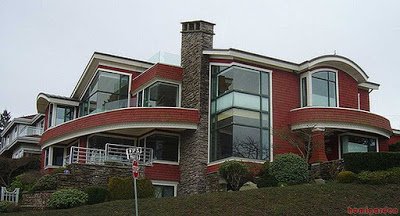
Westcoast Contemporary House

Next, start to pay attention to how you use space in your present home. Which rooms get the most use, and why? Are there rooms that are used one way in the morning, and another way in the evening? Which places are busy and tend toward noise or mess; which spaces are quiet? How much storage do you need, and where? What activities does your family do, and where do they do them?

Once you’ve had a chance to think about what will work for you, sitting down with an architect to talk about plans can be an incredibly creative experience.

By building smartly on a human scale, you will, in the end, possess a home with “maximum livability.” Such a house will be less expensive to heat, more comfortable, and more suitable in every way to your needs. (And an added bonus of building better, not bigger is that it maximizes the green space available on your property.)

Unique, smart, and sustainable – now that’s a nice home design!

Total
3
Shares
Share 0
Tweet 0
Pin it 3
Share 0
Share 0
Previous Article
Featured of Should You Include Access Panels for Your Construction Project

Should You Include Access Panels for Your Construction Project

  • Perla Irish
  • July 30, 2018
View Post
Next Article
Featured of How to Make a Romantic Bedroom

Behind the Sheets: 5 Ways That Will Make You Have the Most Romantic Bedroom

  • Perla Irish
  • July 31, 2018
View Post

Subscribe

Subscribe now to our newsletter

You May Also Like
Wall-mounted ductless mini split air conditioner in a modern living room
View Post

Maintenance Practices That Extend Ductless Heating and Air System Life

  • February 14, 2026
Layered sheer curtains and roman blinds regulating daylight in a minimalist interior space
View Post

Window Furnishings and Interior Balance: Managing Light, Privacy, and Proportion

  • February 12, 2026
Neutral living room interior showing how wall colour interacts with natural window light and warm wooden flooring
View Post

Colour Psychology in Interior Design: How Paint & Light Shape Space

  • February 11, 2026
Living room with rattan furniture and breathable fabrics in a humid climate
View Post

Best Furniture and Fabric Materials for Humid Climates (and What to Avoid)

  • February 7, 2026
Office layout using fabric partitions, soft materials, and plants to help reduce noise in shared workspaces
View Post

Office Acoustics: 5 Practical Ways to Reduce Noise and Support Focus

  • February 6, 2026
Ceiling HVAC air vents integrated into a quiet residential living room
View Post

How HVAC Systems Actually Work (and Why They Often Feel Inefficient at Home)

  • February 4, 2026
Wall-mounted home thermostat and HVAC air vent in a quiet residential hallway
View Post

Understanding Home HVAC Systems: What Actually Matters, What Doesn’t, and When to Act

  • February 4, 2026
Air conditioner integrated into a calm residential living space during daytime
View Post

Why Your Air Conditioner Is Not Blowing Cold Air (And What That Usually Means)

  • January 31, 2026

Leave a Reply Cancel reply

Your email address will not be published. Required fields are marked *

This site uses Akismet to reduce spam. Learn how your comment data is processed.

  • About
  • Privacy Policy
  • Terms of Use
  • Disclosure
  • Sitemap
  • Contact Us

Input your search keywords and press Enter.