Table of Contents Show
Quick answer: Long-term wrapping paper storage works best when rolls are kept upright, protected from moisture and pressure, and grouped by size or use. A simple system prevents creasing, tearing, and unnecessary waste over time.
Wrapping paper often gets stored once a year and forgotten until the next holiday season. Over time, that lack of structure leads to bent rolls, faded prints, and supplies that quietly go to waste. With a few intentional storage habits, however, wrapping paper can stay usable and organized for years.
This guide explains how to organize wrapping paper supplies for long-term use, focusing on practical storage methods that protect quality, save space, and make seasonal setup faster and less stressful.
Why proper wrapping paper storage matters
Wrapping paper is more delicate than it looks. Exposure to moisture, pressure, and friction slowly degrades the surface, even when rolls appear unused. Over time, poor storage leads to creases, crushed edges, and wasted material.
Good organization does more than keep things tidy — it protects paper quality, reduces unnecessary repurchasing, and makes seasonal planning feel more intentional.
Good organization starts long before items are put away — it begins with understanding how wrapping paper is selected and used in the first place.
Before thinking about containers or shelving, it helps to understand how wrapping paper fits into a broader system of selection and planning. A useful starting point is this overview of bulk wrapping paper, which explains material types, roll formats, and typical use cases.
Common storage mistakes that lead to waste
Most damage happens gradually and unintentionally. These are the most common issues that shorten the usable life of wrapping paper:
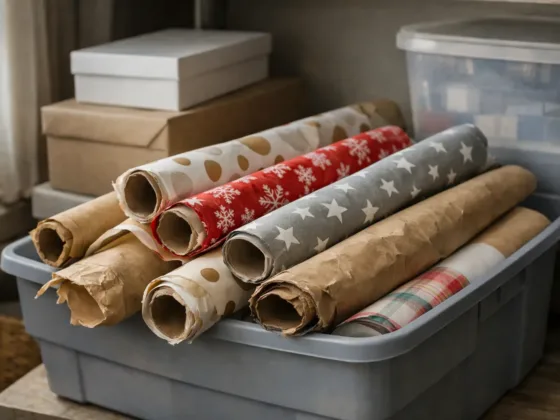
- Storing rolls horizontally under weight, which causes flattening and permanent creases.
- Keeping paper in damp or unventilated spaces, such as basements or garages without airflow.
- Mixing loose sheets with rolls, leading to tearing or uneven edges.
- Overbuying without a plan, which increases clutter and forgotten stock.
In many cases, wrapping paper waste isn’t caused by quality issues, but by small storage habits that compound over time. In fact, wrapping paper often goes unused simply because it becomes hard to access or assess later.
This pattern is explored in more detail in why bulk wrapping paper often goes to waste, which looks at how storage, purchasing habits, and organization choices quietly compound over time.
Choose a storage setup that protects shape and surface

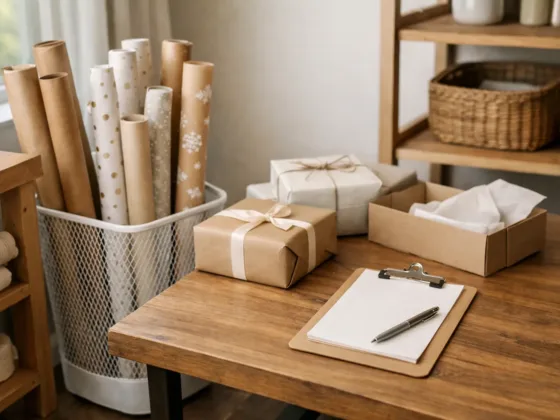
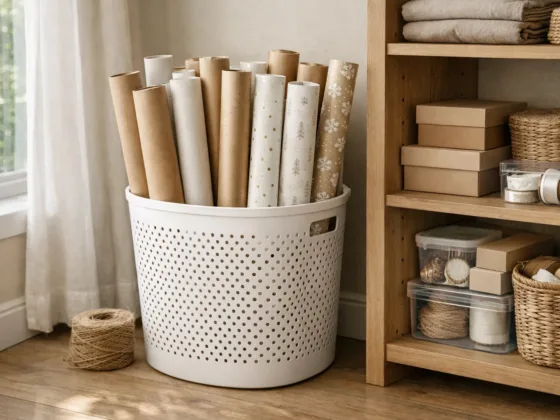
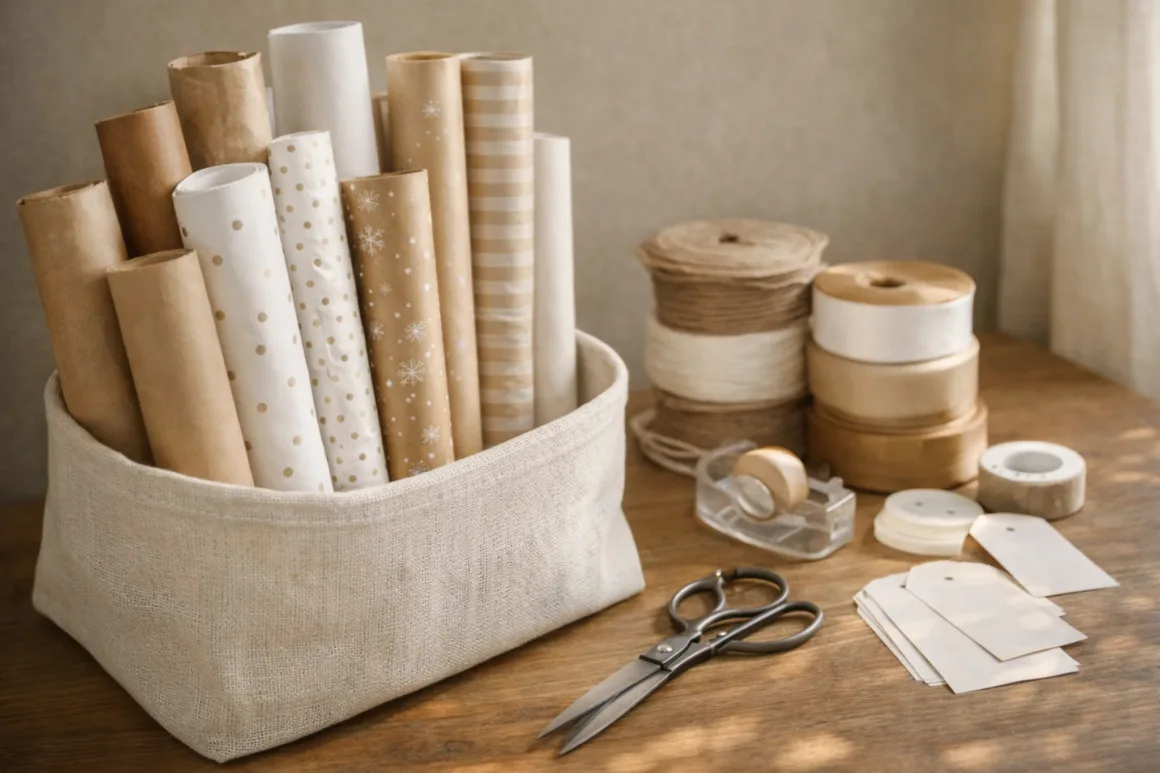
The best storage systems focus on three priorities: keeping rolls upright, minimizing pressure, and allowing airflow. You do not need specialized furniture — just a setup that prevents bending and moisture buildup.
- Upright bins or tall containers help rolls keep their natural shape.
- Breathable storage materials reduce humidity buildup.
- Dividers or light grouping prevent rolls from rubbing against each other.
Clear containers can be helpful, but opacity is not a problem as long as labeling or grouping makes contents easy to identify. The goal is access without rummaging.
Group supplies by use, not just by type
One of the most effective long-term organization strategies is grouping wrapping supplies by how they’re actually used. Instead of separating only by material, consider organizing by purpose or season.
- Holiday-specific wraps stored together
- Neutral or everyday paper grouped separately
- Ribbons, tape, and labels stored near matching rolls
- Oversized or specialty rolls placed in their own section
This approach reduces setup time and helps prevent unnecessary repurchasing simply because items are out of sight.
Plan storage alongside purchasing decisions
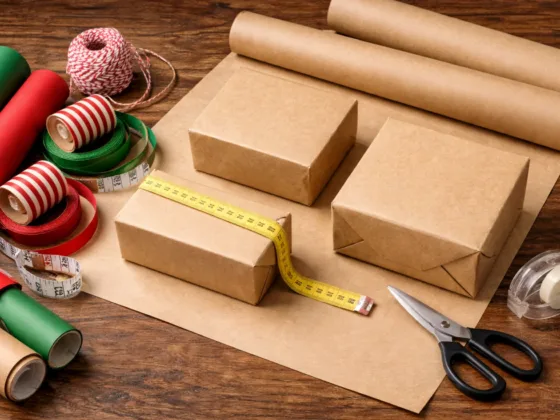
Organization works best when it starts before buying, not after. Knowing roughly how much paper you actually use helps prevent overflow and keeps storage manageable.
If you want to estimate realistic quantities before purchasing, this guide on how much wrapping paper you really need breaks down sizing logic and planning considerations in a practical way.
When quantity planning and storage strategy support each other, wrapping supplies stay usable longer and take up less space overall.
Simple habits that preserve wrapping paper over time
Long-term organization doesn’t require complex systems. Small habits applied consistently make the biggest difference.
- Return rolls to storage immediately after use.
- Avoid leaning heavy items against stored paper.
- Keep storage areas dry and well ventilated.
- Do a quick review once or twice a year to remove damaged items.
These small steps help ensure that what you store today is still usable next season.
Final thoughts
Proper organization plays a quiet but important role in reducing waste and making seasonal preparation easier. When wrapping paper is stored intentionally — protected, visible, and grouped with purpose — it stays usable longer and becomes easier to manage year after year.
Thoughtful storage works best when paired with mindful planning and realistic purchasing habits, creating a system that supports both convenience and sustainability over time.
Author: Perla Irish — Home & lifestyle writer covering practical organization systems, seasonal planning, and sustainable home habits.
This article is written to support long-term household organization and references widely accepted best practices around storage, material care, and responsible use. It complements related guides within the DreamlandsDesign editorial series.