Table of Contents Show
Poorly installed water heaters can leak gas, backdraft carbon monoxide, scald family members, and flood your home—risks that a licensed professional installation is specifically designed to prevent. Professional water heater installation isn’t just “plug-and-play.” It involves gas or electricity, combustion air, venting slope, water pressure, scald protection, and code compliance all working together. Done right, you get safer operation, better efficiency, and a longer-lasting system.
Put simply, professional water heater installation prevents the most common hazards while optimizing efficiency and warranty coverage.
Key takeaways
- Safety first: Correct venting/combustion air, T&P relief, seismic strapping, drain pan & leak alarms prevent fires, CO exposure, and water damage.
- Codes & warranty: Permits and inspections protect you; many manufacturer warranties require professional installation.
- Efficiency that pays back: Proper sizing plus high-efficiency options (see Energy Star ratings) can meaningfully cut water-heating costs.
Why Professional Water Heater Installation by a Licensed Pro Matters
With professional water heater installation, a licensed tech verifies vent pitch, combustion air, T&P discharge, expansion control, and safe gas/electrical connections.
- Handled hazards: Licensed installers work safely with gas/electrical, set combustion air, and ensure venting pitches upward to prevent backdrafting. They verify leak-free gas, water, and condensate connections; properly locate shutoffs; and bond/ground as required.
- Right size, right spec: Correct capacity, first-hour rating, recovery rate, and Uniform Energy Factor (UEF) depend on your family’s draw pattern and space. A wrong-sized or poorly sited unit wastes energy and shortens lifespan.
- Efficiency choices that save: If your home suits it, a heat pump water heater (HPWH) can deliver major long-term savings vs. a standard electric unit.
Illustrative reference only (not an endorsement): to see how a typical contractor describes scope of work, review Water heater installation at Advanced Home Services. Always compare multiple licensed contractors and verify permits, warranties, and reviews in your area.
- Carbon monoxide exposure: Poor venting/backdrafting can be deadly. Learn the basics of carbon monoxide poisoning and always follow manufacturer instructions and local codes.
- Scalds & wasted energy: Many homes need only 120°F (49°C) to balance comfort, energy use, and safety.
- Pressure/expansion errors: Skipping an expansion tank on closed systems or mis-routing the T&P discharge line can cause damage (and code violations).
- Voided warranties: Many manufacturers require licensed installation to keep coverage intact.
Code Compliance & Permits for Professional Water Heater Installation
- Venting & combustion air: Sized and pitched correctly with approved materials and terminations.
- T&P relief valve: Full-size discharge to a safe, visible location (never capped or reduced).
- Expansion control: Expansion tank (or approved alternative) on closed systems; secure support.
- Seismic strapping: Where required; plus drain pan and leak sensor/shutoff in attics/finished areas.
- Proper utilities: Correct electrical/gas supply, bonding/grounding, and accessible shutoffs.
Local permitting snapshot: See examples of permits/rebates and common code items in our regional guide: Charlotte Water Heater Replacement: Costs, Permits & Rebates.
Efficiency, Performance & Longevity from Professional Installation
- Right type for your home: Gas storage, high-efficiency gas, tankless, or hybrid/HPWH—pros match type to usage, space, venting options, and climate to maximize UEF performance.
- Smart commissioning: Correct thermostat setting (often 120°F), recirculation timers, mixing valves for anti-scald, and anode/condensate checks protect your tank and fixtures.
- Fewer callbacks: Proper support/strapping and code-correct discharges prevent hidden stresses that shorten lifespan.
- Compare options using trusted labels: Use ENERGY STAR® heat pump water heaters to spot top-tier efficiency.
What a professional installation typically includes
During professional water heater installation, these steps are performed to code and documented for inspection and warranty.
- Site assessment & sizing: Demand profile, first-hour rating, UEF, vent route, and makeup air.
- Permit & code compliance: Strapping/pan/sensors, electrical/gas, condensate, T&P discharge.
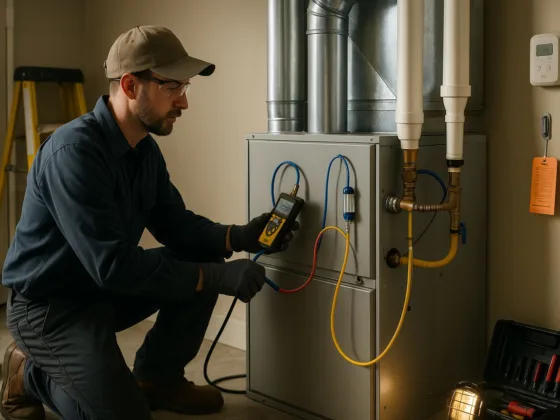
- Startup & safety checks: Combustion/CO checks for gas; leak test; temperature verification at fixtures (~120°F).
- Homeowner handoff: Maintenance schedule, warranty registration, and emergency shut-off instructions.
Professional Water Heater Installation: Mini Checklist
- Permit pulled and inspection scheduled
- Venting pitched upward & terminated per spec (gas)
- T&P discharge piped full-size to a safe, visible location
- Expansion tank on closed systems; securely supported
- Seismic straps/pan/leak alarm where required
- Set temperature to ~120°F and verify at a tap
- Warranty registered; maintenance plan scheduled
Visual guide: correct venting, inspection checklist & video
These quick visuals reinforce safe, code-aligned installs and what inspectors typically verify.


Mini case study: DIY install that backdrafted — fixed in one pro visit
(Composite of reader submissions and installer reports.) A Charlotte homeowner replaced a failing gas water heater on a weekend without a permit. Within days, the CO alarm chirped intermittently, hot water was inconsistent, and a faint soot streak appeared above the draft hood.
What an inspector-ready pro found: a single-wall vent with a slight downward slope that caused backdrafting, a T&P discharge reduced and routed into the drain pan, no expansion tank on a closed system (the PRV on the main line was holding pressure), and the thermostat set to 140°F with no mixing valve.
- Corrections: Pulled the permit; installed listed venting with continuous upward pitch to the exterior; added a properly supported expansion tank; re-piped the T&P discharge full-size to a safe, visible termination; set the thermostat to 120°F; and added a drain pan with a leak sensor.
- Result: The installation passed inspection, the CO alarm stopped chirping, hot-water delivery stabilized, and the homeowner now has a clear maintenance schedule and a valid manufacturer warranty.
In short: hiring a licensed professional water heater installation delivers a code-compliant install with safe venting and combustion air, correct T&P discharge and expansion control, and right-sized, efficient equipment. That means fewer hazards, lower operating costs (especially with a 120°F setpoint or HPWH where suitable), longer system life, and a clear maintenance plan after commissioning—everything you need for safe, efficient hot water.
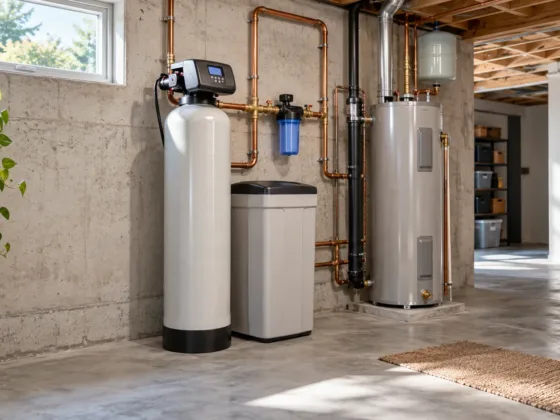
Correct vs. Incorrect Water Heater Installation (Photo Guide)


Concept photos for educational purposes. Always follow local code, manufacturer instructions, and your inspector’s guidance.
Helpful next reads on DreamlandsDesign
- What Every Homeowner Needs to Know About Water Heater Maintenance
- 5 Crucial Signs Your Water Heater Needs to Be Repaired
- Tankless Water Heater Repair: How to Fix & Maintain Yours
FAQs
Do I really need to set my water heater to 120°F?
For most homes, yes—120°F reduces scald risk and saves energy while meeting typical hot-water needs.
Are permits always required?
Often, yes—many jurisdictions require permits/inspections for plumbing/mechanical work, which your licensed installer will handle.
What’s the most efficient option today?
If the space and electrical service allow, heat pump water heaters are among the most efficient options for many households.
Author & Editorial Review
Author: Perla Irish is a design and home-focused writer covering interior materials, everyday homeowner decisions, and real-world performance of residential finishes in consultation with licensed contractors and industry standards where applicable. Her work emphasizes clarity, practical context, and long-term usability over trends or transactional advice.
Editorial Review: This article was reviewed by the DreamlandsDesign editorial team with a focus on homeowner decision-making psychology, behavioral context, accuracy, and long-term relevance. Content is evaluated to ensure balanced explanations, clear intent, and alignment with Google Helpful Content and E-E-A-T quality standards.
Last updated: March 2026