Table of Contents Show
The kind of glass used in a shower door changes how the room feels once you start using it every day. In some bathrooms it keeps the space open and bright; in others, it adds a sense of privacy that feels more comfortable.
This article focuses on common glass options used in shower doors and how they tend to perform in real bathrooms. Rather than ranking one option as better than another, the goal here is to help you understand the trade-offs before making a decision.
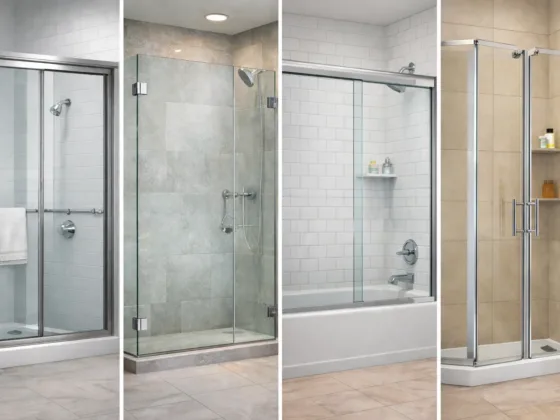
If you’re still comparing overall door structures and layouts, this practical guide to choosing a glass shower door offers a broader decision framework before narrowing down glass types.
Clear Glass
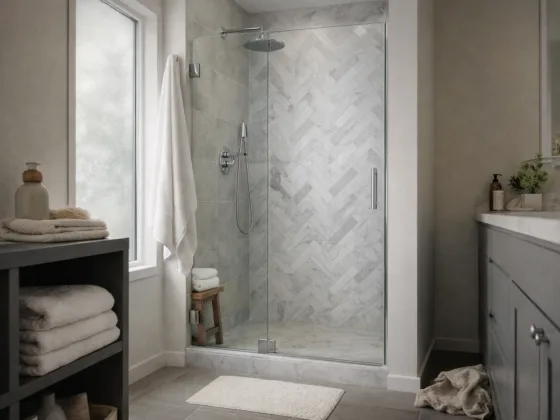
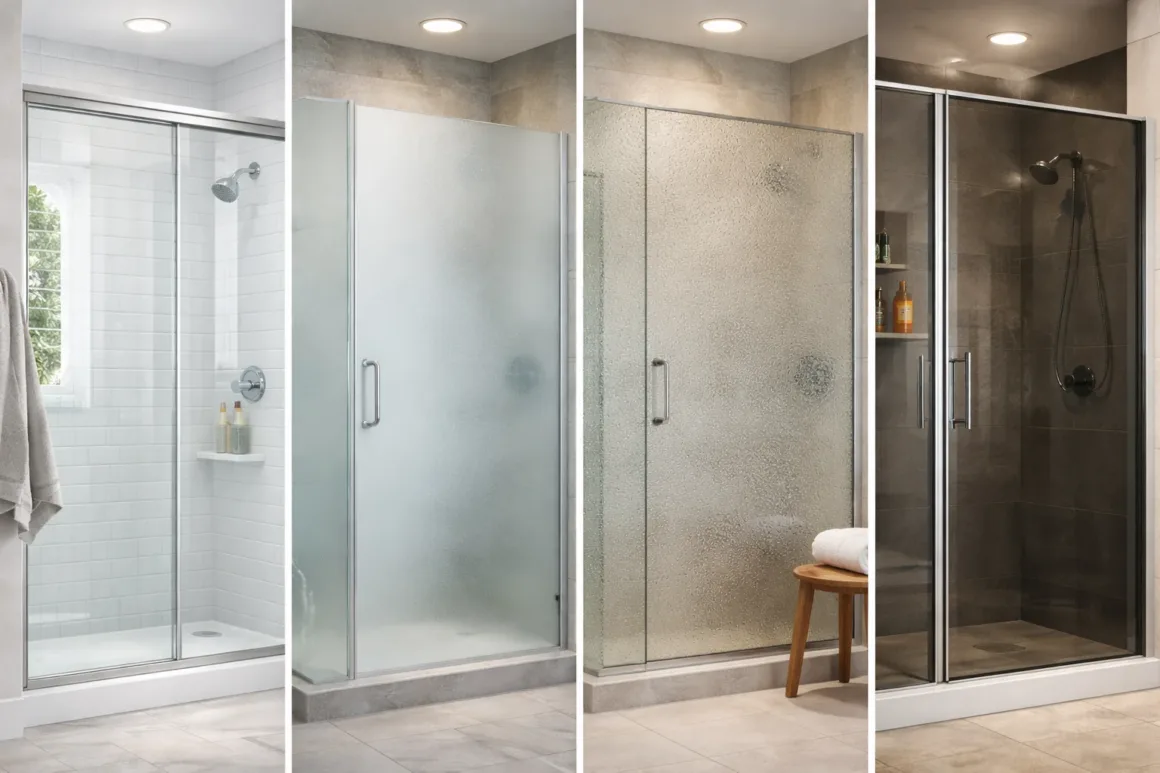
Clear glass is commonly chosen for bathrooms where maintaining an open, light-filled feel matters. It allows tile work and finishes inside the shower to remain visually connected to the rest of the space.
The trade-off is visibility. Water spots, soap residue, and streaks tend to show more easily, which makes light daily upkeep more noticeable than with textured options.
For homeowners seeking maximum visual clarity, low-iron glass is a premium variation of clear glass. Compared to standard clear glass, low-iron glass looks noticeably more neutral, without the faint green cast that can show up against white or light-colored tile.
Frosted Glass
Frosted glass diffuses light while offering more privacy. It’s often chosen for shared bathrooms or layouts where the shower is directly visible from the door or vanity.
While it hides fingerprints and water marks better than clear glass, residue can slowly build up within the frosted surface. Gentle cleaning tends to work better than harsh scrubbing.
Textured or Patterned Glass
Textured glass adds visual interest while obscuring direct views into the shower. Patterns range from subtle ripples to more pronounced designs.
These surfaces can be forgiving day to day, but deeper textures may require more attention during cleaning, especially in areas with hard water.
Tinted or Smoked Glass
Tinted glass slightly darkens the shower enclosure while maintaining a modern look. It’s sometimes chosen to soften bright lighting or add contrast in minimalist bathrooms.
- Softens bright lighting and reduces glare
- Adds visual contrast in modern bathrooms
- May feel too dark in small or windowless spaces
Privacy Film and Coated Glass
Some shower doors use applied films or factory coatings to create privacy effects. These options can be useful when replacing glass isn’t practical.
Over time, films may show wear or peeling, especially in high-moisture environments, making them better suited as short- to mid-term solutions.
Protective Coatings and Daily Maintenance
Some shower glass is treated at the factory with a hydrophobic or water-repellent coating. With this kind of treatment, water tends to slide off the glass more easily, rather than drying in place and leaving visible spots.
Over time, coated glass usually shows fewer mineral marks, which means cleaning doesn’t feel quite as constant. While coatings don’t eliminate maintenance entirely, they can make clear glass feel more forgiving over time—especially in areas with hard water.
When applied during manufacturing, these coatings are built into the glass itself, unlike spray-on products that usually wear off after repeated cleaning.
How Glass Choice Affects Daily Use
Glass choice ends up shaping more than appearance. It often shows up in how often you notice water spots, how private the shower feels, and how bright the room stays throughout the day.
- Clear glass emphasizes openness but shows residue faster.
- Frosted and textured glass improve privacy with softer light diffusion.
- Darker glass can reduce glare but may visually shrink smaller spaces.
When paired with different door structures—such as framed, frameless, or sliding systems—these glass choices can feel very different in daily use. For a broader look at how door types interact with space and maintenance, this overview of common shower door types provides additional context.
Quick Comparison: Light, Privacy, and Maintenance
| Glass Type | Light | Privacy | Maintenance |
|---|---|---|---|
| Clear | High | Low | Higher |
| Frosted | Medium | Medium–High | Moderate |
| Textured | Medium | High | Moderate |
| Tinted | Lower | Medium | Lower |
Putting Glass and Privacy Into Context
No single glass option works equally well in every bathroom. What works best often comes down to how much privacy you want, how bright the room is, and how much upkeep feels manageable.
Taking a moment to consider light, privacy, and upkeep upfront can help avoid small frustrations later, especially once the shower becomes part of your daily routine.
Author: Perla Irish — a design writer focused on interior materials, bathroom layouts, surface finishes, and how everyday home decisions perform in real living spaces.
Editorial Review: This article was reviewed by the DreamlandsDesign editorial team to ensure clarity, accuracy, balanced explanations, and real-world usability.
Published: January 2026 | Last reviewed: January 2026