Table of Contents Show
Quick answer: For most modern homes, the best entry door is an insulated fiberglass or steel pre-hung unit with quality weatherstripping, a good lockset, and (if your climate needs it) a storm or security door. That combination usually gives you the best mix of curb appeal, security, energy efficiency, and low maintenance.
You’ve found a wonderful new home. The appliances are modern, the floors are gorgeous, the kitchen is spacious, and the yard has plenty of room for your kids or pets to play. The only thing that feels a little underwhelming is the front door.
It’s not terrible, but compared to the rest of the home, it’s a bit plain – and maybe even a little drafty or noisy when the wind picks up. Because your entry door is one of the first things visitors notice (and one of the hardest-working parts of your home’s envelope), upgrading it can make a huge difference to how the whole house feels and performs.
Once you start shopping, it’s easy to feel overwhelmed: solid doors, glass doors, sidelights, double doors, Dutch doors, and more. This guide walks through the key decisions – style, materials, configuration, and extras – so you can confidently choose the right entry door for your home and budget instead of just picking whatever the store happens to have on sale.
Key Things to Decide Before You Shop for an Entry Door
Before you fall in love with a specific design in the showroom, it helps to get clear on what you actually need your front door to do. A quick “pre-shopping” checklist:
- Climate & exposure: Is your door in full sun all afternoon, taking the brunt of driving rain, or protected by a deep porch? Climate and exposure influence whether wood, steel, fiberglass, or glass makes the most sense and how often you’ll be maintaining the finish.
- Security needs: Do you want a heavier, more impact-resistant door, multi-point locks, or security glass? If break-ins are a concern in your area, prioritize steel or iron and robust hardware.
- Energy efficiency: If the hallway near your front door is always cold or hot, look for insulated cores, good weatherstripping, and doors with energy-performance labels. Exterior doors can contribute a surprising amount to drafts and energy bills.
- Door size & accessibility: Think about how you actually use the entry: do you often move strollers, prams, or bulky furniture through it? If you plan to age in place or have mobility needs, a wider door or double doors can make everyday life much easier.
- Privacy vs. natural light: Decide how much glass you’re comfortable with at the entry. Frosted, textured, or security glass can bring in daylight without giving the street a clear view of your living room.
- Maintenance tolerance: Some homeowners love the look of stained wood and don’t mind refinishing. Others want a “once and done” door with minimal upkeep.
- Style & curb appeal: Your front door is a big part of your home’s personality. Think about how it works with your façade, lighting, and front porch décor. Later, you can layer in door decoration ideas to finish the look.
Types of Entry Doors (by Style and Configuration)
The first big decision is the overall style and configuration of your entry. Even before you choose materials, think about how the door looks from the street and how it works day to day for your family.
Doors with Glass
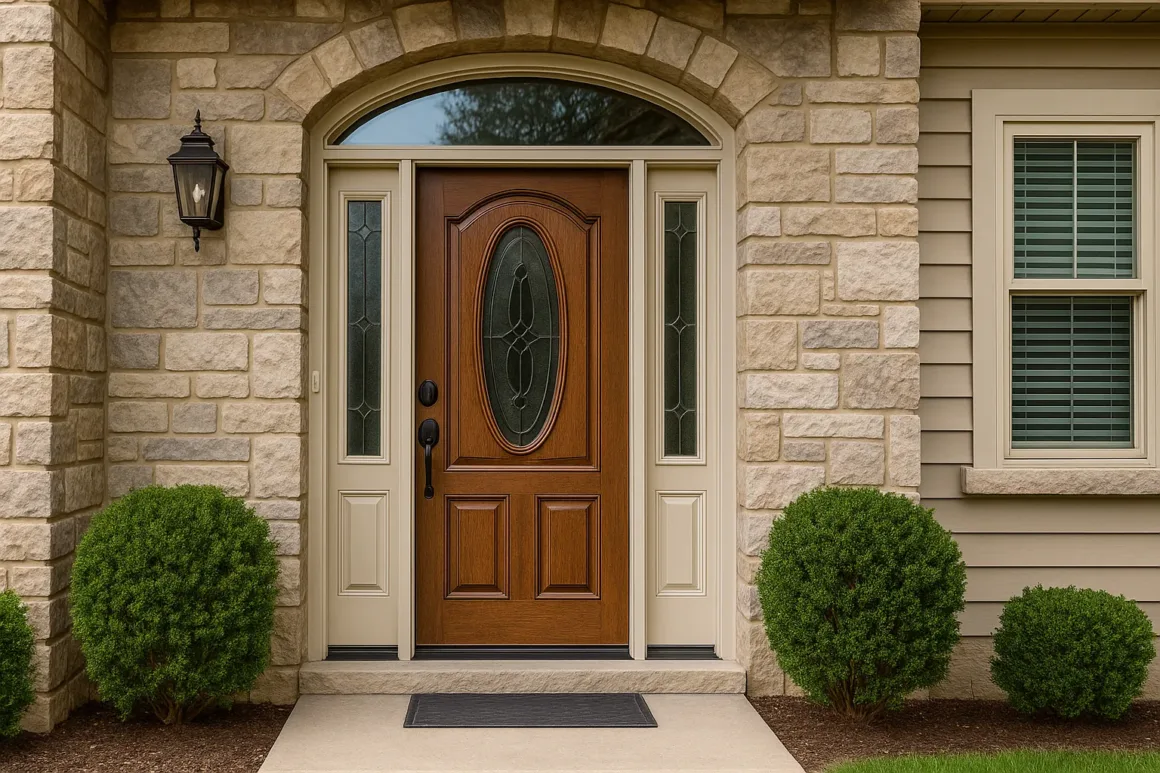
Many front entry doors include decorative glass panels. They instantly make a plain façade feel more welcoming and allow natural light to spill into your foyer. You can choose from frosted, textured, beveled, or leaded glass, depending on how much privacy you want.
Options range from small 1/4-lite panels to 1/2-lite and full-lite doors. You can also choose clear glass, privacy glass, or glass with blinds built in between the panes. Built-in blinds are convenient if you want to control light without extra curtains or shades collecting dust on the door.
When you’re picking out a door with glass, ask yourself two questions: how much light you want to let in, and where you need privacy. If you love daylight but feel uneasy about people seeing straight into your living room, a combo of smaller glass panels and privacy glass often hits the sweet spot.
If security is a concern, consider pairing decorative glass with laminated or security glass that’s harder to shatter from the outside.
Doors with Sidelights (and Transoms)
Sidelights are tall, narrow windows that sit beside the entry door. You can have one sidelight (usually on the latch side) or two, one on each side of the door. They add architectural interest, create a more generous-feeling entry, and flood the hallway with daylight.
For even more impact, pair sidelights with a transom window above the door. A simple rectangular transom feels modern; arched or curved transoms lean more traditional or classic.
Because sidelights and transoms add more glass, pay attention to privacy and energy performance. Privacy glass, decorative patterns, and security glazing or film can help you enjoy the look without compromising safety or comfort.
Double Entry Doors
If you want a dramatic entry that’s also genuinely practical, double doors tick both boxes. They look impressive from the street, and the wider opening is extremely handy when you’re moving furniture, strollers, or large appliances.
In everyday use, you can keep one leaf fixed for better air sealing and just use the active leaf. When you need extra width, simply unlatch the second leaf. Double doors can also be helpful if you’re planning a more accessible home for aging in place.
Don’t forget the floor – a wide entrance pairs well with a properly sized mat. If you have a larger entry, ideas like double door entry mats can keep dirt outside and visually “ground” the doorway.
Dutch Doors
Dutch-style doors are split horizontally, so the top half opens while the bottom half stays closed. They’re charming and surprisingly practical, especially for homes with children or pets.
You can swing open the top to let in fresh air and natural light without worrying about anyone (or anything) slipping out. Many homeowners also like Dutch doors because they make it easy to accept packages or chat with a neighbor while keeping an enthusiastic dog safely inside.
Because the door is split, pay attention to the weatherstripping and latching at the center rail. Good quality hardware here helps prevent rattling and drafts in windy or exposed locations.
Other Popular Configurations
Beyond the classic options above, you may also come across:
- Single solid doors: A clean, timeless look with no glass at all. This can be ideal if your entry is already bright or if privacy and security are top priorities.
- Pivot doors: Dramatic, oversized doors that pivot on a central hinge rather than swinging on side hinges. They’re visually stunning but require careful detailing and professional installation to avoid air and water leaks.
- Bifold and multi-panel doors: For side or rear entries opening to patios, bifold doors and large sliding panels blur the line between indoors and outdoors. They’re less common at front entries, but useful to know about if you’re planning a bigger remodel.
Pre-Hung vs. Slab Doors
When you compare door quotes, you’ll notice two key terms: pre-hung and slab. Understanding the difference will save you time, stress, and money during installation.
Pre-hung doors come already attached to a new frame (jamb) with hinges, weatherstripping, and often a threshold. Your installer removes the existing door and frame and installs the whole unit as one piece.
- Best when: The old frame is damaged, out of square, rotted, or you have air and water leaks you want to solve in one go.
- Pros: Better opportunity to improve air sealing, update the threshold, and ensure the whole system is square and plumb.
- Cons: More labor, more disruption to trim and siding, and usually a higher upfront cost.
Slab doors are just the door panel itself – no frame, no hinges, no hardware. You reuse your existing jamb, hinges, and threshold, and hang the new slab in place of the old one.
- Best when: The existing frame is in good condition and reasonably square, and you’re mainly upgrading the style, color, or material.
- Pros: Lower material cost, less demolition, and a quicker project when the opening is in good shape.
- Cons: Requires more precise carpentry to get smooth operation and proper clearances. You’re also limited by any quirks of the existing frame.
If you’re wondering how far you can push your existing opening, it’s worth understanding what truly makes a door “exterior-grade.” Our guide on whether you can replace an exterior door with an interior door explains why insulation, weather-resistance, and construction differences matter.
Front Door Materials (Pros, Cons, and Best Uses)
Once you have a style in mind, the next big choice is material. Your door’s core material will determine how it looks, how it ages, and how well it stands up to weather, wear, and security demands.
Wood
Wood doors are the classic choice and still one of the most popular options because of their warmth and versatility. You can order them in almost any size, panel pattern, or glass configuration, and they take stain and paint beautifully.
High-quality species such as mahogany, oak, or fir can look incredible and feel substantial when you open and close them. It’s easy to customize wood doors with sidelights, transoms, and decorative trim, which is why they’re common on custom homes and historic renovations.
The trade-off is maintenance. Wood moves with temperature and humidity, so it can warp, swell, or shrink over time – especially on sun-baked or unprotected façades. You’ll need to sand, stain, or repaint every so often to protect the wood and keep the door looking sharp.
If you love the look of wood but live in a harsh climate, consider a thicker, higher-end door or one with an engineered core that’s more resistant to warping, and make sure you have enough overhang or a storm door for extra protection.
Fiberglass
If you like the appearance of wood but want something more durable and energy efficient, fiberglass is hard to beat. Modern fiberglass entry doors can convincingly mimic wood grain and accept stain or paint in almost any color.
Most fiberglass doors have an insulated foam core and a tough outer shell that resists dents, scratches, and rust. They’re highly weather-resistant and, when installed correctly, offer excellent energy performance and low maintenance – a good fit if you’d rather not repaint every few years.
The main downside is cost. Premium fiberglass doors aren’t cheap, but when you factor in lower energy bills and less frequent repainting, they can be a smart long-term investment, especially in climates with big temperature swings.
Steel
Steel is the go-to material when security and value are your top priorities. A well-made steel entry door with an insulated core is tough to kick in, resists common break-in methods, and can be surprisingly energy efficient.
Steel doors generally won’t swell or warp with the weather, and many models can be finished to resemble painted wood. They also tend to be more affordable than high-end wood or fiberglass doors, which makes them popular for many standard homes and rental properties.
The downside is that steel can dent if hit hard, and deep dents can be difficult or impossible to repair invisibly. In coastal or very humid climates, you’ll want to pay attention to corrosion protection and finish quality, and keep an eye on any chips in the paint.
Iron
Iron doors are all about strength and statement-making style. They’re extremely durable, offer excellent security, and can range from sleek and minimal to highly ornate with scrollwork and detailed patterns.
Many iron doors incorporate glass panels, which bring in natural light while the ironwork adds a physical and visual barrier. Because the frames and panels are so robust, they can also contribute to better insulation and longevity when properly installed.
Iron doors are heavy and almost always require professional installation, and the upfront cost is usually higher than standard steel or fiberglass. That said, they can deliver a huge boost in curb appeal – especially on homes where the entry is a major focal point.
If you’re in the New York area and want a truly standout entry, you can browse NY’s premium doors for design inspiration and examples of what’s possible with custom ironwork.
uPVC / Vinyl
uPVC (vinyl) doors are common in some regions because they offer decent insulation, low maintenance, and a relatively low price. They won’t rot or rust and don’t require repainting.
On the downside, vinyl doors can feel less substantial than wood, fiberglass, steel, or iron, and color choices are often more limited. Direct, intense sunlight can also cause fading or warping on lower-quality products, so it’s worth choosing a reputable manufacturer.
Aluminum and Aluminum-Clad Doors
Aluminum and aluminum-clad doors are lightweight, modern-looking, and resistant to rust. They’re often used with larger glass areas where slim, strong frames are important, such as modern homes with lots of glazing.
They can be an excellent choice for contemporary designs, but you’ll want to pay attention to thermal breaks and glass performance to avoid condensation or heat loss in colder climates.
Glass (Full-Glass Doors)
If you love the look of glass, you can choose to have a full glass front door made out of it. Full-glass doors allow for maximum natural light and give you an uninterrupted view of the outdoors, but it’s worth understanding the safety, privacy, and energy implications before you commit.
The trade-offs: people walking by can also see inside unless you opt for privacy glass, and fully glazed doors typically don’t insulate as well as solid doors. They’re often best used where they’re partially sheltered or paired with a separate security or storm door.
Screen Doors
Once you’ve chosen your main entry door, it’s time to think about add-ons that can extend its life and improve comfort. A classic upgrade is a screen door.
Screen doors sit in front of your main door, providing ventilation while keeping insects out. They come as traditional hinged screen doors or in gliding and retractable designs that roll away when not in use.
A good screen door can protect your main door from minor scuffs and sunlight, while letting you leave the entry open on mild days without inviting pests inside.
Security Doors
If you’re concerned about break-ins, a security door can add serious peace of mind. These doors are usually constructed of steel with heavy-duty frames, tamper-resistant hinges, and impact-resistant mesh or bars.
Installed in front of your main door, a security door adds a physical barrier that’s difficult to cut, kick, or pry open. Many models are designed so the bars and mesh can’t simply be unscrewed or removed from the outside, and quality powder-coat finishes help resist corrosion.
Pairing a solid entry door with a well-made security door, good locks, and smart use of security glass is a powerful way to upgrade home security without making your house look like a fortress.
Storm Doors
Storm doors are another layer that fits over your exterior door, designed mainly to protect against weather and improve energy performance. They often have interchangeable glass and screen panels, so you can switch between extra insulation and ventilation depending on the season.
By shielding your main door from rain, snow, wind, and UV exposure, a storm door can prolong its finish and reduce wear. It can also provide a buffer of air that helps with drafts and temperature swings, especially in older homes.
One important note: some manufacturers won’t honor the warranty if you install a storm door over certain types of wood doors, especially in hot climates where trapped heat can damage the finish. Always check your door’s warranty before adding a storm door, or ask your installer to confirm in writing.
Finishes, Hardware, and Smart Upgrades
Once your new door is in place, the finish and hardware are what tie everything together – visually and functionally.
For paint and stain, choose products rated for exterior use and compatible with the door material. If you’re painting a front door, guides like Bob Vila’s on how to choose a finish can help you pick the right paint and sheen for durability and style.
- Color and contrast: A bold color can make the door the star of your façade; a more subtle tone can blend with siding and trim for a calmer look. It’s worth taping up a few paint swatches and looking at them morning, midday, and evening before you commit.
- Hardware: Don’t skimp on the lockset and deadbolt. Look for solid metal construction, good security ratings, and finishes that coordinate with your house numbers, porch lights, and mailbox.
- Smart locks and doorbells: Keyless entry, video doorbells, and smart strikes add convenience and an extra layer of security and monitoring. They’re especially handy if you receive a lot of deliveries.
- Decor and lighting: Once the door is in, finish the scene with tasteful décor and lighting. You can draw inspiration from home door decoration ideas or from guides on designing an outdoor living space that connects seamlessly with your entry.
How to Choose the Right Door for Your Home (Step-by-Step)
- Assess your existing door: Is the frame sound? Do you feel drafts? Are there signs of rot, rust, or water damage around the jamb or threshold?
- Set your priorities: Rank what matters most: security, energy savings, appearance, accessibility, or low maintenance. Your top two or three priorities should drive every decision that follows.
- Choose a configuration: Decide between single, double, sidelight, or Dutch doors based on how you use the entry and how much wall space you have to work with.
- Pick a material: Use the pros and cons above to narrow down the best material (or combination of materials) for your climate, lifestyle, and budget.
- Decide on pre-hung vs. slab: If the frame is in bad shape, lean toward pre-hung. If it’s solid and square, a slab may be enough – and easier on your budget.
- Plan extra layers: Consider whether a screen, security, or storm door would add comfort or safety in your climate. In some regions, this is almost standard; in others, you may not need the extra layer at all.
- Work with a reputable supplier or installer: Getting the right product is only half the story – proper installation, flashing, and sealing are essential for security and energy performance. Don’t be shy about asking for references or photos of past projects.
When you take the time to think through these steps instead of buying on impulse, your new front door can do more than just look good in listing photos. It can make day-to-day life more comfortable, more secure, and more enjoyable every time you walk through it.
Looking for more ways to give your home a facelift? Explore our other guides on exterior design, security glass, and outdoor living, and check back often – we’re always adding new, homeowner-friendly ideas and step-by-step tips.
References & Further Reading
- U.S. Department of Energy – Doors: energy performance and selection basics
- National Fenestration Rating Council – Understanding certified ratings for doors and windows
- ENERGY STAR – Residential windows, doors, and skylights buying guidance
- IRS – Energy Efficient Home Improvement Credit (exterior doors and more)