Table of Contents Show
Having a high-quality HVAC system in place improves energy efficiency. It allows businesses and commercial properties to save on a lifetime of utility costs.
It provides comfort and better air quality for employees. It increases a property’s value too.
But, does investing in HVAC automation have any extra benefits? In what ways can a business even automate its HVAC systems?
What is HVAC Automation?
HVAC automation requires the use of HVAC controls. These are devices used to control how HVAC systems behave.
Manual HVAC controllers like thermostats and water heaters are quite common in residential homes.
- Manual thermostats adjust temperatures with direct input from a user. They will run at a specified temperature until someone comes along and provides another direct input.
- Programmable thermostats follow a set of schedules. Users can set these schedules, which tell AC systems when to turn the heat up and when to turn it down.
- More modern thermostats can use sensors to “read the room” and adjust the temperature. These are also known as smart thermostats.
In larger properties, HVAC controls are part of larger, more complex systems. Automated HVAC systems usually belong to even bigger systems known as energy management systems (EMS) or building automation systems (BAS).
Some people also call these systems direct digital control (DDC), building management systems (BMS), or building control systems (BCS). These encompass more than just heating, ventilation, and air conditioning.
The simplest BA systems run on three priority levels: operator, logic, and schedule.
- Operators usually take top priority. The system operator sends direct commands to the system and tells it how it should run.
- In the absence of direct orders, logical programming takes its place. These are more commonly a set of if-else statements that can adjust system settings.
- Schedules simply decide on which days the systems should run. This is helpful when shutting down unnecessary systems on off-days.
It’s all too easy to see how AI and machine learning can fit into the whole equation.
The Benefits of Automating HVAC for Your Business Property
HVAC systems can account for up to 50% of a commercial property’s utility and upkeep costs. This is why more and more business and property owners are looking to at least partially automate their systems.
By automating HVAC and building management, business owners can enjoy the following benefits:
Continuous Control and 24/7 Access
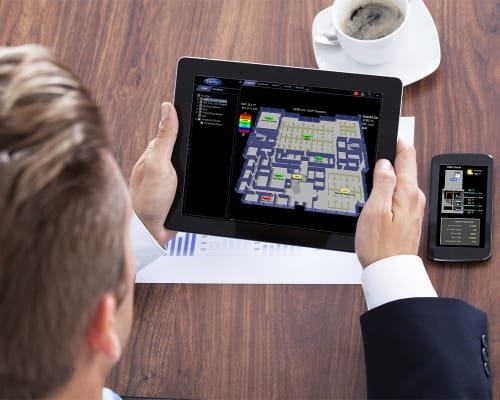
This mostly applies to web-based building automation systems. These online systems allow remote control and monitoring using the web interface.
The 24/7 access that web-based BAS provides can be particularly beneficial for remotely controlling HVAC systems during off-hours, weekends, and holidays.
Facility managers don’t need to be physically present to adjust and monitor office heating and ventilation. Local system administrators may still be employed to control and monitor the systems onsite.
But, in general, fewer people are needed to efficiently run a BAS.
If you own and manage multiple buildings, automated systems make it possible for you to control and monitor each building remotely. And these aren’t limited to just office spaces too.
You can automate HVAC and BAS in schools, transportation hubs, malls, city complexes, airports, exhibits, and many others.
Smart Adjustments and Better Savings
Some automated HVAC systems harness the power of AI and machine learning to learn a property occupant’s energy consumption habits.
It’s practically like programming a thermostat but on a larger scale, with hundreds of possible different configurations at any given time.
Programmable thermostats can help you save on utility costs in a residential setting. In an office setting, the smarter energy management system will allow you to save even more.
AI-capable systems can learn to read particular areas of a building and adjust heating and ventilation accordingly. They can detect which rooms are occupied and which rooms are empty, and they don’t rely simply on programmed time schedules.
Better Air Quality and Improved Comfort Levels
A comfortable office boosts productivity. Employees can do more work when they don’t have to worry about their surroundings. But, how do you make an office more comfortable? Aside from getting the temperatures right, you might also want to consider indoor air quality.
The biggest factors that affect indoor air quality are humidity, ventilation, and temperature. These factors are some of the easiest to control using automated HVAC systems too.
Sensors can be used to determine and control humidity levels, as well as to detect air pollutants. You can automatically turn on dehumidifiers during summers, or turn on humidifiers during winters.
In cases of fire emergencies, smoke control systems can help provide breathable air and give occupants a higher chance of evacuating successfully.
The quality of a building’s air ducts is also a factor that affects indoor air quality. You can check this guide for more information on proper duct cleaning, HVAC maintenance, zoning, and more.
Consumption Analytics
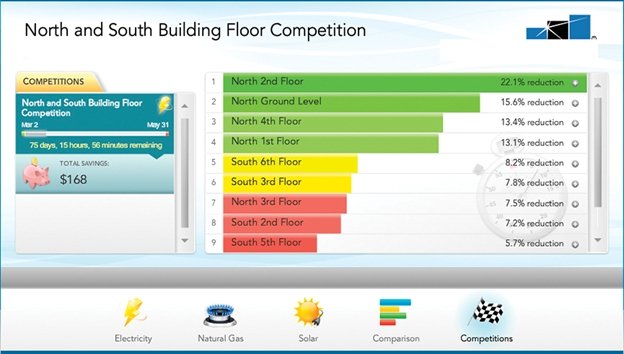
Exactly how much and how can you better save on automated HVAC systems? A sophisticated BAS can create in-depth reports on how properties consume energy.
They may even provide tips as to how the system can be better utilized for more energy savings. These reports can help property managers create better energy consumption plans.
Other Ways to Automate HVAC and BAS
Automated HVAC and BA systems aren’t just limited to controlling and monitoring HVAC systems and appliances. Property managers can choose to integrate other systems and utilities to further enhance the system’s capabilities.
- Lighting systems
- Water heaters and hot water boilers
- Underfloor heating
- Cold drinking water systems
- Utility meters for tenant billing
- Security and area access systems
- Traffic and occupancy statistics
- Cooling towers
- Refrigeration, freezer, cold room, and pantry room controls
- Car parking carbon monoxide sensors and controls
- Solar power generation and other types of generators
- Alarm and emergency systems
- Logistical operations
To Sum It Up
A simple BAS deals with HVAC automation at the very least. Commercial property owners can choose from a long list of other systems to integrate into a BAS.
Automated HVAC systems offer unprecedented benefits for business owners, facility managers, and building occupants. As part of BAS, an automated HVAC system can help you:
- Enjoy remote system control;
- Gain round-the-clock HVAC system access;
- Make smarter energy consumption adjustments;
- Get better utility savings;
- Provide better air quality to tenants and occupants;
- Improve comfort levels for tenants and occupants;
- And develop better energy consumption plans.