Table of Contents Show
Quick Answer: The easiest way to prevent plumbing emergencies is to build a few drain maintenance habits into your normal routine: keep fats, oils, and grease out of the sink, use strainers to catch hair and food scraps, run hot (not boiling) water after greasy or soapy use, treat busy drains with gentle enzyme cleaners, and call a plumber if you notice slow drains, gurgling, or sewage smells. These small habits prevent more problems than any one-time “miracle” fix later.
Most plumbing emergencies don’t start with a dramatic pipe burst. They often begin with a bathroom sink that has been slow for months, a kitchen drain that smells a bit off, or a basement floor drain you keep ignoring. Over time, fats, oils, grease, soap scum, food scraps, and hair coat the inside of your pipes and gradually restrict the flow of water.
This guide is for homeowners, landlords, and renters who handle basic home upkeep and want a straightforward drain maintenance routine. By the end, you’ll know how to set up simple monthly and seasonal habits that keep drains clear and reduce the chances of an emergency callout.
Simple, consistent drain maintenance habits reduce buildup before it turns into a blockage. Instead of waiting until water is standing in the sink and you’re searching for an emergency plumber, you stay slightly ahead of problems with easy routines you can repeat every month and season.
Why Consistent Drain Maintenance Matters
Each drain in your home deals with more than you might think in a typical week:
- Kitchen drains see grease, cooking oil, food scraps, starchy water, and dish soap.
- Bathroom sinks, tubs, and showers collect hair, soap scum, toothpaste, shaving cream, and hard-water deposits.
- Toilets are meant for human waste and toilet paper only, but often end up with wipes and other “convenience” products.
- Laundry and utility drains take on lint, detergent residue, dirt, pet hair, and debris from outdoor gear.
When drain maintenance is skipped for long periods, this material builds up. Common results include:
- Persistent slow-draining sinks, tubs, or showers
- Gurgling or “glugging” sounds as air pushes past partial blockages
- Unpleasant odors coming from drains
- Sewage backups in lower fixtures when the main line is restricted
- Burst pipes from trapped water that freezes in winter
- Unplanned emergency plumbing visits that cost more than scheduled maintenance
Many municipalities and organizations, such as the U.S. Environmental Protection Agency (EPA) note that fats, oils, and grease are major causes of sewer blockages and home sewer backups. In practical terms, that means small changes in how you handle grease and food waste at home can prevent a lot of trouble. The tips below are low-cost and easy to add to tasks you already do in the kitchen and bathroom.
1. Avoid Pouring Grease and Oils Down the Drain
Grease and cooking oil look harmless as they go down the sink, but once they cool inside your pipes, they harden and stick. That layer then traps crumbs and scraps, and the drain gradually slows until it clogs.
Swap in a few better habits:
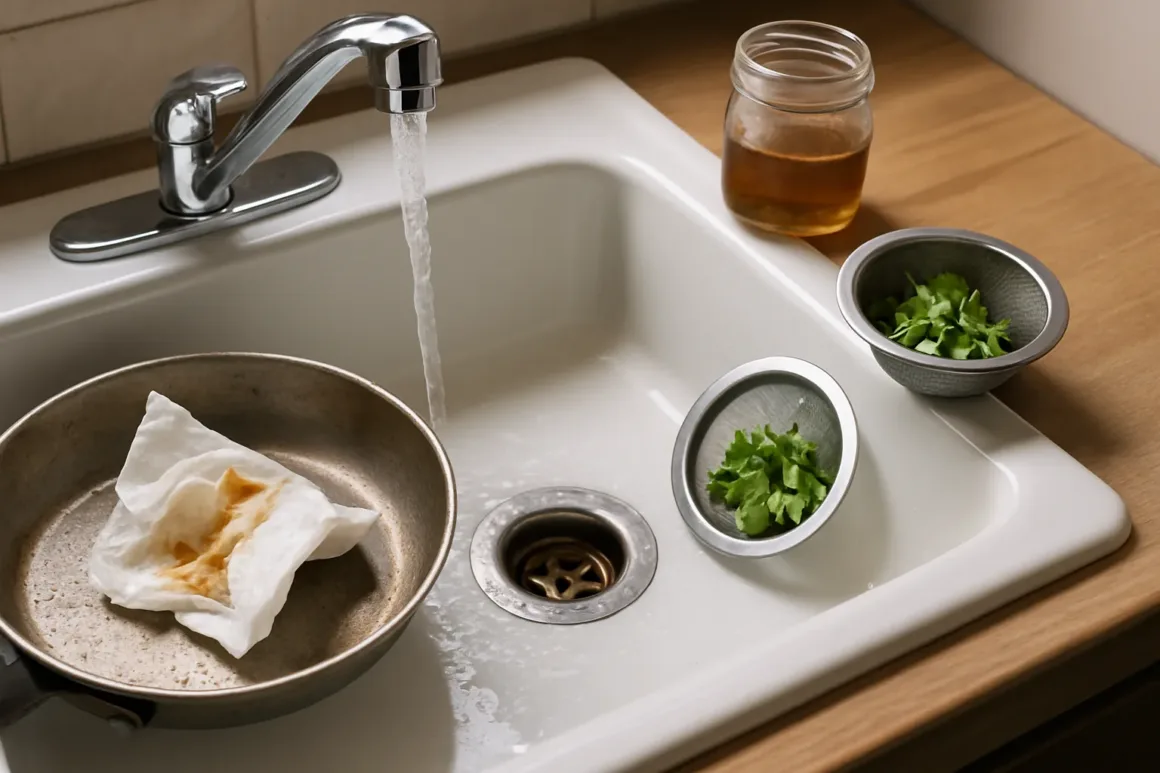
- Wipe pans before you wash. After cooking, let the pan cool slightly, then wipe the grease and residue into the trash with a paper towel.
- Collect used oil instead of rinsing it. Pour cooled oil into a metal can or jar. When it’s full, seal it and throw it away according to local rules.
- Scrape plates first. Knock food scraps into the trash or compost before plates go near the sink.
These steps significantly reduce fats, oils, and grease (FOG) inside your pipes and lower the risk of kitchen drain clogs and sewer line issues.
2. Use Drain Screens to Catch Hair and Debris
In bathrooms, hair and soap scum are a common cause of clogs. A little buildup every day eventually forms a dense mat at the drain opening or inside the pipe. If you share a bathroom with several people, this can happen surprisingly fast.
Two or three inexpensive screens can prevent most of this:
- Install mesh or cup-style screens in shower and tub drains so hair is caught on top, where you can remove it.
- Use basket strainers in the kitchen sink to catch food scraps, coffee grounds, and eggshells.
- Empty and rinse them regularly. Make it part of cleaning up after showers or meals instead of letting buildup harden.
For more everyday ideas like these, see our guide on tips to keep drains clean and odor-free.
3. Run Hot Water After Greasy or Soapy Use
Running hot water after using sinks, tubs, and showers helps rinse away residues before they cool and stick to the pipe walls.
Simple rules you can follow without much effort:
- After washing dishes or rinsing something greasy, let hot tap water run for 20–30 seconds to push residue farther down the line.
- In showers and bathroom sinks, finish with a brief hot-water rinse to wash away soap, shampoo, and hair products.
- If you have PVC waste lines, use hot tap water instead of boiling water, which can be too aggressive on some plastic systems.
Hot water will not clear a fully clogged drain, but as part of regular maintenance, it helps slow down buildup.
4. Treat the Garbage Disposal Like a Tool, Not a Trash Can
Garbage disposals are useful, but they’re easy to overload. When they replace the trash can, the drain behind them often suffers.
To avoid problems:
- Avoid problem items. Don’t put fibrous foods (such as celery and onion skins), stringy vegetables, coffee grounds, fruit pits, bones, or large amounts of rice or pasta into the disposal.
- Feed it slowly. Run the disposal with small, steady amounts instead of packing the chamber full and switching it on.
- Use cold water while it runs and for 20–30 seconds afterward. Cold water helps fats stay solid long enough to be chopped up and carried away.
Treat the disposal as a finishing tool for small leftovers, not as a way to get rid of all food waste. This protects both the unit and the drain line.
5. Use Enzyme Cleaners for Routine Maintenance (Not Harsh Chemicals)
When a drain smells musty or starts to slow down, many people reach for a strong chemical cleaner. These products can work, but frequent use is hard on older pipes, PVC, and rubber gaskets.
Enzyme-based or bacterial drain cleaners are usually a better option for regular maintenance:
- They use bacteria and enzymes to break down organic buildup like hair, grease, and soap scum inside the drain.
- They tend to be gentler on residential plumbing when used as directed.
- They are meant for ongoing maintenance, not for clearing a completely blocked pipe.
A realistic routine might look like this:
- Pick one evening a month and treat the busiest drains—often the kitchen sink and the main bathroom drains.
- Run warm water, apply the product according to the label, and avoid heavy use of that fixture for the recommended period.
Always read labels carefully, especially if you have a septic system. If a drain is already fully clogged, rely on mechanical methods or these chemical-free ways to unclog a drain first. If they fail, call a plumber instead of repeatedly using harsh chemicals.
6. Be Mindful of What You Flush
Toilets are designed for a limited range of materials. Many “flushable” wipes and other disposable products do not break down quickly enough once they reach your pipes or the municipal sewer system.
A simple rule works in most homes:
- Only flush human waste and toilet paper.
Keep these items out of the bowl:
- “Flushable” baby, makeup, or cleaning wipes
- Paper towels, tissues, cotton balls, and cotton swabs
- Feminine hygiene products and diapers
- Dental floss, hair, or bandages
- Cat litter or pet waste in bags
These materials tend to snag on rough spots or tree roots and then combine with grease and other debris. Over time, they form hard blockages that are difficult and expensive to remove.
7. Schedule Routine Professional Drain Maintenance
There is a limit to what you can see and fix from the top of the drain. Even with good habits, most plumbing systems benefit from a professional inspection from time to time, especially in older homes or houses with recurring clogs.
A qualified drain professional can:
- Run a camera through the main lines to look for tree roots, collapsed or sagging pipes, and hidden blockages.
- Perform deeper cleaning with augers or high-pressure jetting to remove long-term buildup.
- Check venting and pipe slope if you have ongoing gurgling or slow drains in several fixtures.
For many households, a professional drain cleaning every one to two years is enough, especially if you are consistent with basic maintenance. In some homes, a single thorough cleaning of a problem line is enough to stop repeated slow drains.
Early Warning Signs Your Drains Need Attention
Plumbing emergencies usually come with warning signs. Recognizing them early lets you arrange a standard service call instead of dealing with urgent damage and cleanup.
Watch for:
- Slow drains that never fully clear, even after plunging or basic treatments.
- Gurgling or bubbling sounds when another fixture is draining—for example, the toilet gurgles when the bathtub empties.
- Recurring clogs in the same sink, shower, or toilet every few weeks or months.
- Bad smells near drains, especially sewer or rotten-egg odors that return after normal cleaning.
- Water backs up in a lower fixture (such as a tub or floor drain) when you run water elsewhere in the house.
- Fruit flies or drain flies are near sinks or floor drains, even when surfaces look clean.
If more than one drain is acting up at once, or you see sewage backing up into tubs, floor drains, or the yard, the blockage may be in the main line. In that situation, call a plumber and review the signs your sewer line needs attention so you know what kind of work might be required.
Monthly, Seasonal, and Annual Drain Maintenance Checklist
A simple checklist makes it easier to turn good intentions into habits. You can set phone reminders or add these tasks to your regular home maintenance list.
Every Month
- Clean hair and soap scum from the shower and tub strainers.
- Empty and wash the kitchen sink strainers.
- Check under sinks for drips or damp spots that may indicate a slow leak.
- Use an enzyme-based maintenance treatment on your busiest drains.
Every Season
- Before winter: Protect outdoor hose bibs, disconnect garden hoses, and make sure basement and crawlspace pipes are insulated or heated. For more cold-weather tips, see our guide on how to prevent frozen pipes and winter plumbing disasters.
- Before heavy rain seasons: Clear leaves and debris from exterior drains, stairwell drains, and basement walkout drains so water drains away from the house.
- Before vacations: If you’ll be away during freezing weather, consider shutting off the main water supply and draining key fixtures to reduce the risk of frozen pipes.
Once a Year (or As Needed)
- Schedule a drain and sewer inspection if you’ve had recurring issues, own an older home, or have large trees close to your sewer line.
- Ask a plumber to check any ongoing gurgling, recurring backups, or sewer odors instead of living with them long-term.
When to Call a Plumber Instead of DIY
There is a lot you can do yourself: strainers, hot water flushes, enzyme treatments, plunging, and simple drain snakes if you’re comfortable with them. At the same time, some situations are better handled by a professional.
Call a plumber if:
- Multiple fixtures are backing up at the same time—for example, the tub and toilet clog together.
- You see sewage in tubs, showers, floor drains, or outside near the sewer cleanout.
- You’ve tried reasonable DIY methods, but the same drain keeps clogging repeatedly.
- You hear gurgling in lower drains when upper fixtures are used, which often points to a vent or main-line problem.
- There is a strong, persistent sewer smell inside or near the house.
Plumbers have camera equipment, high-pressure jetters, and other tools that can identify whether you’re dealing with a simple clog or the early stages of pipe failure. Addressing those issues early usually costs less than waiting for a full blockage or break.
FAQs About Drain Maintenance and Plumbing Emergencies
How often should I do drain maintenance?
For most households, light weekly maintenance—such as scraping plates, using strainers, and running hot water after greasy or soapy use—is enough to keep drains moving. Add a monthly enzyme treatment for the busiest drains. If you have an older home, a large family, or long-haired family members and pets, you may want to clean strainers more often.
Are chemical drain cleaners ever okay to use?
An occasional chemical drain opener may not cause major issues, but regular use is risky, especially with older pipes or unknown plumbing materials. These products are designed to be aggressive. It is usually safer to use enzyme cleaners, plungers, small drain snakes, or call a plumber rather than rely on harsh chemicals.
What’s the difference between a slow drain and a “real” plumbing emergency?
A single slow drain is typically a localized clog that can often be handled with DIY methods or a standard service call. A plumbing emergency involves active flooding, sewage backing up into fixtures, a complete loss of drainage, or visible pipe damage. In those cases, shut off water to the affected area and contact an emergency plumber.
Do I really need a camera inspection of my drains?
You probably don’t need a camera inspection for every minor issue. However, if you live in an older house, have repeated clogs or unexplained backups, or suspect tree roots, a camera inspection is one of the most reliable ways to see what is happening inside the pipes. It can show collapsed sections, roots, or sagging pipes before they fail.
The Bottom Line on Drain Maintenance Habits
You don’t need special tools or advanced plumbing skills to look after your drains. A few basic habits—watching what goes into sinks and toilets, using strainers, flushing with hot water, choosing enzyme cleaners instead of harsh chemicals, and reacting quickly to early warning signs—are usually enough to prevent most everyday plumbing problems.
These simple steps keep pipes clearer, lower the risk of sudden blockages, and help your plumbing last longer. If something doesn’t seem right, such as new smells, repeated clogs, or water backing up where it shouldn’t, treat it as a warning and speak to a local plumber while the issue is still small.
- Author: Perla Irish – Home Improvement Editor at Dream Lands Design. Perla focuses on homeowner-friendly guides that turn trade jargon into clear, practical checklists for plumbing, HVAC, and everyday home maintenance. View Perla’s professional profile on Muck Rack.
- Reviewed by: Roger Wakefield, Master Plumber – Licensed Master Plumber with more than 40 years of field experience, trades advocate, and plumbing educator known as “The Expert Plumber.” Roger teaches homeowners and professionals how to maintain and troubleshoot plumbing systems safely. View Roger’s professional bio.
Editorial note: This article is for general educational purposes and doesn’t replace a site visit from a licensed plumber. If you suspect a leak, sewer backup, frozen pipe, or other urgent issue, contact a qualified local professional right away.