Table of Contents Show
Household appliances rarely attract attention when they work properly. Their importance becomes obvious the moment one stops working and daily routines suddenly slow down.
Modern households run on systems most people rarely notice. Refrigeration protects food safety, washing machines handle weekly laundry, and ovens keep daily meals predictable. These machines quietly support the routines that make modern living possible.
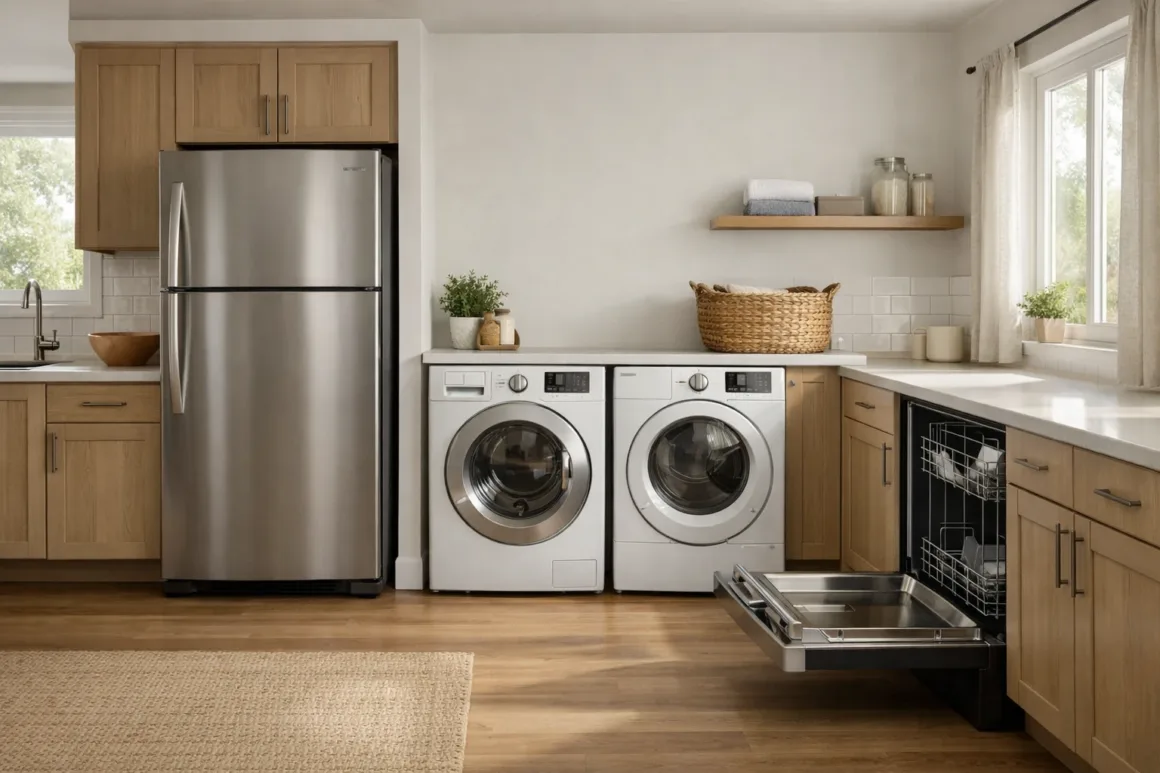
Refrigerators, washers, dryers, and dishwashers now operate as essential systems inside most modern homes.
Appliances usually stay invisible until something stops working. A refrigerator that stops cooling overnight quickly becomes a serious problem. Laundry piles up when a washer fails mid-cycle. Small disruptions like these reveal how dependent modern homes have become on reliable equipment.
Understanding how household appliances function—and why routine maintenance matters—helps homeowners prevent unexpected breakdowns, control repair costs, and extend the lifespan of the machines they rely on every day.
Why Appliance Maintenance Matters
- Household appliances reduce physical labor and improve daily efficiency.
- Reliable equipment protects food safety and supports consistent routines.
- Most appliance failures develop gradually rather than suddenly.
- Unusual noises, leaks, and temperature changes often signal early issues.
- Routine cleaning and inspection prevent many common failures.
- Timely repairs frequently cost less than replacing newer appliances.
- Well-maintained appliances consume less energy and operate more efficiently.
The Evolution of Household Convenience
Household chores once required far more effort than they do today. Laundry demanded hand washing and manual wringing. Food preservation relied on salting, drying, or frequent market visits. Cooking involved constant supervision and careful temperature control.
Modern appliances transformed these routines. Refrigerators extend the life of fresh ingredients. Washing machines eliminate labor-intensive scrubbing. Dishwashers sanitize dishes while conserving water. Dryers shorten drying times and reduce humidity indoors.
Automation changed the pace of household work. Tasks that once consumed hours now take minutes. This shift frees time for work, education, and family life.
Why Appliance Reliability Matters in Modern Homes
Daily life relies on predictable systems. When appliances fail unexpectedly, small problems can quickly escalate into larger disruptions.
A refrigerator malfunction may cause food spoilage within hours. A washing machine breakdown interrupts laundry schedules for an entire household. Oven failures interfere with meal preparation and routine cooking.
Reliable appliances support more than convenience. They protect food safety, maintain sanitation, and keep households organized.
Common Causes of Appliance Failures
Reliable appliances still experience mechanical stress over time. Most appliance problems develop slowly as internal components wear down, airflow becomes restricted, and electrical systems degrade.
- Wear and tear: Moving parts such as belts, bearings, and motors deteriorate after years of use.
- Poor maintenance: Dust accumulation, clogged filters, and blocked vents reduce efficiency.
- Electrical faults: Power surges, damaged wiring, or faulty cords interfere with normal operation.
- Improper usage: Overloading machines stresses internal components.
- Moisture exposure: Leaks and humidity can corrode mechanical parts and electronics.
Warning Signs You Shouldn’t Ignore
Appliances rarely fail without warning. Early symptoms usually appear long before complete failure occurs.
- Unusual noises or excessive vibration
- Burning smells or overheating
- Water leaks around the appliance
- Inconsistent internal temperatures
- Longer operating cycles
- Unexpected increases in energy consumption
Recurring issues often signal deeper mechanical or electrical faults. When problems repeat despite basic troubleshooting, the cause often involves worn internal components or electrical failures that require professional diagnosis. Situations like these may require evaluation from experienced appliance repair specialists who can identify failing components and prevent additional damage.
Safe Troubleshooting Before Seeking Help
Basic troubleshooting helps homeowners identify simple issues before assuming major mechanical failure.
- Confirm the appliance remains connected to power.
- Check circuit breakers for tripped switches.
- Inspect filters and vents for airflow blockages.
- Verify temperature and cycle settings.
- Look for visible obstructions such as clogged drains.
Disconnect appliances from electrical power before inspection. Internal electrical repairs require trained technicians and appropriate safety procedures.
The Hidden Cost of Neglecting Maintenance
Ignoring routine maintenance reduces appliance lifespan and increases operating expenses.
Dirty refrigerator coils force compressors to work harder. Blocked dryer vents increase energy consumption and create potential fire hazards. Worn door seals allow cold air to escape and reduce efficiency.
Simple maintenance tasks often prevent costly mechanical failures. Many homeowners follow broader detailed home maintenance tips that focus on routine inspection and preventive care across the entire house.
Maintenance Habits That Extend Appliance Life
- Clean refrigerator condenser coils twice each year.
- Remove lint buildup from dryer vents regularly.
- Inspect hoses and seals for cracks or deterioration.
- Avoid overloading washing machines and dryers.
- Clean dishwasher filters to maintain proper drainage.
- Follow manufacturer maintenance recommendations.
Maintenance routines vary depending on the appliance. Practical guides such as these practical washer machine maintenance tips show how simple checks and cleaning habits can significantly extend the life of household machines.
Repair or Replace: When Each Option Makes Sense
Appliance failures raise a common decision for homeowners: appliance repair or replacement. The right choice often depends on the appliance age, repair cost, and expected remaining lifespan.
Repair often makes sense when the appliance remains relatively new, the damaged component is replaceable, and repair costs stay significantly lower than replacement.
Replacement becomes practical when repairs occur frequently, major components fail, or newer models offer significant efficiency improvements.
Energy Efficiency and Environmental Impact
Modern appliances consume far less energy and water than older models. Regular maintenance ensures these systems continue operating efficiently throughout their lifespan.
Efficient appliances reduce household utility costs while lowering overall energy demand.
Well-maintained appliances rarely attract attention. Their value becomes obvious only when daily routines stop working as expected.
Final Thoughts
Household appliances support nearly every aspect of modern living. They protect food safety, simplify chores, and maintain everyday comfort.
Routine maintenance, early attention to warning signs, and timely repairs protect these systems from costly breakdowns. Homes that care for appliances properly benefit from lower operating costs, fewer disruptions, and longer equipment lifespan.
Author & Editorial Review
Author: Perla Irish is a design and home-focused writer covering interior materials, everyday homeowner decisions, and real-world performance of residential finishes in consultation with licensed contractors and industry standards where applicable. Her work emphasizes clarity, practical context, and long-term usability over trends or transactional advice.
Editorial Review: This article was reviewed by the DreamlandsDesign editorial team with a focus on homeowner decision-making psychology, behavioral context, accuracy, and long-term relevance. Content is evaluated to ensure balanced explanations, clear intent, and alignment with Google Helpful Content and E-E-A-T quality standards.
Last updated: March 2026