Table of Contents Show
For many people, working from home started with a laptop placed wherever space was available — a kitchen table, a sofa, or a corner of the living room.
Remote and hybrid work have gradually reshaped how people use space inside their homes. What once began as temporary laptop setups on kitchen tables or living room sofas has increasingly turned into a permanent need for a dedicated work environment.
Creating a comfortable home office does not necessarily require a spare room or a full renovation. In many homes, the most effective workspaces are created through thoughtful adjustments: choosing the right location, improving lighting conditions, and making small ergonomic improvements that support daily routines.
When these elements come together, even a modest corner of the house can become a functional and comfortable place to work. From workspace layout and lighting design to furniture choices and simple organisation strategies, a well-planned home office can make everyday work feel far more manageable.
The ideas below explore practical ways to shape a home workspace that supports focus, comfort, and everyday work routines.
Carving Out the Right Space for a Home Workspace
Before choosing furniture or upgrading equipment, the most important step in building a comfortable home office is deciding where the workspace should actually live. In many homes, the workspace evolves gradually rather than appearing as a fully designed office from the beginning. Many people start by buying a desk, yet the location of the workspace often has a greater influence on productivity than the furniture itself.
In smaller homes or apartments, the office area rarely has the luxury of a dedicated room. Creating a functional workspace in these situations often requires thoughtful layout decisions and creative ways of making space work inside the home without disrupting daily living areas. Instead, it might take shape in a quiet corner of the living room, along a spare wall in the bedroom, or even inside a converted closet. What matters most is creating a clear boundary between daily living space and work activities. Even a subtle visual separation can make it easier to stay focused during work hours.
Lighting and movement around the house also influence where a workspace should be placed. A location near natural light generally improves comfort throughout the day, while areas with heavy foot traffic can make concentration difficult during video calls or focused tasks.
When space is limited, homeowners often look for home organisation ideas for small spaces to create functional work areas without overcrowding the room. A well-planned layout can transform even a modest corner into a workspace that feels intentional rather than improvised.
Taking a few minutes to sketch the layout before moving furniture can also prevent unnecessary rearranging later. A simple plan helps ensure that the desk, chair, and lighting all work together within the available space.
Investing in Ergonomic Furniture That Supports Long Work Sessions
Once the workspace location is established, the next priority is comfort during long hours of work. Furniture often plays a larger role in daily productivity than people initially expect. A temporary setup with a dining chair or improvised desk might feel acceptable for a few days, but over weeks it often leads to neck stiffness, shoulder tension, or lower-back discomfort.
An ergonomic chair is usually the most important investment in a home office. When evaluating different models, it helps to understand the key factors involved in choosing an office chair that supports posture and long work sessions. Look for adjustable seat height, proper lumbar support, and armrests that allow the shoulders to remain relaxed while typing. When seated correctly, the thighs should be parallel to the floor, feet flat on the ground, and elbows positioned roughly at a ninety-degree angle — a posture commonly recommended in workplace ergonomics guidelines.
Desk height and monitor position also influence posture. Ideally, the top of the screen should sit at or slightly below eye level, while the monitor remains about an arm’s length away from the face. This positioning reduces the tendency to lean forward or tilt the neck downward during long work sessions.
Laptop users often benefit from simple adjustments such as using a laptop stand paired with an external keyboard and mouse. These small changes help maintain a more natural wrist position and prevent unnecessary strain throughout the workday.
While ergonomic upgrades do not need to happen all at once, prioritising supportive seating and proper monitor alignment usually delivers the biggest improvement in comfort for people who work from home regularly.
Designing Lighting That Supports Focus Throughout the Day
Lighting is often one of the most overlooked elements in a home office, yet it has a direct impact on focus and visual comfort. Many people rely entirely on natural daylight during the morning and early afternoon, only to find that the workspace becomes dim or unevenly lit later in the day. Others depend solely on overhead lights that were never intended for detailed desk work.
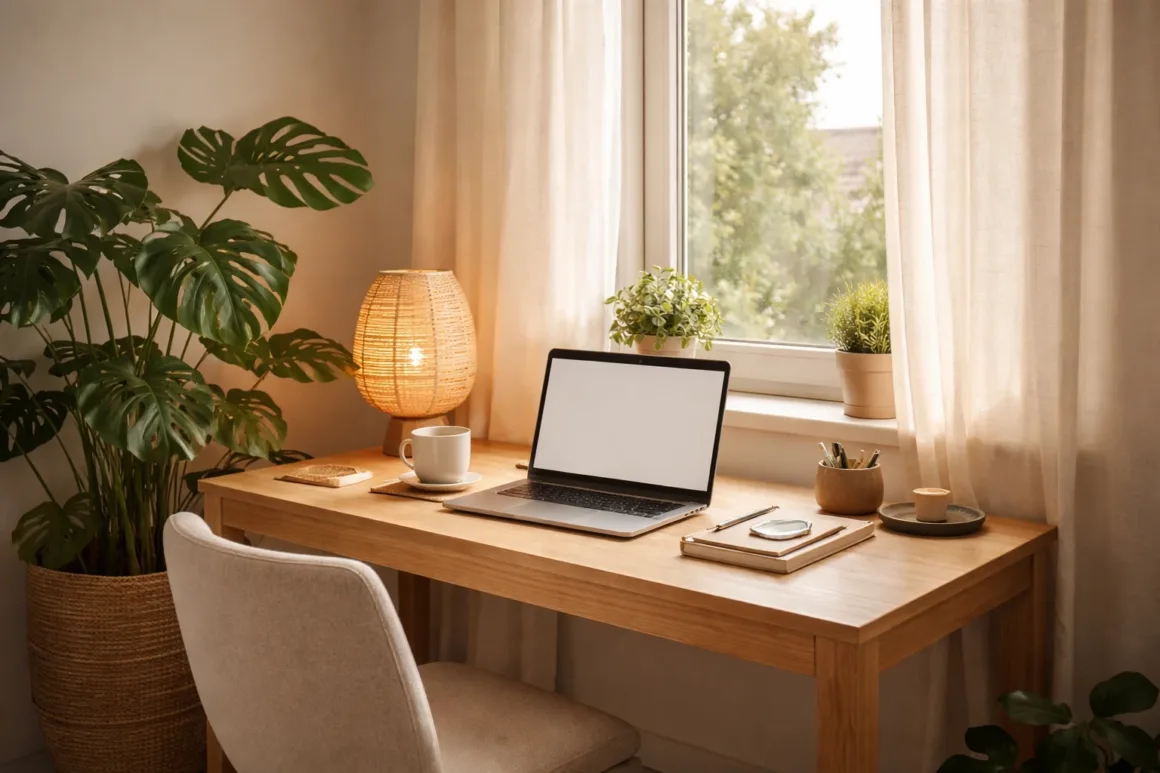
A comfortable workspace typically combines natural light with carefully positioned artificial lighting. If possible, placing a desk near a window allows daylight to brighten the room and reduce the feeling of working in an enclosed space. Side lighting—where the window sits to the left or right of the desk—usually works best because it provides brightness without creating glare on the computer screen.
Artificial lighting helps maintain consistency once natural light begins to fade. Neutral white bulbs around the 4000K range are commonly recommended for workspaces because they offer a balanced tone that feels clear without being overly harsh. A desk lamp can also help illuminate paperwork or keyboards without directing light straight onto the monitor.
Layering multiple light sources—ambient lighting, task lighting, and daylight—creates a more comfortable visual environment. This approach helps prevent the sharp contrast between bright screens and dark rooms that often leads to eye fatigue during long work sessions.
Managing Clutter and Keeping the Workspace Functional
Even a well-designed workspace can quickly lose its effectiveness if clutter begins to take over. Papers, cables, devices, and everyday household items often accumulate on desks throughout the week, gradually turning a productive setup into a distracting environment.
One of the easiest ways to maintain focus is to keep the desk surface reserved for only the items used regularly during work. Storage drawers, wall shelves, and small desk organisers can help move less frequently used tools out of immediate sight while still keeping them accessible when needed.
Cable management can play a surprisingly important role in overall workspace comfort. A cluster of loose wires under the desk or behind a monitor can make the workspace feel visually chaotic. Simple solutions such as cable trays, clips, or cord organisers keep cables tidy and prevent them from becoming tangled.
Many homeowners also explore creative ways of using storage spaces more efficiently so the workspace stays organised without overcrowding the room. Thoughtful storage planning allows the workspace to stay functional while still blending naturally with the rest of the home.
A short end-of-day routine—clearing the desk, organising documents, and resetting the workspace—can make the next workday feel far more manageable and less visually overwhelming.
Adding Personal Elements That Make the Workspace Feel Comfortable
Beyond layout and ergonomics, a comfortable home office also benefits from small personal touches that make the environment feel more welcoming. While productivity tools and furniture support physical comfort, visual surroundings influence how relaxed and focused a person feels during long work sessions.
Many people add a few decorative elements to soften the technical feel of a workspace. A framed photo, a small piece of artwork, or a neutral decorative object can give the area a sense of identity without overwhelming the desk.
Indoor plants are another popular addition. Even a single plant placed near a desk can subtly change how a workspace feels throughout the day, adding natural colour and texture to the room. In smaller workspaces, even a single plant can help visually separate the work area from the rest of the living space.
However, moderation is important. A workspace filled with too many decorative items can quickly become distracting. The goal is not to turn the desk into a display shelf, but to create a calm environment that supports concentration throughout the day.
When the workspace feels visually balanced and comfortable, it becomes easier to stay engaged with daily tasks while still maintaining a sense of personal space within the home.
When Workspace Changes Require Extra Help
As work-from-home routines become more permanent, many households eventually rethink how their workspace fits into the rest of the home. What may have started as a temporary desk in the corner of a room sometimes evolves into a larger reorganisation of furniture, storage, and room layout.
In some cases, the challenge is simply clearing enough space to create a comfortable working area. Shelving units, unused furniture, or rarely used household items can take up valuable room that would otherwise allow a desk and chair to fit more comfortably.
During larger home transitions—such as moving house, reorganising rooms, or relocating heavy furniture—some homeowners rely on Professional removalists to transport desks, shelving units, and storage items safely. This type of assistance can make it easier to reset a workspace without the risk of damaging equipment or struggling with heavy lifting.
Even smaller adjustments, such as moving cabinets or clearing out storage areas, can dramatically improve how spacious and functional a home office feels. Once unnecessary items are removed and the layout is simplified, the workspace often becomes easier to maintain and more comfortable for everyday use.
These occasional adjustments help ensure that the workspace continues to support productivity rather than becoming another source of household clutter.
Technology That Improves Everyday Workspace Comfort
As remote work becomes more common, many homeowners are gradually upgrading their workspaces with small pieces of technology designed to improve comfort. While these additions are not always essential, the right tools can make daily work noticeably easier.
Monitor arms, for example, allow screens to be raised, lowered, or repositioned throughout the day. This flexibility helps maintain a comfortable viewing height and can free up valuable desk space. Adjustable monitor placement also makes it easier to align the screen with eye level, which helps reduce neck strain during long work sessions.
Standing desks are another increasingly popular upgrade. These desks allow users to alternate between sitting and standing positions, which can help reduce fatigue caused by remaining seated for extended periods. Even occasional standing breaks throughout the day can improve circulation and help reset posture.
Other simple improvements—such as wireless keyboards, noise-cancelling headphones, or cable management systems—can also make a workspace feel more organised and comfortable. Individually these upgrades may seem small, but together they can significantly improve how smoothly a home office functions.
Ultimately, the goal of these tools is not to create a high-tech workspace, but to remove small daily frustrations that can interrupt focus and productivity.
Creating a Home Office That Supports Long-Term Comfort
A comfortable home office rarely depends on a single piece of furniture or a perfectly designed room. More often, it is the result of several small decisions working together—choosing the right location, maintaining good lighting, supporting posture with ergonomic furniture, and keeping the workspace organised.
Over time, these small adjustments can transform an improvised work corner into a reliable part of the home. A workspace that feels comfortable and functional makes it easier to stay focused throughout the day while maintaining a healthy balance between work and home life.
Whether the office occupies a dedicated room or a compact corner of the house, thoughtful planning ensures the space continues to support productivity as work routines evolve.
For many households, these small adjustments gradually turn a temporary work corner into a workspace that feels naturally integrated into everyday life.
Author & Editorial Review
Author: Perla Irish is a design and home-focused writer covering interior materials, everyday homeowner decisions, and real-world performance of residential finishes in consultation with licensed contractors and industry standards where applicable. Her work emphasizes clarity, practical context, and long-term usability over trends or transactional advice.
Editorial Review: This article was reviewed by the DreamlandsDesign editorial team with a focus on homeowner decision-making psychology, behavioral context, accuracy, and long-term relevance. Content is evaluated to ensure balanced explanations, clear intent, and alignment with Google Helpful Content and E-E-A-T quality standards.
Last updated: March 2026