Table of Contents Show
Most home toolboxes don’t start as a plan. They build over time—one tool added after a repair, another after something breaks, and a few more after realizing what was missing when it mattered.
A home toolbox typically includes a small set of power tools designed to handle everyday repairs, adjustments, and unexpected problems around the house.
This is why certain tools show up again and again across different homes. Not because they belong to a category, but because they solve the same kinds of problems people face—tight spaces, poor visibility, loose fixtures, or materials that need cutting or adjustment.
A real toolbox is not a collection. It’s a response system.
Before Any Tool Works, You Need to See
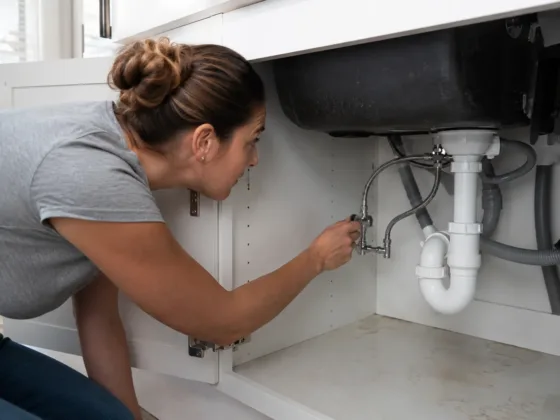
Most tasks at home don’t begin with cutting or drilling. They begin with trying to see what’s actually happening—under a sink, behind a panel, inside a dark corner.
This moment is often underestimated. Visibility is not a secondary need—it determines whether a problem can even be understood. Without it, homeowners rely on guesswork, which leads to slower decisions and repeated mistakes.
Even a simple inspection becomes difficult when light is uneven or limited. Small details get missed. Surfaces look flat when they are not. What appears fixed can still be unstable.
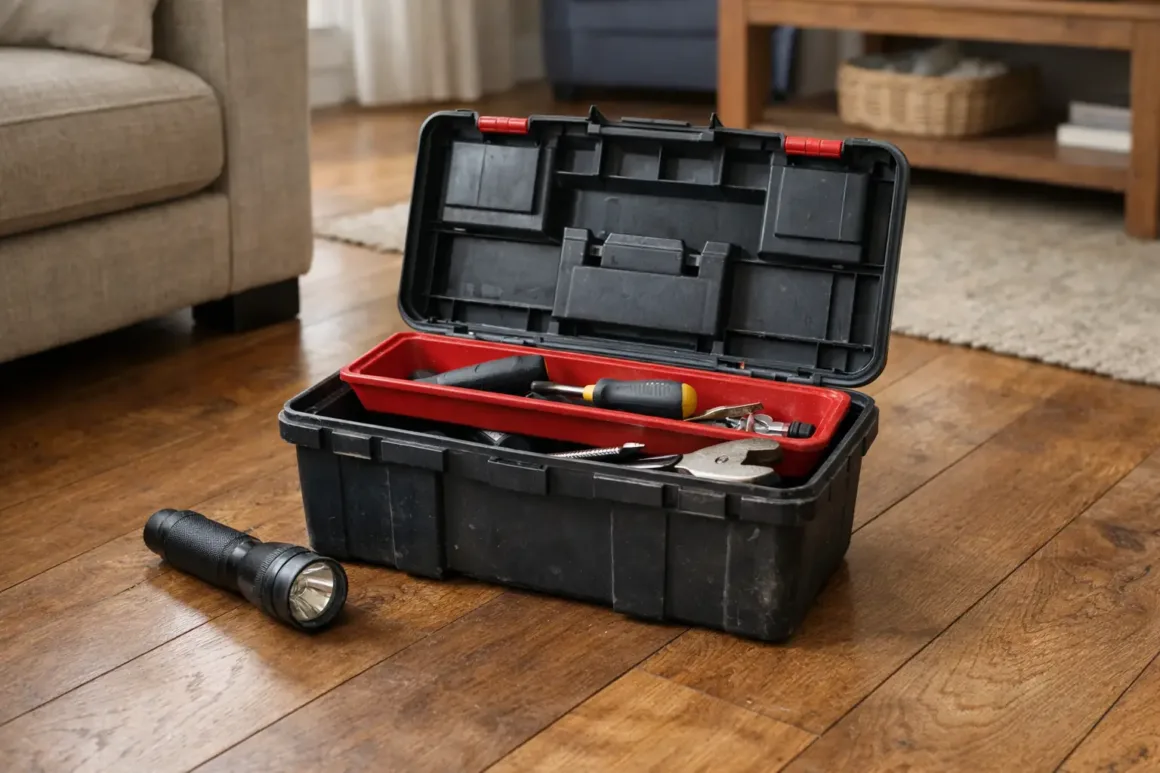
This is where a simple torch becomes part of the system. It doesn’t solve the problem directly, but it makes every other tool usable. Without light, even basic repairs slow down or stop entirely.
That role often gets overlooked. In practice, portable lighting shows up earlier than most tools, especially during outages or quick inspections. These torch light use cases explain how often it supports situations before any repair begins.
In many homes, the moment that exposes a missing tool is rarely planned. A cabinet hinge loosens late at night. A pipe under the sink starts dripping. A breaker trips and leaves part of the house in the dark.
These situations don’t wait for preparation. They demand immediate response. That is why certain tools become permanent—not because they are used daily, but because when they are needed, nothing else can replace them.
The Tools That Stay in Most Home Toolboxes
After visibility, the next layer is control—tightening, cutting, shaping, or adjusting something that isn’t working as it should.
The drill usually becomes the first reliable tool in that category. It handles mounting, fixing, and assembling without much setup. Over time, it replaces several manual tools simply because it reduces effort.
In practice, this often shows up in small moments. A shelf that needs to be mounted properly. A loose hinge that keeps shifting. Without a drill, these tasks take longer and rarely feel stable once finished.
Circular saws start to appear once cutting is no longer occasional. Materials need to be trimmed cleanly, edges need to align, and repeating the same cut by hand becomes impractical. They provide speed and consistency that manual tools struggle to match, especially when accuracy matters.
Without this kind of tool, cutting becomes inconsistent. Edges don’t align, and materials often need to be reworked. Over time, this creates more effort than the original task required.
Grinders tend to show up later, but they stay. They handle tasks that don’t fit neatly into other categories—smoothing, cutting metal, or adjusting surfaces where precision tools fall short.
This is where many homeowners realize that not all problems fit into clean categories. Some tasks require tools that can adapt rather than specialize.
Miter saws are more specific. They don’t belong in every home, but where clean angled cuts matter, they quickly become essential rather than optional.
Where Most Home Toolboxes Fall Short
Many toolboxes look complete on the surface but fail in actual situations. They may include multiple tools for cutting or drilling, yet lack something as basic as reliable lighting or a tool that fits tight, awkward spaces.
This imbalance often shows up during unexpected repairs. The right tool might be available, but the conditions—poor visibility, limited access, or unstable positioning—make it difficult to use effectively.
A balanced toolbox does not prioritize quantity. It prioritizes readiness across different conditions.
How These Tools Work Together
Most situations at home don’t rely on a single tool. A repair often starts with inspection, moves into adjustment, and ends with reinforcement.
A loose fixture, for example, may require light to inspect, a drill to secure it, and sometimes a cutting tool if materials don’t fit as expected.
This is why tools make more sense as a system rather than a checklist. Each one supports a different stage of the same situation. For a broader view of how tools fit into everyday repairs, see tools that support common DIY projects.
When one part of that system is missing, everything slows down. A task that should take minutes turns into trial and error. This is usually when homeowners recognize which tools actually belong in their toolbox and which ones were never truly necessary.
How Homeowners End Up Choosing the Right Tools
Most tool decisions are not made in advance. They are shaped by experience—what failed, what slowed things down, and what made a task harder than it needed to be.
Over time, this leads to a small but reliable set of tools that stay within reach. Not because they are the most powerful or the most advanced, but because they consistently solve real problems without complication.
This is also why certain tools, once added, are rarely removed. They earn their place through use, not specification.
What This Means for a Home Toolbox
A useful toolbox is not defined by how many tools it contains, but by whether it can respond when something stops working.
Some tools handle specific tasks. Others support multiple situations quietly in the background. Together, they create a setup that allows homeowners to act instead of wait.
This is what separates a prepared home from a reactive one. The difference is not the number of tools available, but how quickly a situation can be understood and handled without hesitation.
Related Tool Guides
- Essential Components of a Basic Home Tool Set
- Things You Should Know About Clamps for Better Project Productivity
Author & Editorial Review
Author: Perla Irish is a design and home-focused writer covering interior materials, everyday homeowner decisions, and real-world performance of residential finishes in consultation with licensed contractors and industry standards where applicable. Her work emphasizes clarity, practical context, and long-term usability over trends or transactional advice.
Editorial Review: This article was reviewed by the DreamlandsDesign editorial team with a focus on homeowner decision-making psychology, behavioral context, accuracy, and long-term relevance. Content is evaluated to ensure balanced explanations, clear intent, and alignment with Google Helpful Content and E-E-A-T quality standards.
Last updated: March 2026