Table of Contents Show
Most electrical problems don’t start as emergencies. They begin quietly—small inconsistencies, occasional flickers, or outlets that don’t behave quite right. Because nothing feels urgent, they’re easy to ignore.
Over time, these issues stack. What starts as inconvenience shifts into system strain, higher energy use, or safety risks that become harder to manage later.
The problems homeowners overlook aren’t rare—they’re familiar patterns that stay easy to live with until they aren’t.
1. Frequent Circuit Breaker Trips
A breaker that trips occasionally after a heavy load isn’t unusual. But repeated tripping under normal use signals a system mismatch.
This reflects overloaded circuits, aging wiring, or demand that has outgrown the original design. Resetting the breaker only clears the symptom.
What makes this easy to dismiss is that the reset works—temporarily. The power comes back, everything runs again, and the pattern feels manageable. But each trip adds stress to the panel and connected circuits, gradually reducing reliability over time.
It’s one of the clearest early signals that the electrical system no longer matches how the home is being used. Many of these patterns show up alongside issues covered in common electrical problems homeowners encounter.
2. Flickering or Dimming Lights
Lights that flicker when appliances run are often brushed off. They reflect unstable load distribution or voltage inconsistency.
This tends to show up in homes where electrical demand has increased without corresponding upgrades. Kitchens, workspaces, and multi-device areas expose it first.
The inconsistency is the key signal. Occasional dimming under heavy load is one thing. Repeated flickering across normal usage points to a system struggling to distribute power evenly.
The issue often overlaps with broader lighting decisions—especially where fixture placement and electrical load weren’t planned together, something often overlooked in general home lighting adjustments.
3. Warm or Discolored Outlets
Outlets should never feel warm. Heat signals resistance somewhere in the connection—whether from loose wiring, internal wear, or hidden damage.
What makes this easy to ignore is timing. The warmth doesn’t stay constant. It appears under load—when devices run longer or draw more power—then fades again.
That pattern creates a false sense of stability. In reality, it reflects a connection that is already degrading, even if the outlet still works on the surface.
Discoloration means overheating has already occurred. At that point, the issue is no longer early-stage—it’s established.
4. Outlets That No Longer Hold Plugs Properly
If plugs slide out or feel loose, the outlet has worn internally.
This creates inconsistent contact, leading to micro-arcing—small electrical jumps that generate heat over time.
The issue often hides behind normal use. Devices still power on, so it doesn’t feel urgent. But the connection is no longer stable, and the wear continues with every use.
It’s a subtle signal, but one that reflects broader system aging—especially in high-use areas like kitchens and living rooms.
5. Lack of Ground Fault Protection (GFCI)
Bathrooms, kitchens, garages, and outdoor areas require GFCI protection. Many older homes still operate without it.
Without proper protection, faults near water sources carry significantly higher risk. The issue isn’t visible unless you check for it directly.
This is where many systems fall behind current standards. The home still functions, but it no longer reflects how electrical safety is expected to work today.
These gaps usually become clear during a broader system review, especially when compared against modern benchmarks outlined in home inspection checklists.
6. Overuse of Extension Cords and Power Strips
Extension cords start as temporary fixes but often turn into permanent setups.
This shifts load into configurations the system wasn’t designed for, increasing heat buildup and uneven demand.
The pattern usually develops gradually. One extra device leads to another, until a single outlet carries far more load than intended.
If extension cords are part of daily use, the issue isn’t access—it’s infrastructure. In many cases, the long-term fix involves adding proper outlets, as outlined in adding electrical sockets safely.
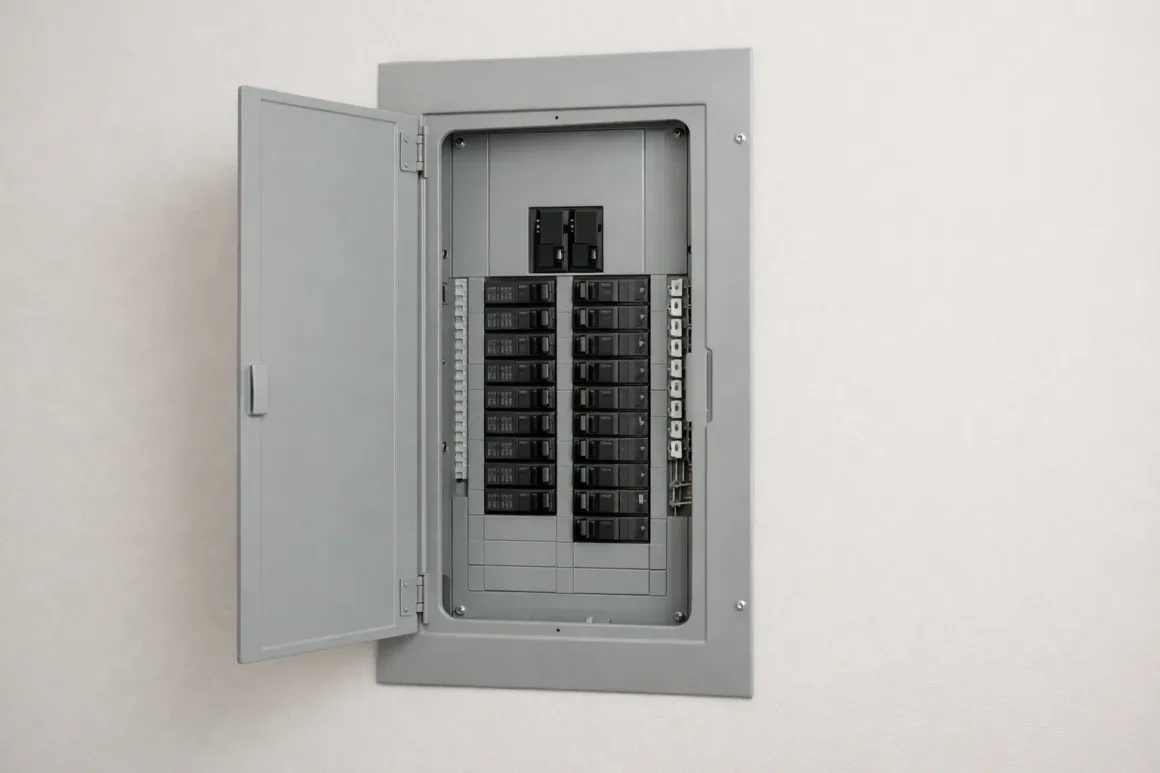
7. Outdated Electrical Panels
Many homes still run on panels designed for a different era of energy use.
Modern usage—continuous devices, higher loads, and multi-room demand—pushes these systems beyond their original capacity.
The system still appears to work. Power is available, devices run, and nothing feels immediately broken.
But recurring overloads and uneven distribution indicate that the margin of safety is shrinking. Left unaddressed, these issues tend to escalate—something explored further in why ignoring electrical problems leads to bigger costs.
What These Issues Usually Mean in Real Homes
Each issue feels manageable on its own. Together, they point to a system that hasn’t kept up.
Breaker trips, flickering lights, and overloaded outlets rarely happen in isolation. They tend to appear in clusters—different symptoms of the same underlying imbalance between demand and system capacity.
This is the point where surface fixes stop working. Resetting breakers, swapping outlets, or adding adapters doesn’t resolve the core issue—it only delays it.
A structured evaluation—like an electrical inspection—often reveals how these patterns connect and where the system is starting to fall behind.
For homeowners in Edmonton, working with a licensed Electrician helps surface underlying issues before they escalate into larger failures.
The Long-Term Perspective
Electrical systems stay invisible until they don’t.
Small inconsistencies aren’t random—they’re early signals that the system and usage are no longer aligned.
Addressing them early keeps decisions simple. Waiting reduces options.
This isn’t about reacting to failure. It’s about recognizing patterns before failure becomes the only signal left.
Disclosure: This article may include contextual references to products, services, or providers for general informational purposes. All content is written independently and reflects editorial judgment focused on clarity, safety, and real-world relevance.
Author & Editorial Review
Author: Perla Irish is a design and home-focused writer covering interior materials, everyday homeowner decisions, and real-world performance of residential finishes in consultation with licensed contractors and industry standards where applicable. Her work emphasizes clarity, practical context, and long-term usability over trends or transactional advice.
Editorial Review: This article was reviewed by the DreamlandsDesign editorial team with a focus on homeowner decision-making psychology, behavioral context, accuracy, and long-term relevance. Content is evaluated to ensure balanced explanations, clear intent, and alignment with Google Helpful Content and E-E-A-T quality standards.
Last updated: April 2026