Table of Contents Show
If you’ve ever stepped into a home near the coast or in a tropical region, you know how challenging humidity can be for furniture and fabrics. Moisture in the air doesn’t just make a room feel sticky—it gradually affects how interiors age, how materials behave, and how comfortable a space feels over time.
Furniture can warp or loosen, fabrics may trap odors, and surfaces that once felt solid can start to feel damp or unstable. The good news is that with the right material choices and realistic expectations, homes in humid climates can remain comfortable, durable, and visually appealing.
The sections below look at materials that handle humidity with fewer surprises, as well as those that break down once moisture becomes a constant condition.
Why Humidity Causes Long-Term Damage
Humidity refers to the amount of moisture present in the air. When indoor humidity consistently stays above roughly 60 percent, materials absorb moisture faster than they can release it. This ongoing imbalance is what causes most long-term damage.
Wood expands and contracts as it absorbs moisture, metals are more prone to corrosion, and fabrics can hold dampness deep within their fibers. Unlike spills or water exposure, humidity damage happens gradually, often without immediate warning signs.
For furniture, this typically results in swelling, cracking, loose joints, or veneer separation. For fabrics, prolonged moisture encourages mildew growth, musty odors, discoloration, and a heavier feel that never quite disappears.
Furniture Materials That Perform Better in Humid Climates
In humid homes, furniture performance is shaped more by how materials behave over time than by what they claim to resist.
Teak Wood
Teak wood has long been used in humid climates because of its natural resistance to moisture. Its naturally high oil content helps repel moisture, making it resistant to rot, mildew, and decay. This is why teak is widely used in outdoor and marine environments.
Indoors, teak offers both durability and warmth, aging more predictably than many other woods when humidity levels fluctuate.
Rattan and Wicker
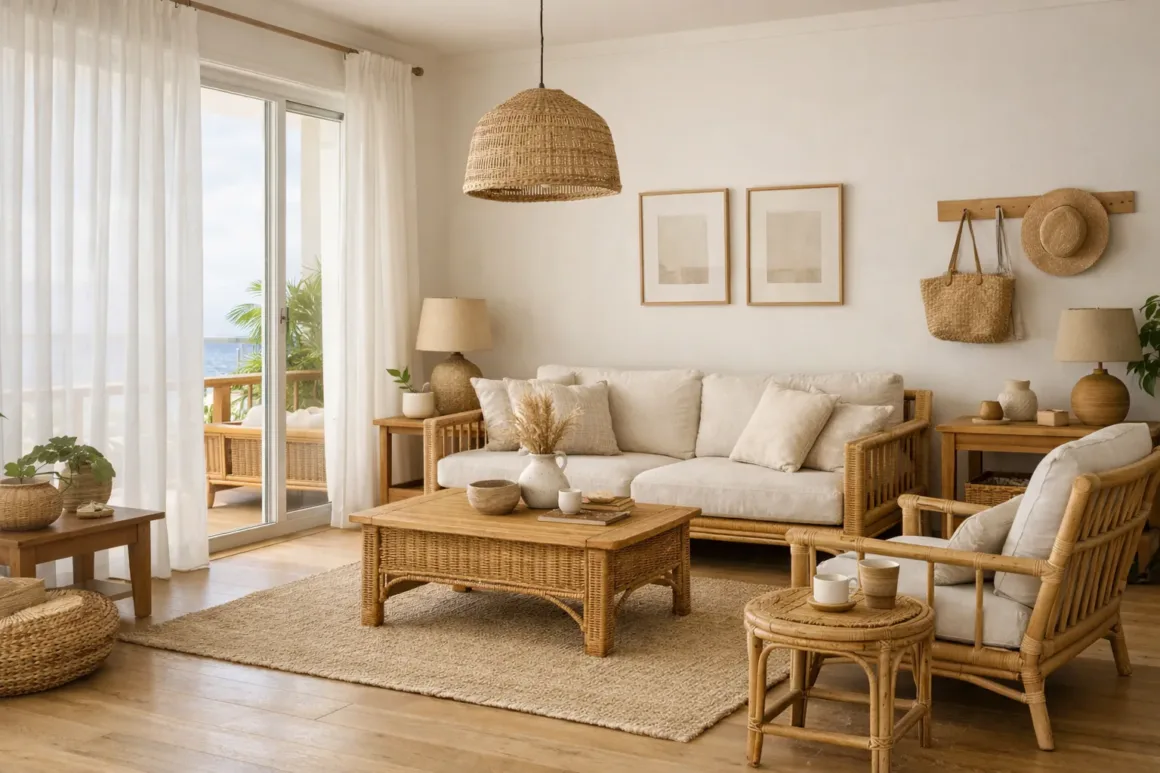
Rattan and wicker allow air to circulate naturally, reducing moisture buildup around the material. Synthetic wicker, made from resin or polyethylene, offers the same visual texture with added resistance to mold and humidity-related weakening.
These materials are commonly used for seating, accent pieces, and lighter furniture where airflow matters more than weight.
Bamboo
Bamboo is lightweight, strong, and naturally more resistant to swelling than many traditional woods. Its natural silica layer provides an added barrier against moisture absorption.
While bamboo performs best indoors or in covered spaces, it behaves more consistently in humid regions when protected from prolonged dampness.
Metal and Aluminum
Powder-coated aluminum and stainless steel do not absorb moisture and remain dimensionally stable in humid air. These materials are often used in modern furniture frames, shelving, and structural components.
In coastal areas, rinsing off salt residue and maintaining protective coatings helps prevent surface corrosion over time.
Synthetic Resins
Synthetic resin furniture is highly resistant to humidity and requires minimal maintenance. It’s particularly useful in coastal homes or spaces where moisture exposure is constant.
Fabric Materials That Handle Humidity More Comfortably
Fabric choices influence comfort and durability just as much as furniture frames. In humid climates, breathability and drying speed matter more than thickness or luxury appeal.
Linen
Linen has an open weave that dries relatively quickly in humid conditions. It helps regulate body temperature and resists the heavy, damp feeling common in humid spaces.
Cotton Blends
Cotton blends remain breathable while reducing moisture retention compared to pure cotton. Cotton blends that include synthetic fibers strike a balance by improving durability while maintaining comfort.
Performance Fabrics
Engineered performance fabrics are manufactured to handle moisture exposure, fading, and slower drying conditions. These fabrics are well suited for high-use seating in humid environments.
Jute and Other Natural Accent Fibers
While not ideal for large upholstered pieces, jute works well in decorative accents where breathability and texture matter most. A space with rattan seating and neutral fabrics can be visually grounded by accents like an elegant jute pillow, adding warmth without trapping excess moisture.
Furniture and Fabrics That Often Struggle in Humid Homes
Some materials do not tolerate prolonged moisture exposure and break down faster in humid climates.
Unsealed wood, MDF, and particleboard absorb moisture easily, leading to swelling, cracking, and structural breakdown. Iron and low-grade steel rust quickly if coatings fail.
Luxury fabrics such as silk, velvet, wool, and natural leather are also problematic. These materials absorb moisture readily, making them prone to mold growth, discoloration, and persistent odors.
Cushions, Padding, and Hidden Moisture Retention
Humidity doesn’t only affect visible surfaces. Cushions, padding, and foam often retain moisture long after the surrounding air feels dry, especially in seating and bedding used every day.
Lower-density foam tends to trap moisture more easily, which can lead to a consistently heavy feel and slow drying times. Over months or years, this moisture retention accelerates material breakdown, reducing comfort and support before obvious wear appears.
In homes where humidity lingers, limited airflow often worsens moisture retention inside cushions and fabrics, which is why addressing airflow and moisture buildup can make a noticeable difference in long-term comfort.
In humid climates, higher-density foam and breathable cushion construction generally perform better. Removable covers, ventilated liners, and regular rotation allow internal materials to dry more evenly, reducing odor buildup and uneven wear.
Maintenance Expectations in Humid Climates
Even well-chosen materials benefit from realistic maintenance strategies. Consistent airflow, regular cleaning, and thoughtful placement all reduce uneven moisture exposure.
Regular care matters more in humid environments, as upholstery that holds moisture often ages unevenly, making consistent upholstery maintenance in humid homes an important part of long-term furniture care.
Avoid pushing furniture directly against exterior walls, rotate cushions regularly, and maintain stable indoor humidity levels using ventilation or climate control when necessary.
In humid regions, furniture problems rarely appear all at once. More often, materials soften gradually, joints loosen, and fabrics begin to feel heavier long before visible damage becomes obvious.
Material choices made early tend to shape how a space feels years later. In humid homes, furniture and fabrics that cope well with moisture movement remain usable and comfortable longer, while poorly suited materials quietly create frustration long before they fully fail.
Disclosure: This article may include contextual references to products, services, or providers for general informational purposes. All content is written independently and reflects editorial judgment focused on clarity, safety, and real-world relevance.
Author & Editorial Review
Author: Perla Irish is a design and home-focused writer covering interior materials, everyday homeowner decisions, and real-world performance of residential finishes in consultation with licensed contractors and industry standards where applicable. Her work emphasizes clarity, practical context, and long-term usability over trends or transactional advice.
Editorial Review: This article was reviewed by the DreamlandsDesign editorial team with a focus on homeowner decision-making psychology, behavioral context, accuracy, and long-term relevance. Content is evaluated to ensure balanced explanations, clear intent, and alignment with Google Helpful Content and E-E-A-T quality standards.
Last updated: February 2026