Table of Contents Show
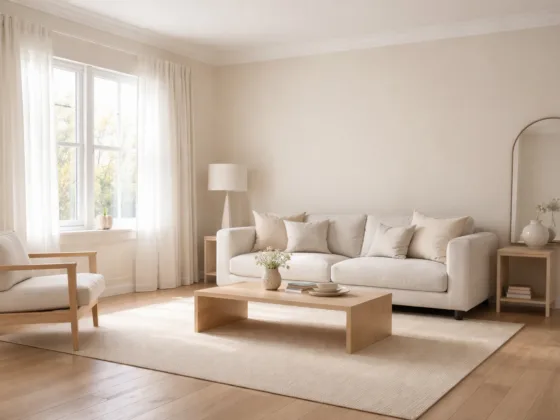
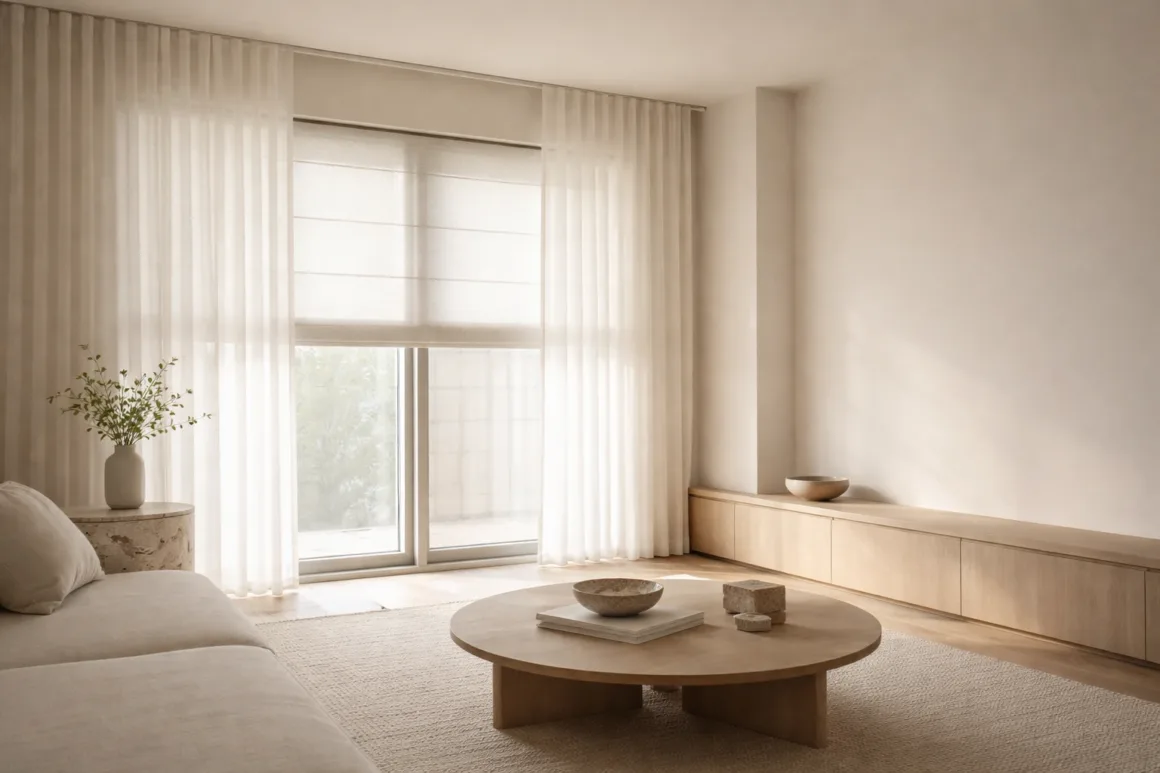
Window furnishings are often treated as decorative afterthoughts. In practice, they function as one of the most influential architectural controls within a room. Curtains, blinds, and layered treatments regulate light intensity and reshape perceived height, directly affecting how wall colour behaves throughout the day.
A carefully chosen paint colour can still feel misaligned if daylight is unmanaged. Direct glare sharpens contrast, while diffused light softens undertones. Heavy coverage, on the other hand, compresses space visually. When viewed as a light-management system rather than a styling accessory, window treatment becomes central to interior balance. This is why two rooms with identical paint can feel completely different once daylight and fabric coverage shift.
In Practical Terms
- Window treatment regulates how wall colour behaves.
- Fabric weight changes perceived height and depth.
- Layering improves seasonal comfort and glare control.
- Undertone alignment prevents visual tension.
Windows as Architectural Variables
Every window introduces three variables into a room: direction, scale, and exposure. South-facing windows deliver consistent brightness. Western exposure intensifies late-afternoon warmth. Oversized glazing increases reflective load (the amount of light bouncing back into the room) on adjacent walls.
Without modulation, strong directional light exaggerates undertones and distorts perceived proportion. Layered treatments allow gradual adjustment rather than abrupt transitions between full exposure and complete blackout.
Light Regulation and Colour Interaction
Light does not simply illuminate colour — it reshapes it. Sheer fabrics diffuse brightness while preserving tonal clarity. Structured blinds allow directional filtering. Heavier drapery reduces reflection and deepens perceived saturation.
The relationship between light direction and undertone response plays a measurable role in how interior colours are perceived. For a deeper explanation of how colour psychology interacts with light and proportion, see our in-depth guide to colour psychology in interior design.
Privacy Without Visual Weight
Privacy solutions influence spatial perception as much as light control. Heavy, opaque coverings establish enclosure but reduce vertical openness. Lightweight layering preserves daylight while softening interior visibility from outside.
The choice depends on street proximity, interior sightlines, and ceiling height. In compact spaces, visual heaviness along window lines can shorten perceived wall height. Elevating curtain tracks closer to ceiling level restores vertical emphasis.
Beyond visual balance and privacy, thermal performance becomes the next critical consideration.
Energy Performance and Thermal Moderation
Window furnishings also influence thermal performance. In this context, thermal moderation refers to reducing indoor temperature fluctuation by limiting excessive solar heat gain and radiant heat loss. Fabric density and layering directly affect how much heat enters or escapes a room.
Beyond aesthetics, thoughtful window coverage contributes to environmental comfort and energy efficiency without structural modification.
In regions with high solar exposure, reflective linings lower solar heat gain coefficient (SHGC), the measure of how much solar radiation enters a space through glazing. This reduces heat buildup without altering the window structure itself.
In practical terms, the room remains noticeably cooler during peak afternoon heat, reducing reliance on air conditioning.
Proportion and Vertical Emphasis
Window treatment placement alters perceived ceiling height and wall scale. Mounting curtain rods closer to the ceiling line elongates vertical proportion. Wider panel extension beyond window edges increases perceived width.
These adjustments are subtle, yet they influence how the architecture of a room is perceived more than decorative details alone.
Daylight Phases and Material Response
Daylight shifts continuously throughout the day and across seasons. Morning clarity differs from late-afternoon warmth, and seasonal shifts alter intensity. Window furnishings respond differently depending on fabric density, weave structure, and colour temperature.
Lightweight linen diffuses brightness while preserving tonal nuance. Dense woven textiles absorb illumination and reduce reflection. Sheer layering maintains spatial openness during daylight hours and supports heavier coverage in the evening.
For example, a west-facing living room fitted with dense neutral drapery can appear several shades warmer by late afternoon, even when wall paint remains unchanged.
Rooms with strong western exposure require more deliberate modulation, particularly where warm late-day light intensifies red or yellow undertones in adjacent surfaces. Coordinated window treatment prevents colour distortion and glare fatigue.
Undertone Coordination Between Fabric and Wall
Window fabric carries undertones just as paint does. A cool-grey blind placed against warm beige walls introduces subtle tension. A cream-toned curtain alongside crisp white trim can appear yellow under LED lighting.
Consider a north-facing room with cool daylight and pale grey walls. Introducing warm cream curtains in that setting can shift the entire space toward yellow undertones by evening. The change feels subtle at first, but over time it alters perceived harmony.
Evaluating fabric swatches directly against wall colour under real lighting conditions prevents undertone conflict. Sample testing should occur both during peak daylight and under evening artificial lighting to ensure continuity.
This layered assessment follows the same principles outlined in our interior colour planning approach, where light interaction and undertone harmony shape long-term visual comfort.
Acoustic Influence and Soft Surface Absorption
Beyond light and privacy, window furnishings contribute to acoustic moderation. Soft textiles absorb sound reflections, particularly in rooms with hard flooring and minimal upholstery, while dense drapery further reduces echo and enhances perceived quietness.
In open-plan layouts with large glazing panels, untreated windows amplify reverberation. Layered fabric coverage softens sound reflection and enhances spatial comfort without structural renovation.
Layering Strategy for Seasonal Adaptability
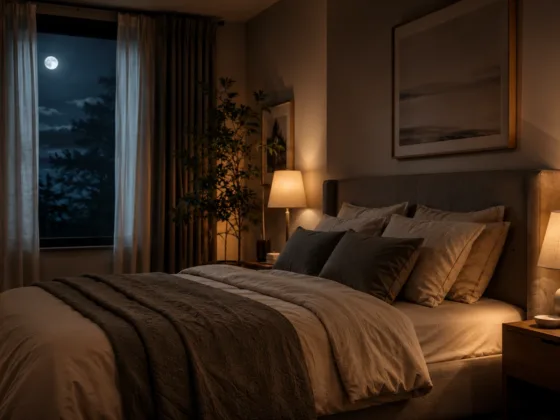
Seasonal variation alters light intensity and thermal performance. Layered systems offer flexibility without requiring full replacement. Sheers diffuse daylight during active hours, while blackout panels provide insulation and full light control when needed.
This adaptability supports both comfort and energy moderation. Instead of relying on a single material solution, layering introduces dynamic control aligned with environmental shifts.
Quick Reference: Window Treatment Impact
- Sheer fabrics soften glare without eliminating daylight.
- Dense drapery reduces reflection and enhances acoustic control.
- Higher mounting positions increase perceived ceiling height.
- Layered systems improve seasonal flexibility.
- Undertone alignment prevents visual tension.
When Structured Customisation Makes Sense
Standard off-the-shelf options address basic coverage, but rooms with unique proportions or directional exposure often benefit from tailored measurement and layered coordination. Structured assessment considers window orientation, ceiling height, adjacent materials, and light intensity before selecting fabric weight or blind configuration.
Several providers offer structured consultation models for complex glazing layouts and layered installations.
One example of a provider offering structured custom window furnishing solutions is Amaru, where design consultation integrates light behaviour, proportion, and privacy needs within a cohesive interior plan.
This reference serves as an example of structured consultation rather than an endorsement of a single provider, as similar approaches are used across the industry.
Common Mistakes in Window Planning
- Selecting fabric tone without considering wall undertones.
- Mounting curtain rods too low, reducing perceived height.
- Using heavy blackout solutions in rooms that require reflected daylight.
- Ignoring seasonal light shifts during material selection.
Conclusion: Window Treatment as Interior Architecture
Window furnishings shape how interiors feel and function. They regulate light, adjust proportion, and influence colour behaviour across surfaces. When evaluated as part of a broader architectural system, they strengthen spatial balance rather than compete with it.
Thoughtful modulation of daylight and privacy transforms window coverage from decorative element into structural design decision.
Author & Editorial Review
Author: Perla Irish is a design and home-focused writer covering interior materials, everyday homeowner decisions, and real-world performance of residential finishes in consultation with licensed contractors and industry standards where applicable. Her work emphasizes clarity, practical context, and long-term usability over trends or transactional advice.
Editorial Review: This article was reviewed by the DreamlandsDesign editorial team with a focus on homeowner decision-making psychology, behavioral context, accuracy, and long-term relevance. Content is evaluated to ensure balanced explanations, clear intent, and alignment with Google Helpful Content and E-E-A-T quality standards.
Last updated: February 12, 2026