Table of Contents Show
Lighting often shapes how a home feels before we even notice it. A softly lit corner can feel inviting and calm, while harsh or uneven lighting can make the same space feel unfinished. Decorative lighting lives in that subtle space between function and atmosphere, helping rooms feel intentional rather than accidental.
From subtle accent lights to more noticeable fixtures, lighting tends to shape how a room feels as the day moves from morning to evening. This guide shares practical, experience-based ways to use decorative lighting so your home feels comfortable, expressive, and thoughtfully put together — without relying on trends or complicated setups.
When lighting is planned alongside materials and textures, it becomes part of the architecture itself. This effect is especially noticeable in interiors that use depth and contrast, such as those shown in wooden slat walls decor ideas, where light and shadow work together to create visual interest.
What Decorative Lighting Really Means
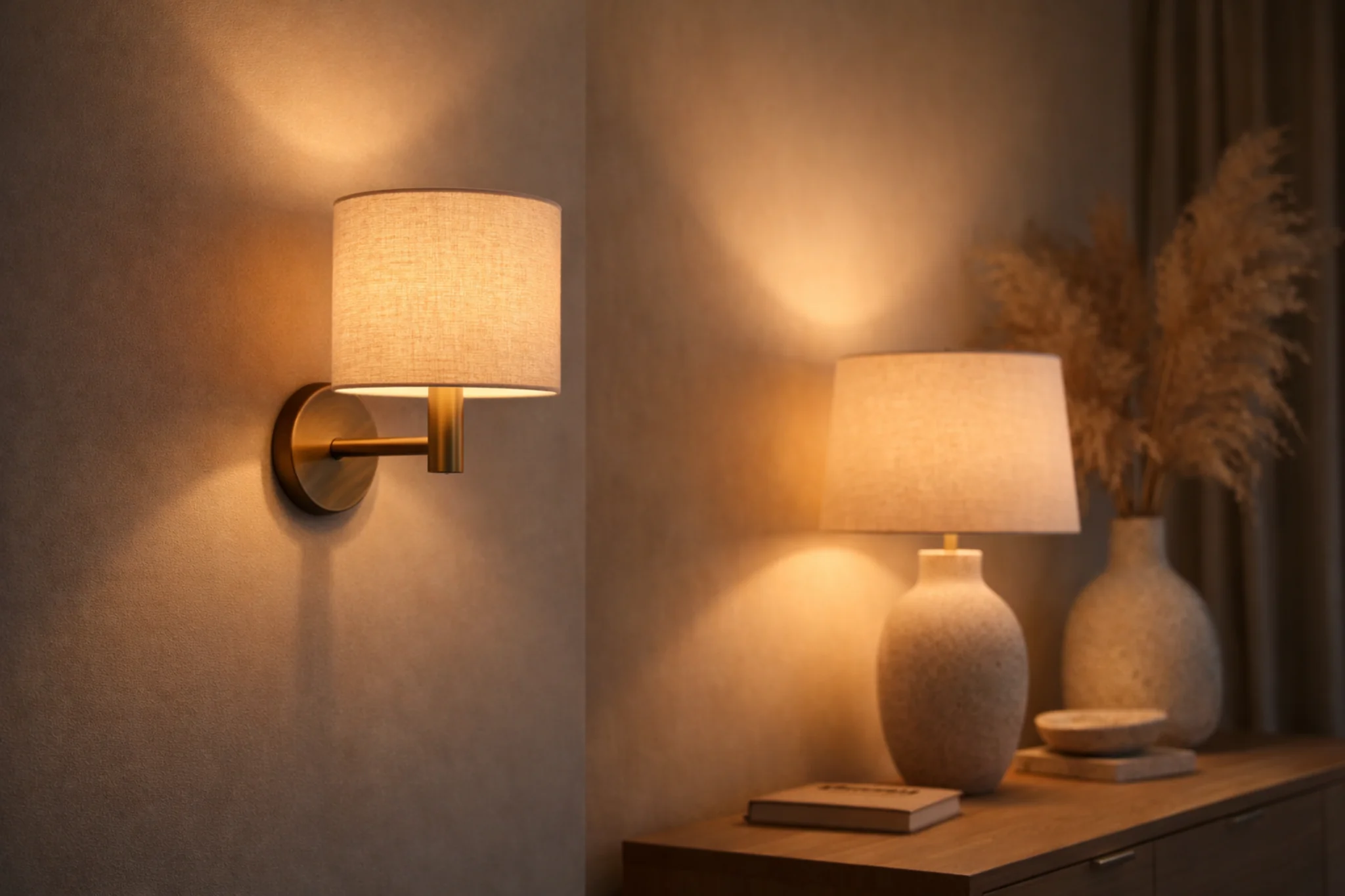
Decorative lighting refers to fixtures chosen not only for illumination, but also for their visual presence. These include pendant lights, sculptural lamps, wall sconces, and subtle accent lighting that shape how a room feels rather than simply how bright it is.
In real homes, decorative lighting usually feels most natural when it works alongside practical light sources rather than replacing them. This approach allows rooms to shift naturally throughout the day — brighter when focus is needed, and softer when comfort matters more.
Types of Lighting Used in Home Design
- Ambient lighting – provides general illumination for the entire room
- Task lighting – supports activities like reading, cooking, or working
- Accent lighting – highlights textures, artwork, or architectural features
- Decorative lighting – adds character and visual identity
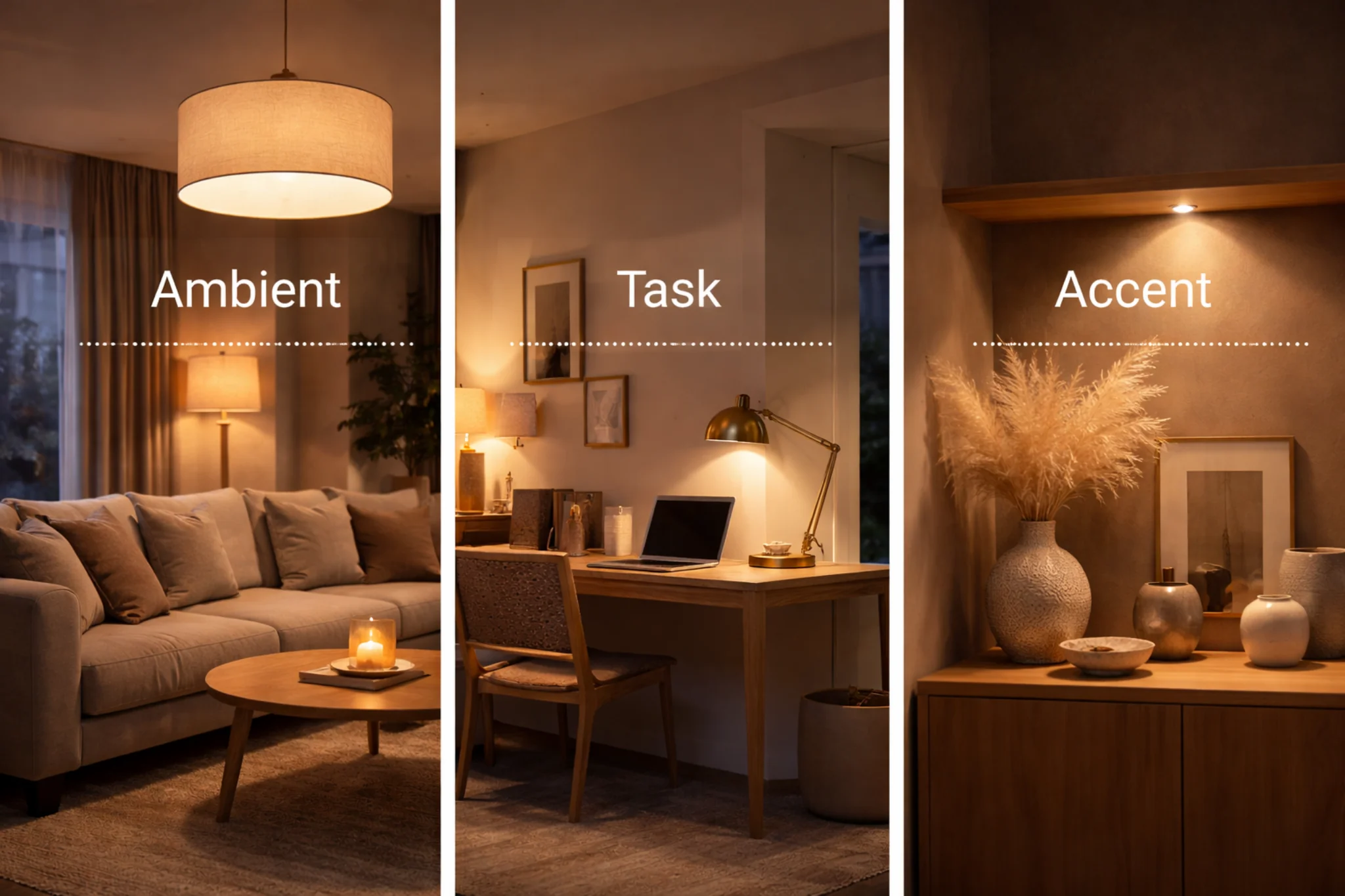
One option many homeowners find useful is track lighting, since it can be adjusted over time as furniture layouts or needs change.
Living Room Lighting Ideas
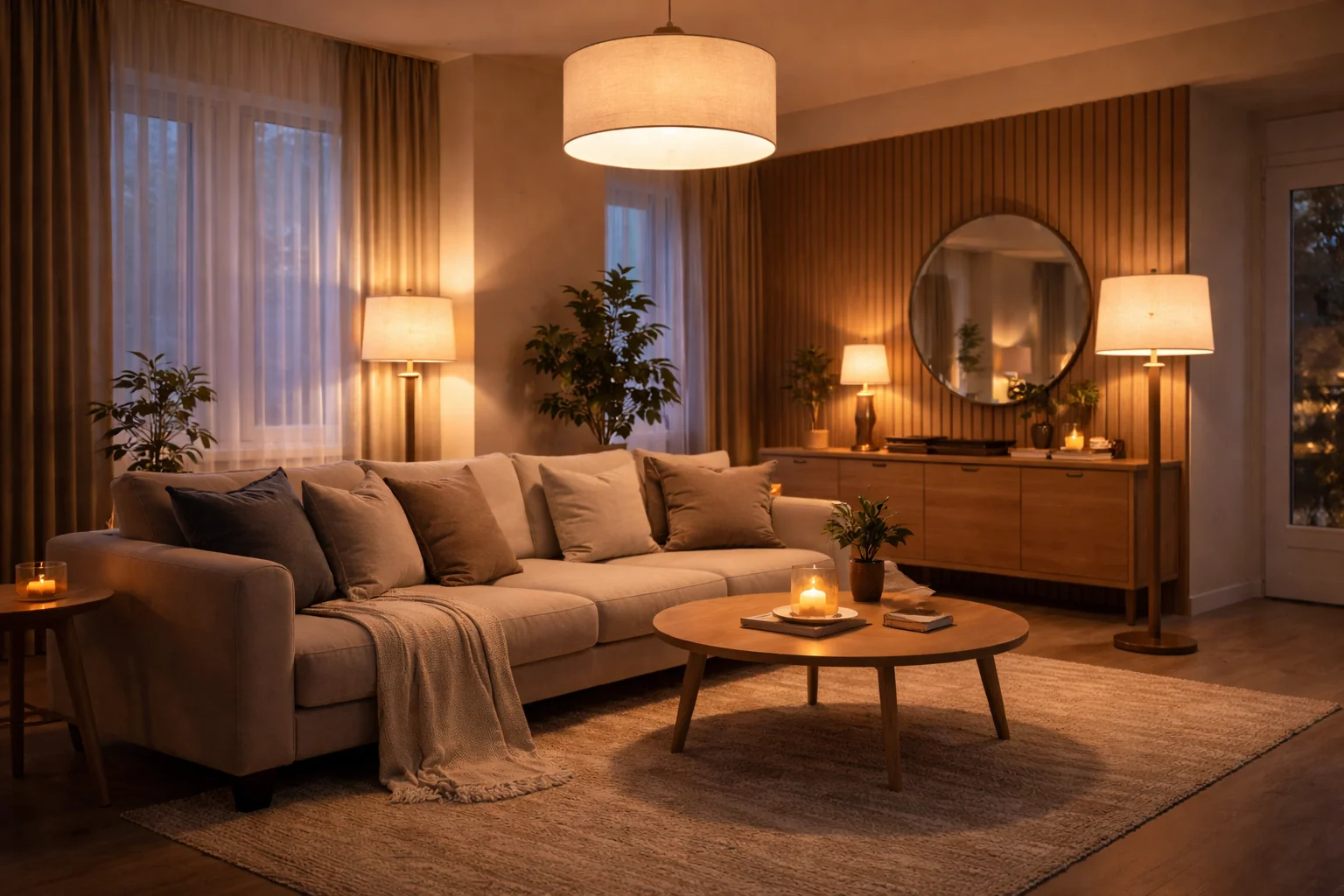
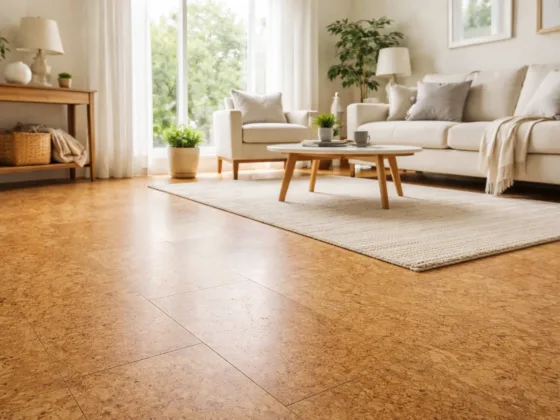
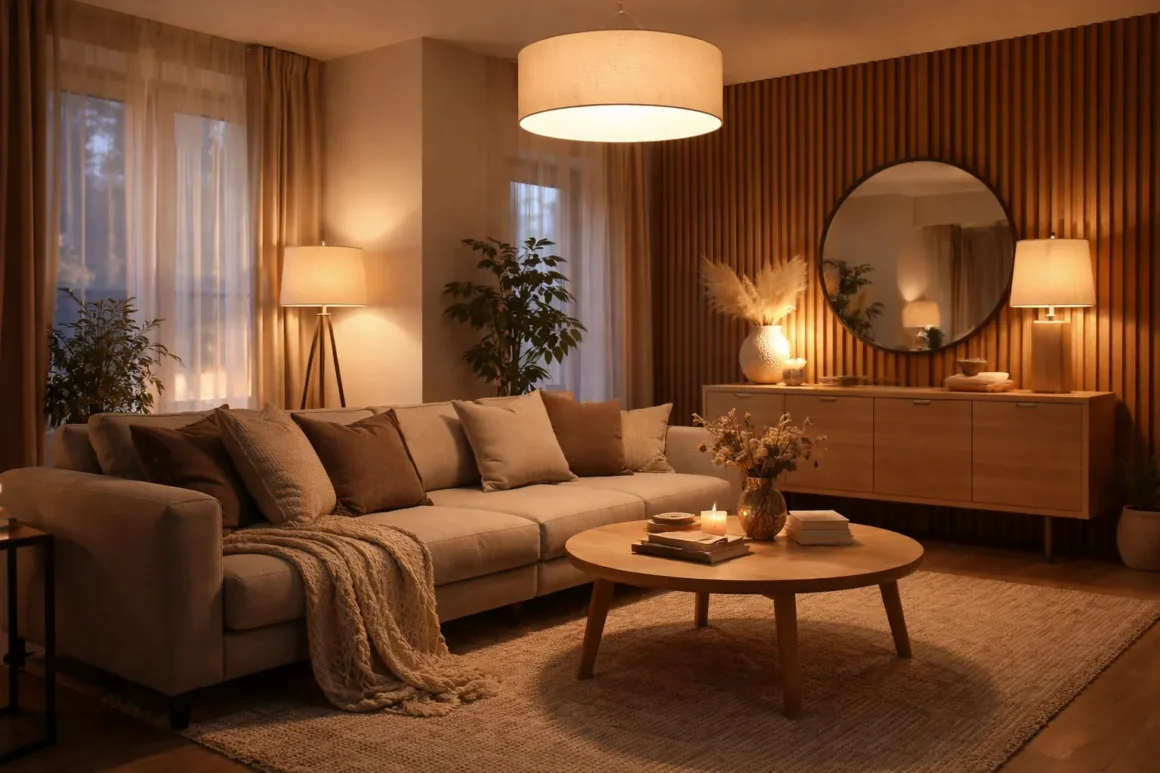
In living rooms, lighting often plays a role in how the space is actually used, helping define seating areas and guide attention. A central fixture often anchors the room visually, while table lamps and accent lights soften contrast and add depth.
In larger layouts, lighting becomes a subtle zoning tool. These large living room design ideas show how thoughtful lighting placement can separate seating areas without physical dividers.
Good living room lighting usually comes from a mix of sources rather than a single overhead fixture.
Bedroom Lighting That Feels Comfortable
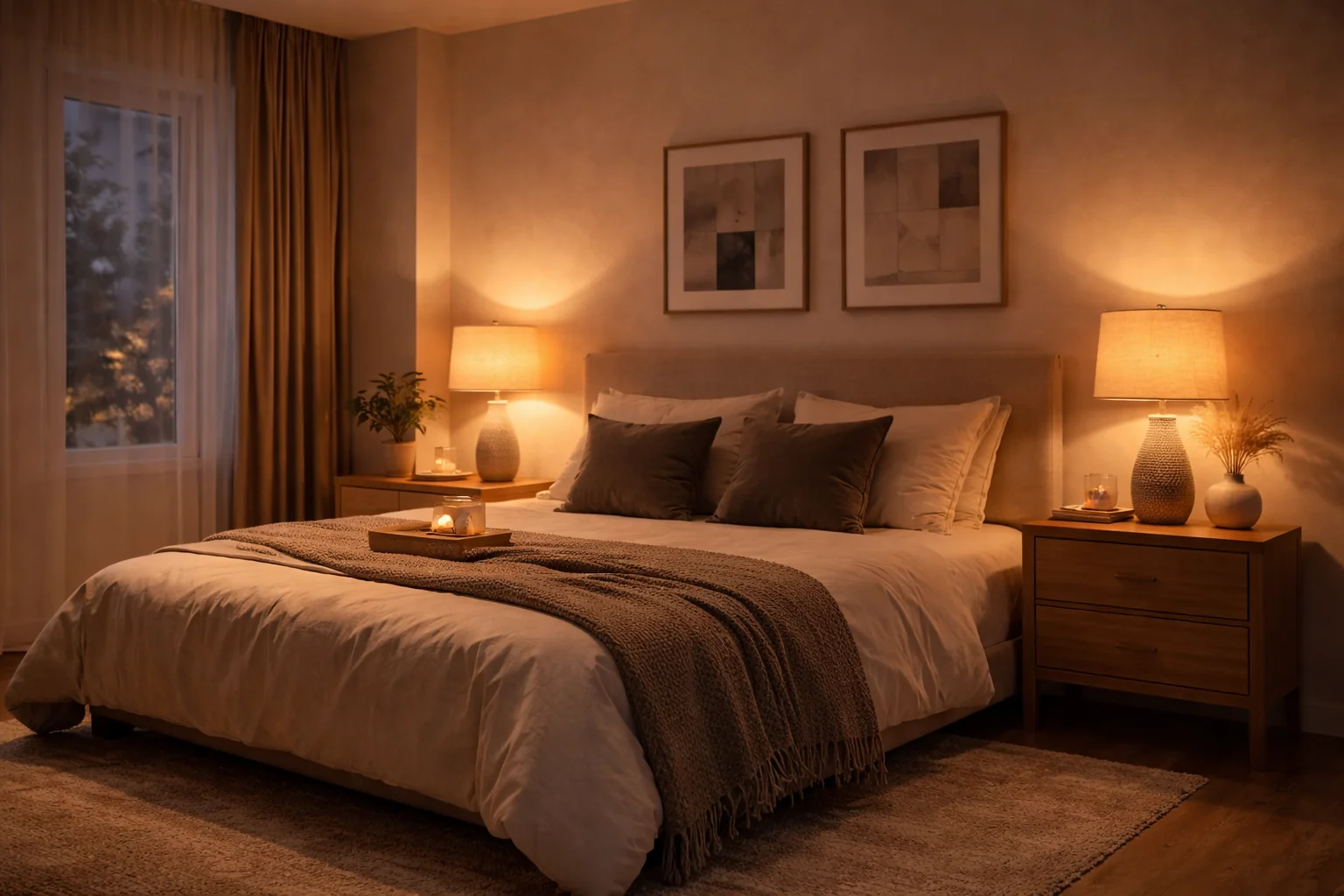
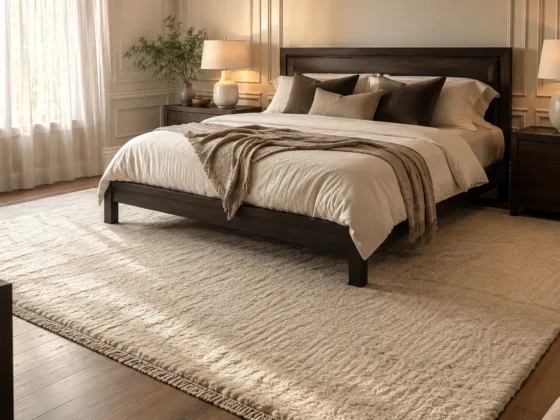
Most bedrooms feel more relaxing when the lighting is soft and warm rather than bright or overly white. Color temperatures between 2700K and 3000K are generally ideal because they reduce glare and create a calming atmosphere.
Wall-mounted lamps, shaded pendants, or bedside lights offer practical illumination without overpowering the room. Mood-forward interiors, such as those shown in dark academia bedroom lighting ideas, rely heavily on controlled brightness and shadow.
For layout and comfort guidance, these modern bedroom lighting and design tips provide helpful direction for balancing function with atmosphere.
Kitchen and Work Areas: Lighting That Actually Works
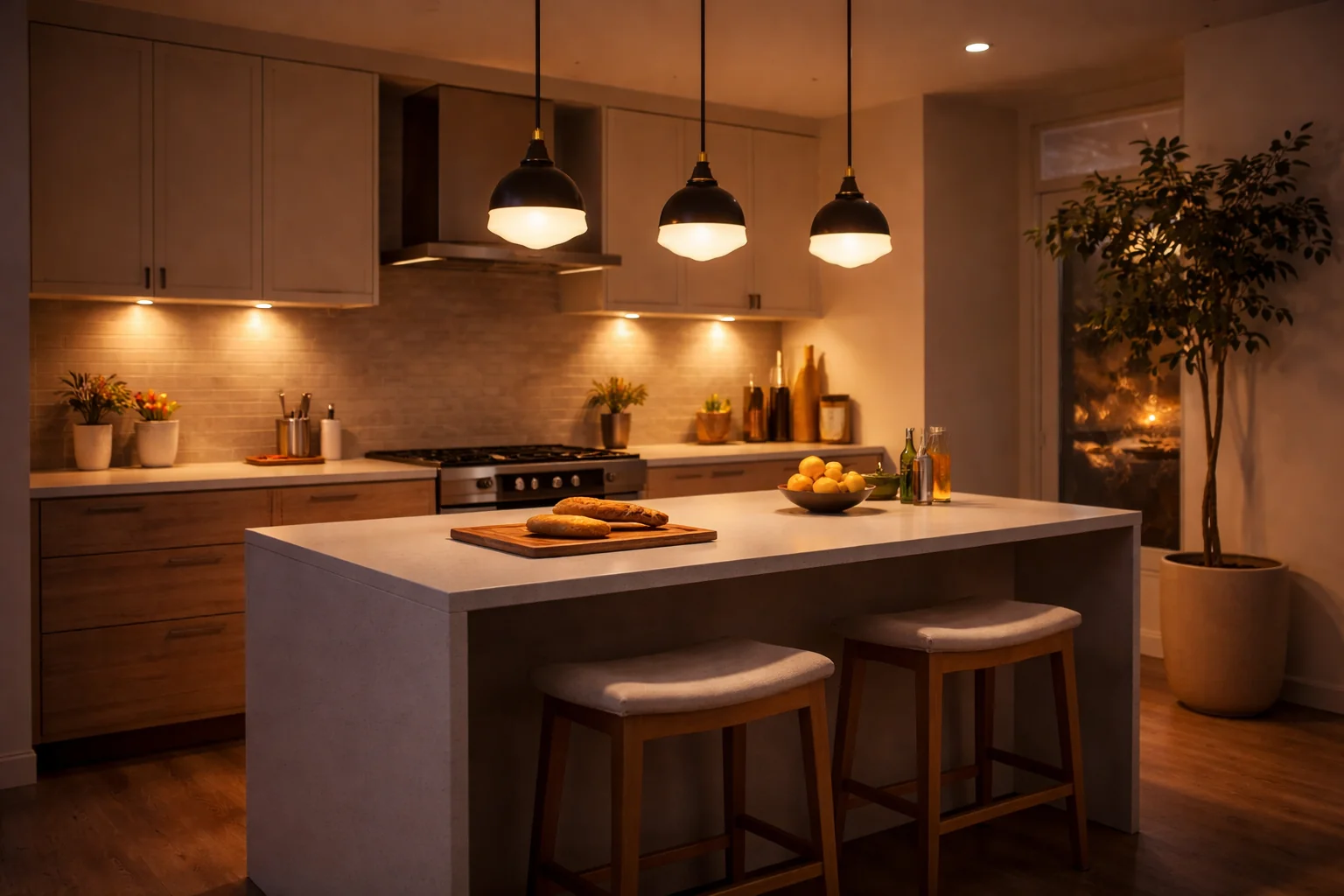
In kitchens and work areas, lighting needs to be bright enough for daily tasks without making the space feel cold or overly harsh. The key is combining clarity with warmth.
- Recommended color temperature: 4000K–5000K for clear visibility
- Task brightness: around 300–500 lumens per square meter for countertops
- Accent lighting: warmer tones (around 3000K) to soften the overall look
Under-cabinet lighting, pendants over islands, and diffused ceiling fixtures work together to reduce shadows. Choosing the right diffuser or shade also matters, which is why this lamp shade style guide can be useful when balancing brightness with comfort.
In many homes, kitchens tend to feel more welcoming when practical lighting is softened with a warmer decorative layer.
In many real homes, even a small change — such as switching to warmer under-cabinet lighting in the evening — can noticeably affect how long people feel comfortable staying in the space.
Lighting as Part of Interior Style
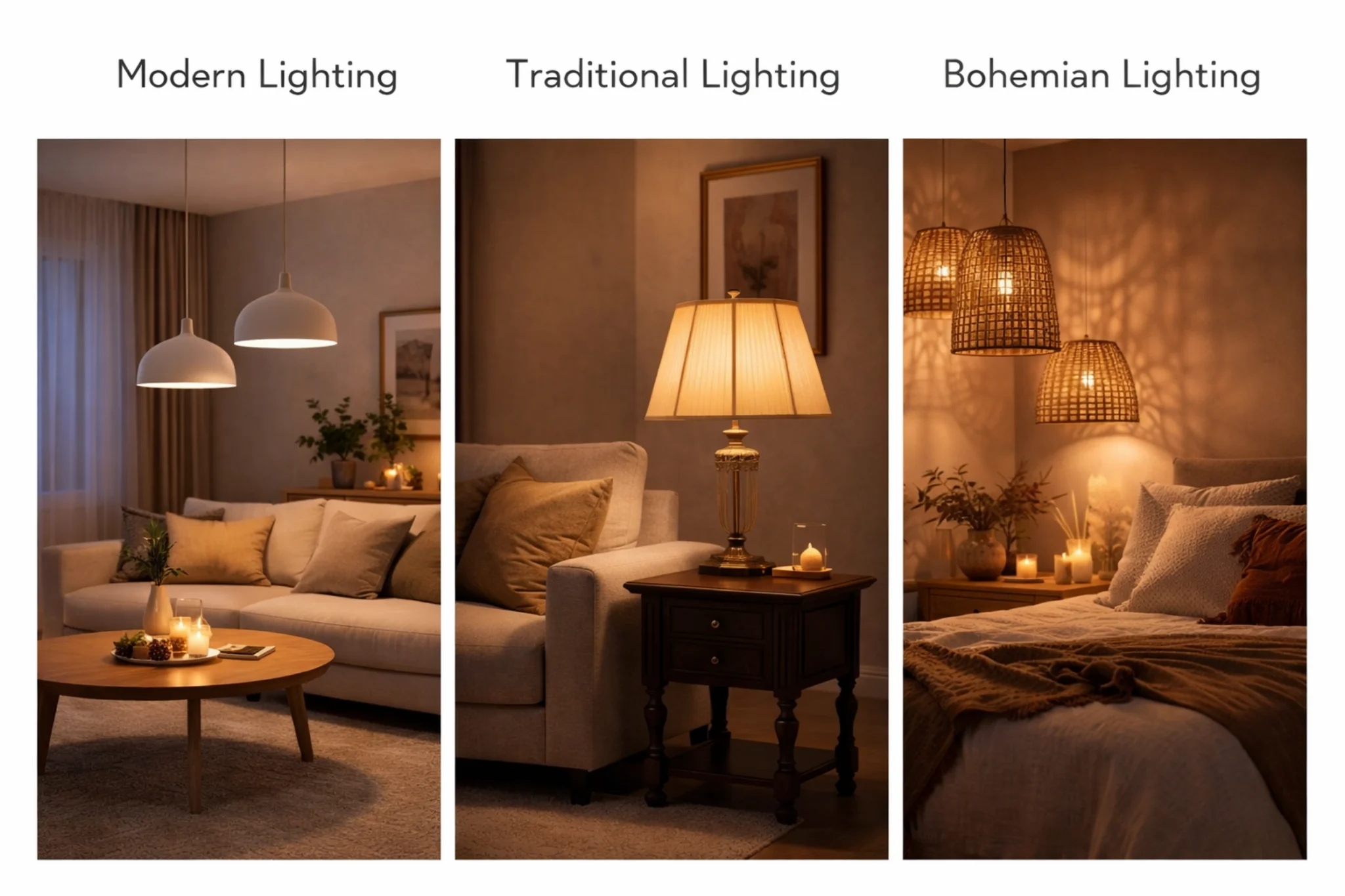
Lighting often plays a quiet but important role in how a home’s style comes across overall. Fixture shapes, finishes, and light temperature all influence whether a space feels traditional, modern, or somewhere in between.
This becomes especially clear in style-driven interiors, such as those explored in interior design inspiration with lighting, where illumination supports mood, storytelling, and visual rhythm.
Decorative Lighting and Seasonal Styling
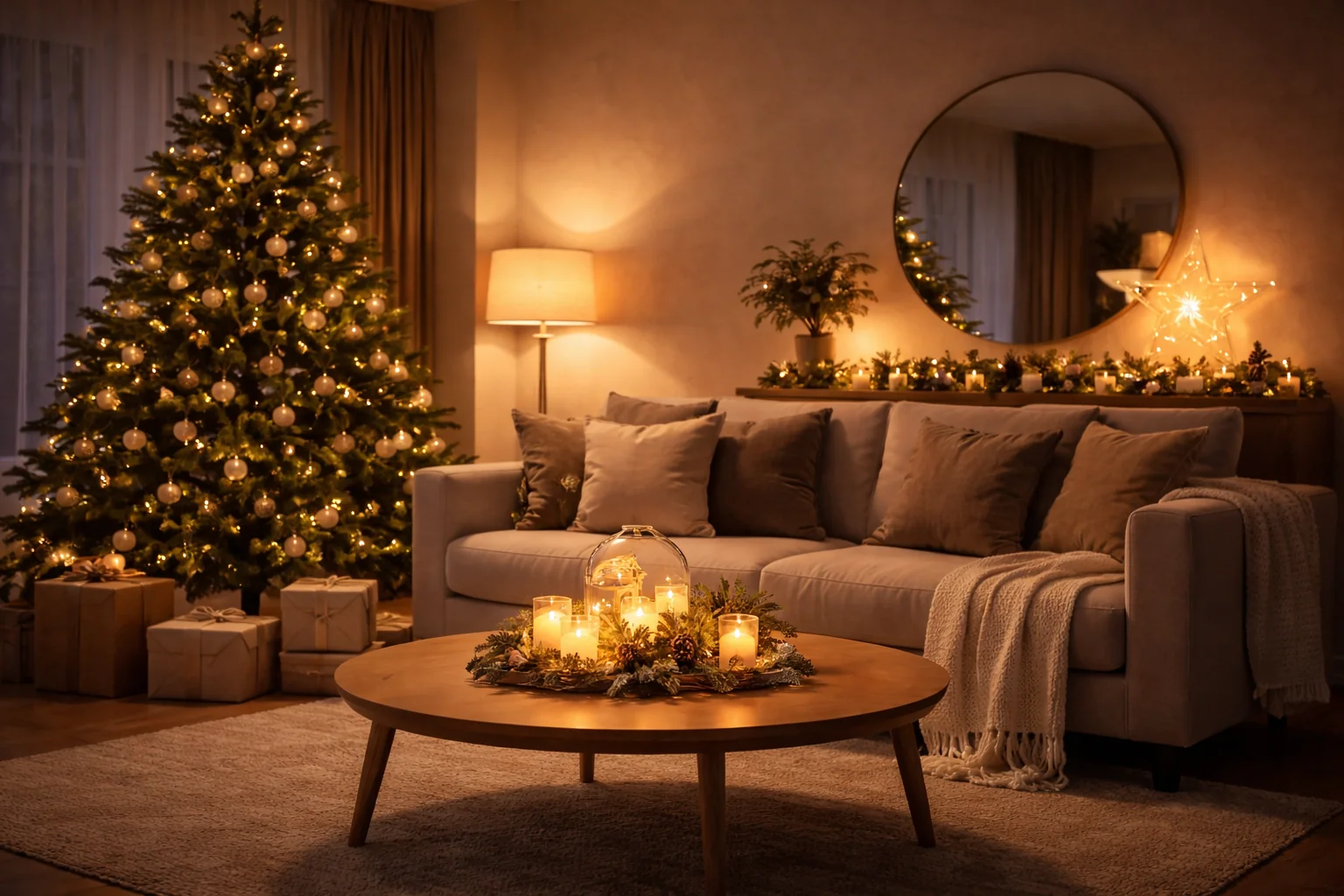
As the seasons change, even small lighting adjustments can help refresh a space without major updates. Accent lights can highlight objects, greenery, or textures so they feel intentional rather than temporary.
This approach works especially well when paired with natural materials, as shown in these natural home decorating ideas.
With thoughtful placement, ornaments can become a year-round feature in your home, supported by gentle lighting that keeps them visually relevant beyond a single season.
Energy Efficiency and Practical Choices
Decorative lighting doesn’t have to come at the cost of efficiency. Modern LED bulbs, dimmers, and zoning systems make it easier to reduce energy use while maintaining comfort.
These ways to improve home lighting efficiency outline practical adjustments that work in real households.
Final Thoughts
Decorative lighting works best when it feels intentional, flexible, and human. Spaces tend to feel more comfortable when light comes from more than one source, shifts naturally throughout the day, and supports how people actually use a room. With thoughtful choices around tone, placement, and purpose, lighting can quietly shape spaces that feel both practical and expressive over time.
Author: Perla Irish — design writer covering interior styling, lighting behavior, and practical home improvement.
Editorial Review: This article was reviewed by the DreamlandsDesign editorial team to ensure clarity, accuracy, and alignment with internal quality and helpful-content standards used across our home improvement content.
If you’re interested in contributing thoughtful editorial content on home design and everyday living, our contributor guidelines outline what we look for.