Table of Contents Show
Looking for wardrobe designs 2026 that feel fresh but still stand the test of time? You’re in the right place. This guide helps you match a wardrobe design to your home interior and daily routine — whether you live in a compact city apartment or a roomy family house. We’ll cover walk-in closets, corner solutions, integrated lighting, materials, space planning, and a short decision checklist to make choosing painless.
A well-designed wardrobe does more than store clothes: it reduces clutter, speeds up your morning routine, and can even protect garments from humidity and pests. Below are practical designs that work in real homes — with quick tips so you can picture exactly how each idea would fit your space.
If you’re planning a full bedroom refresh, you may also want to explore our guide to bedroom remodel ideas or see how smart storage fits into modern home storage solutions.
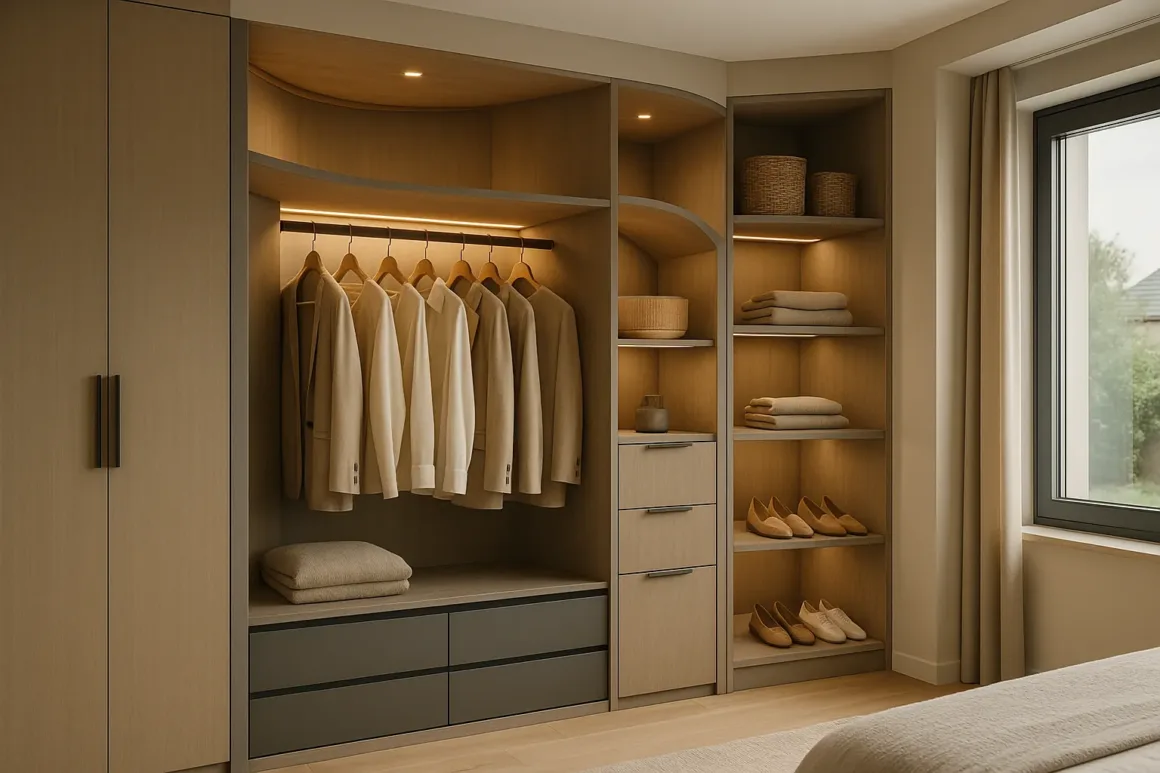
Modern wardrobe designs are no longer just about storage — they combine layout, lighting, and materials to support daily routines while keeping bedrooms tidy and visually balanced.
1. Walk-In Wardrobe Designs 2026 — boutique comfort at home
Walk-ins feel a bit like having a small boutique in your home: they provide room to try outfits, keep accessories organized, and allow mirrors and seating so dressing becomes a calm, intentional ritual. When planned well, a walk-in turns daily dressing into something you don’t have to rush.
- Space to allow circulation: Keep 80–100 cm (32–40 in) clear between storage runs for comfortable movement.
- Mix storage types: Long hanging for coats, double hanging for shirts, drawers for small items, and jewelry inserts for organization.
- Optional island: Adds storage and polish — only if you have the floor area for it.
For layout ideas and visual inspiration, see the DreamlandsDesign overview of current walk-in styles in our trends page.
2. Corner Wardrobe Designs — smart use of awkward spaces
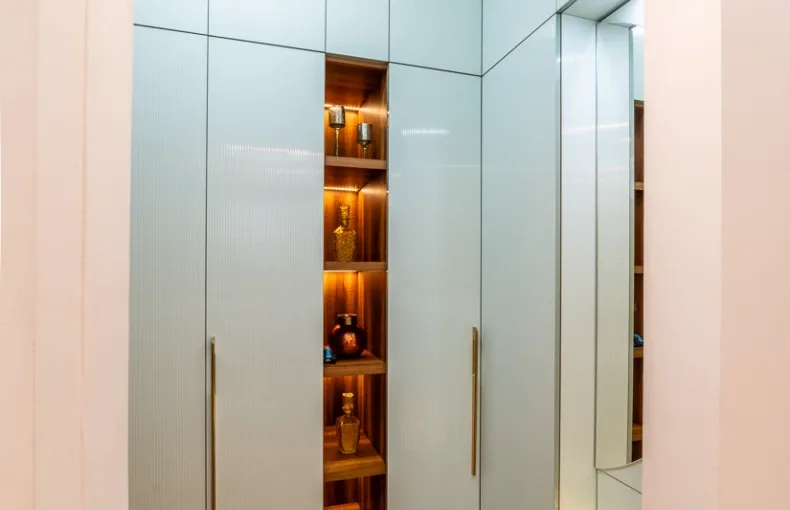
Corners are often wasted. A corner wardrobe converts that dead space into high-capacity storage. This is a great choice for small rooms, guest rooms, or anyone who wants the maximum storage with minimal footprint.
- L-shaped run: Uses two walls with continuous shelving and hanging.
- Angled corner unit: Works well with sliding or bi-fold doors to reduce swing area.
- Triangular shelving: Perfect for shoes and baskets.
See real corner wardrobe options from designers such as Contempo Space for layout ideas and finishes.
3. Lighting-integrated Wardrobes — find things fast, quietly
Internal lighting makes a surprisingly big difference. Motion-activated LEDs let you retrieve items in the dark without disturbing a sleeping partner — and high-CRI LED strips help you judge fabric and color accurately.
- Use diffused LED strips under shelves for even illumination.
- Motion sensors avoid fumbling for switches.
- Choose high CRI (90+) LEDs when color matching matters.
For tested product ideas, study modular closet systems (IKEA, Elfa) and professional installs to find lighting layouts that work for your space.
Note: when checked externally these media files externally returned an access response; if the image fails to show after publishing, please verify the file in the WordPress Media Library and re-upload if needed.
Why invest in a great wardrobe?
At first glance, a shelf and a hanging rail might seem enough, but a considered wardrobe solves problems that cheap storage cannot: it helps you find what you need quickly, keeps garments in better shape, and makes rooms feel calmer and larger.
The real challenge isn’t choosing a trend — it’s finding a design would aligns with every home, taking into account room size, lifestyle habits, and long-term usability.
- Better daily routines — less time searching for outfits.
- Improved garment care — ventilation, material choices, and protective finishes.
- Decluttered rooms — everything has a place, and it’s easier to keep tidy.
Market context: the global wardrobe market size is increasing, which shows homeowners are investing in smarter storage solutions.
Materials, finishes, and hardware — what to pick
- MDF + laminate: cost-effective and clean-looking.
- Plywood / solid wood veneers: more durable and repairable; warmer aesthetic.
- Glass / frosted fronts: lighten the feel and can look very modern.
- Hardware: soft-close hinges, quality drawer runners, and robust hanging rails make daily use feel premium.
Space planning & measurements — practical rules
- Hanging rod heights: ~110–120 cm for shirts, 160–180 cm for long garments.
- Shelf depth: 35–45 cm for folded clothing.
- Shoe shelf depth: ~30–35 cm.
- Clearance in front of doors: allow ~50 cm for hinged doors; sliding doors need less.
Cost guide: quick tiers
- Budget: flatpack or freestanding — low cost, fast.
- Mid-range: semi-custom modular systems — better finishes and durability.
- High-end: bespoke built-ins with hardwood veneers, integrated lighting, and accessories.
Maintenance & garment care
- Keep interiors dry — use moisture absorbers in humid climates.
- Use cedar blocks or natural sachets for moth prevention.
- Wipe laminate and glass per the manufacturer’s guidelines to keep finishes looking new.
Quick decision matrix — which wardrobe fits you?
| Need | Best fit |
|---|---|
| Minimal space/budget | Corner wardrobe or sliding doors |
| Luxury + storage | Walk-in wardrobe |
| Night visits/shared bedroom | Lighting-integrated wardrobe |
| Smart home | Motion sensors, app controls, and inventory tags |
FAQs
How wide should a walk-in wardrobe be?
A single-run walk-in should be at least 120–150 cm wide; for two facing runs, allow ~240–260 cm overall for comfortable circulation.
Are sliding doors better than hinged doors?
Sliding doors save swing space and are great for tight rooms. Hinged doors give full access at once and are better when you have space in front of the wardrobe.
What lighting is best for wardrobes?
LED strip lighting with a diffuser and motion sensor is practical and low-heat. Choose high CRI bulbs (90+) if you frequently check color and fabric in the wardrobe.
Conclusion
Wardrobes are small investments with a noticeable everyday payoff: less stress finding clothes, a neater room, and longer-lasting garments. Whether you aim for a compact corner solution or a full boutique-style walk-in, a well-planned wardrobe changes how your home functions. These wardrobe designs 2026 focus on real-life usability, long-term comfort, and flexible layouts that adapt as your storage needs change.
If you don’t yet have a custom design, talk with a designer or try a modular system first — it’s often the fastest way to get neat, usable storage without a full remodel.
- Author: Perla Irish — Home Improvement Editor, DreamlandsDesign.
- Reviewer: Renee Gangeness, B.Des (Interior Design), Design Consultant, California Closets — profile: California Closets — Renee Gangeness.