Table of Contents Show
Stand across the street from almost any home and one feature immediately stands out: the driveway. It occupies a surprising amount of the front elevation, yet homeowners often save it for the end of a renovation project. Fresh paint, new landscaping, and an updated entry certainly improve curb appeal, but an aging paved surface still shapes the overall first impression.
A thoughtfully designed paver driveway can transform the look of an entire property. The right pattern introduces rhythm, while a carefully detailed border frames the paved surface and gives it a finished appearance. Together, those elements make the exterior feel cohesive rather than assembled piece by piece.
Many exterior renovation projects begin with paint, landscaping, or a new front entry, while the driveway stays exactly as it is. Yet every visitor crosses it before noticing almost anything else. Treating the driveway as part of the overall renovation—not as a separate project—creates a stronger visual connection between the house, garden, and entrance. Pairing it with other home improvement ideas that increase the value of your house results in an exterior that feels complete instead of updated one feature at a time.
Why the Pattern Matters
Two driveways built with the same pavers can look surprisingly different once the laying pattern changes. Beyond appearance, the arrangement also affects structural performance, installation efficiency, and long-term durability. Choosing a layout that suits both the home’s architecture and the demands of daily vehicle traffic usually produces the best long-term result.
Unlike patios or garden paths, driveways carry the repeated weight of vehicles every day. An interlocking layout distributes those loads more evenly, limits movement over time, and preserves the finished appearance far longer than a poorly chosen pattern.
Several layouts remain popular because they combine long-term performance with timeless style. Each pattern changes the character of a driveway in a different way, so the right choice depends as much on the home’s architecture as the level of vehicle traffic it will carry.
Running Bond
Running bond has remained popular for decades because it suits almost every architectural style. The familiar brick-like offset keeps the surface orderly, reduces the number of difficult cuts, and simplifies installation without sacrificing visual appeal.
Herringbone
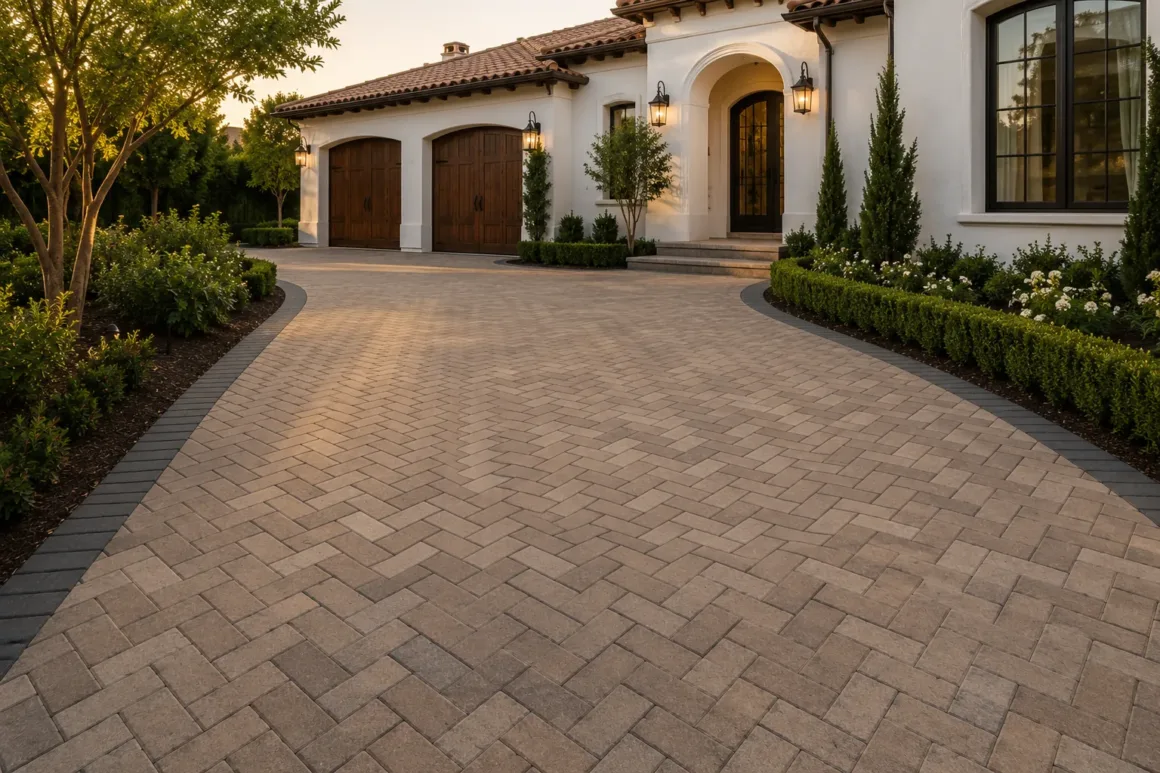
Many paving contractors recommend herringbone for residential driveways because the interlocking pattern stands up exceptionally well to repeated vehicle traffic. The 45-degree version feels more dynamic, while the 90-degree layout creates a calmer, more structured appearance.
Basketweave
Basketweave introduces a softer, more traditional character. Alternating pairs of pavers resemble woven fabric, adding subtle texture without overpowering the surrounding architecture. The pattern complements colonial, cottage, and heritage-inspired homes especially well.
Stack Bond
Stack bond creates crisp grid lines that suit contemporary architecture and large-format pavers. The clean geometry leaves very little room for installation errors, so careful alignment becomes especially important from the first row onward.
Cobble and Random Ashlar
Cobble and random ashlar layouts combine several paver sizes to create a relaxed, handcrafted appearance. They work particularly well with Mediterranean, rustic, and European-inspired homes, where the irregular arrangement softens the overall look and makes small variations far less noticeable.
Color often gets the most attention, but the laying pattern does just as much to define a driveway’s character. Homeowners who want a deeper understanding of layout choices can explore the visual language of paver patterns, which explains how different arrangements influence the look and feel of an outdoor space.
Selecting the field pattern is only half of the design process. The border determines how neatly that pattern meets the rest of the landscape.
Why Borders Make Such a Difference
Even the most attractive paving pattern looks unfinished without a border. A well-designed edge frames the layout, defines the driveway’s outline, and gives the entire installation a cleaner, more intentional appearance.
A border also separates the paved surface from lawns, flower beds, walkways, and decorative stone. That clear edge gives every landscape element its own space, so the entire front yard looks organized instead of blending into one continuous paved area.
Extending the same paving materials to nearby walkways or patios creates a stronger sense of continuity throughout the landscape. Consistent colors, textures, and edging make each outdoor feature feel connected instead of competing for attention.
Several border styles remain popular because each creates a distinct architectural effect.
Soldier Course
The soldier course places pavers lengthwise around the perimeter to create a crisp, formal frame. This classic detail works well with almost every architectural style, from traditional homes to clean contemporary designs.
Sailor Course
The sailor course lays the pavers flat across the edge instead of standing them upright. The wider border softens the overall appearance while still providing strong visual definition.
Double Border
A double border uses two rows of pavers, often in complementary or contrasting colors. The extra width adds visual weight and suits larger driveways where a single border might appear too narrow.
Contrasting Colors
A darker border surrounding lighter field pavers remains one of the simplest ways to define the driveway’s shape. The contrast catches the eye without overpowering the overall design, making this approach a timeless choice for homeowners who prefer understated curb appeal.
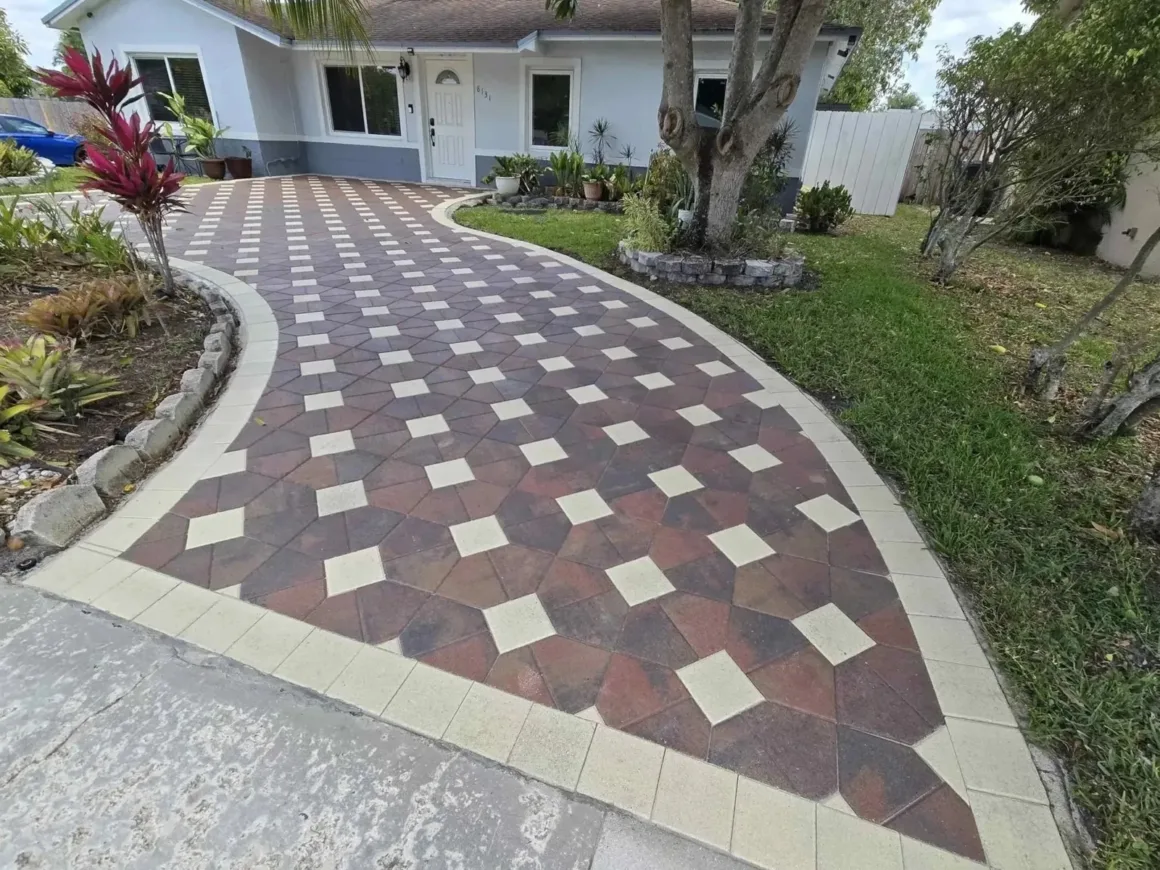
Border width deserves just as much attention as color. A narrow border complements compact driveways, while wider borders help balance larger paved areas. Choosing the right proportion keeps the driveway in scale with the home rather than making it appear oversized or undersized.
A driveway rarely stands alone. Walkways, planting beds, retaining walls, and paved gathering areas all contribute to the overall impression. If your landscape includes a patio, using complementary materials and colors creates a smoother transition between outdoor spaces. These patio ideas for your home offer inspiration for creating a landscape that feels connected instead of pieced together.
Even the best-looking pattern and border can feel out of place if they ignore the style of the house. That’s where color, proportion, and material choice begin to matter just as much as the paving layout itself.
Matching the Driveway to Your Home
The most attractive driveways rarely feel like later additions. Instead, they look as though they were planned alongside the house itself, with every decision—from color to pattern and border treatment—reinforcing the architecture rather than competing with it.
Color usually catches the eye before the paving pattern does. Warm-toned pavers pair naturally with brick, cream stucco, and tan stone, while cooler grays complement contemporary homes finished with white render, black trim, or natural stone accents. Matching undertones creates a more unified exterior than trying to match colors exactly.
Proportion is equally important. Large-format pavers complement expansive driveways and wider frontages, while smaller properties usually benefit from patterns with more visual texture, such as herringbone or basketweave, without making the entrance feel busy.
Layout direction also influences how visitors experience the property. Patterns that lead toward the entrance naturally draw the eye forward, while carefully positioned borders distinguish parking areas from walkways and improve the overall flow of the front yard.
The driveway should complement nearby patios, entry steps, retaining walls, and planting areas. Repeating similar textures across those features creates visual continuity, making the landscape feel planned rather than assembled over time. If your project includes additional hardscape, this guide to home paving slabs for gardens and front yards offers additional design ideas.
Many homeowners underestimate how much visual weight a driveway carries. Replacing worn concrete with thoughtfully arranged pavers often changes the appearance of the entire property, even when the house itself remains untouched. The improvement feels immediate because the driveway occupies so much of the front elevation.
The Long-Term Value
A well-built paver driveway continues to earn its value long after the installation is finished. Durable materials, an appropriate laying pattern, and carefully detailed borders create a surface that performs reliably while keeping the entrance looking well maintained year after year.
Well-chosen patterns rarely feel dated, even as exterior design trends change over time. A properly framed border also helps the installation retain its clean appearance for years, making the investment just as satisfying long after construction is finished.
Whether the project involves replacing an aging driveway or building a new one, the same principle applies: select a pattern that suits the home’s architecture, frame it with a border that adds definition, and choose colors that connect naturally with the surrounding landscape. Those decisions create a driveway that feels complete rather than simply functional.
Bringing It All Together
The most memorable driveways rarely stand out because of a single feature. Instead, the pattern, border, and color palette work together so naturally that the entrance feels like it has always belonged to the home. That sense of balance is what gives a property lasting curb appeal, whether you’re welcoming guests today or preparing to sell years from now.
Author & Editorial Review
Author: Perla Irish is a design and home-focused writer covering interior materials, everyday homeowner decisions, and real-world performance of residential finishes in consultation with licensed contractors and industry standards where applicable. Her work emphasizes clarity, practical context, and long-term usability over trends or transactional advice.
Editorial Review: This article was reviewed by the DreamlandsDesign editorial team with a focus on homeowner decision-making psychology, behavioral context, accuracy, and long-term relevance.