Table of Contents Show
A water heater is one of those systems most homeowners don’t think about until it stops working. When the time comes to replace one, though, the choice between a tankless model and a traditional tank system is bigger than it might first appear.
Each option has real trade-offs in cost, efficiency, lifespan, and how well it fits a household’s actual hot water habits. Understanding these differences ahead of time makes for a much smoother decision than trying to figure it out during an emergency replacement.
How Each System Works
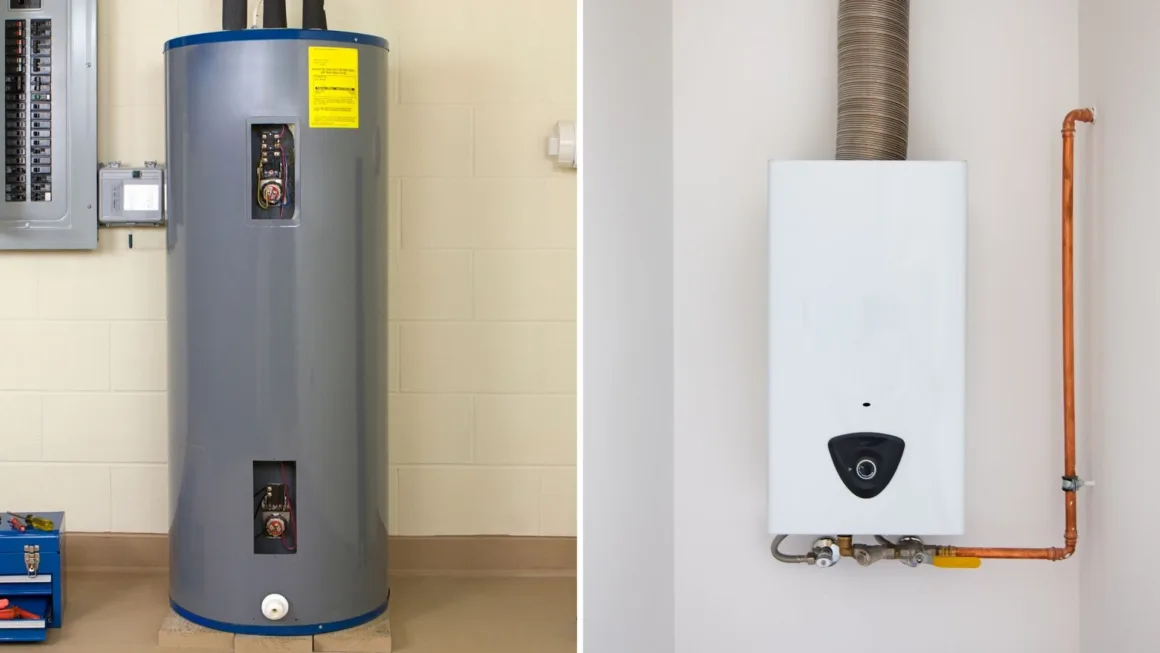
A traditional water heater stores a set volume of water, typically between 30 and 50 gallons for a residential unit, and keeps it heated around the clock using a gas burner or electric element. When a faucet or appliance calls for hot water, it draws from that stored supply, which is continuously reheated as it’s used.
A tankless water heater works differently. Instead of storing hot water, it heats water on demand as it flows through the unit, using a high-output burner or electric element that activates the moment a hot water tap opens. Because there’s no tank, tankless systems are often called on-demand or instantaneous water heaters.
Homeowners who want a deeper explanation of the technology can read our guide on how a tankless water heater works, including how flow rate, heat exchangers, and on-demand heating affect everyday performance.
Energy Efficiency
The efficiency gap between these two systems mostly comes down to standby heat loss. A traditional tank has to keep water hot at all times, even during hours when no one is using it, which means a steady, ongoing loss of energy as heat escapes through the tank walls. Tankless systems avoid this entirely, since they only use energy while water is actively flowing through them.
This difference typically translates into meaningful energy savings for tankless systems, though the size of that saving depends heavily on a household’s hot water usage patterns. Homes with moderate, spread-out hot water use tend to see the biggest efficiency gains from switching to tankless. Homes with very high, near-constant hot water demand see a smaller relative benefit, since a tankless unit still has to work hard to keep up with heavy simultaneous use.
Whether you choose a storage tank or an on-demand unit, adopting a few practical habits can further reduce operating costs. These ways to make your gas hot water heater work more efficiently can help improve performance while lowering energy consumption.
Upfront Cost and Installation
Traditional tank water heaters cost less upfront, both for the unit itself and for installation, since the infrastructure needed to support them is already standard in most homes. A straightforward tank replacement, where the new unit matches the size and fuel type of the old one, is usually a same-day job.
Tankless units cost more to purchase, and installation is often more involved. Depending on the home’s existing setup, a tankless installation may require upgraded gas lines, new venting, or additional electrical capacity to support the higher-output heating element. These upgrades add both cost and time to the installation process, particularly in older homes that weren’t originally built with tankless systems in mind.
Lifespan and Long-Term Value
Tankless water heaters generally last longer than tank systems. A well-maintained tankless unit can run 20 years or more, while traditional tank heaters typically last 10 to 15 years before needing replacement. Over the lifespan of a home, this can mean replacing a tank system once or twice for every single tankless unit.
That longer lifespan, combined with lower ongoing energy costs, is often what makes tankless systems worth the higher upfront investment for homeowners planning to stay in a home long term. For a home that might be sold within a few years, the higher upfront cost of tankless is harder to fully recoup, which shifts the calculation back toward a traditional system.
Age is only one factor when deciding whether to replace a unit. Knowing when to replace your water heater can help homeowners avoid emergency breakdowns while getting the best value from their existing system.
Maintenance Requirements
Both systems need regular maintenance, but the specifics differ. Traditional tank heaters accumulate sediment at the bottom of the tank over time, which needs to be flushed out periodically to maintain efficiency and prevent premature wear. The anode rod, a component that helps prevent corrosion, also typically needs replacement every few years.
Tankless systems are prone to mineral scale buildup inside their heat exchangers, especially in areas with hard water. Regular descaling, often recommended annually, helps prevent reduced flow and premature failure. Homes with notably hard water may need this maintenance more frequently regardless of which system is installed.
Routine servicing is essential for both types of systems. Our guide to water heater maintenance explains the inspections and preventive tasks that can extend equipment life and reduce costly repairs.
Space and Household Considerations
Traditional tank heaters take up a meaningful amount of floor space, typically in a basement, garage, or dedicated utility closet. Tankless units are wall-mounted and considerably more compact, which can free up usable space in smaller homes or utility areas.
Household size and simultaneous hot water demand also matter. A large household running multiple showers, a dishwasher, and a washing machine at the same time needs either a properly sized tankless unit or a large-capacity tank to keep up without a drop in temperature or pressure. Undersizing either system leads to the same complaint: running out of hot water at the worst possible moment.
Making the Right Choice for Your Home
There isn’t a universal answer to which system is better. A traditional tank water heater tends to suit homeowners prioritizing lower upfront cost and simpler installation, particularly in homes already set up for a tank system. A tankless unit tends to suit homeowners planning to stay long-term, dealing with frequent hot water shortages, or looking to reduce ongoing energy costs, provided the home can support the installation requirements.
Because the right choice depends on so many home-specific factors, from existing gas and electrical infrastructure to household hot water habits, a professional evaluation is often the most reliable way to compare the real costs and benefits for a specific property. Companies offering water heater replacement services can typically walk homeowners through both options based on the home’s actual setup rather than general assumptions, which helps avoid over- or under-investing in a system that doesn’t match the household’s needs.
Final Thoughts
Both tankless and traditional water heaters can reliably serve a home’s hot water needs. The right choice comes down to weighing upfront cost against long-term savings, matching the system to a household’s actual usage patterns, and accounting for what a home’s existing infrastructure can support without major modification.
Taking the time to compare these factors before a water heater fails, rather than during an emergency replacement, generally leads to a better long-term outcome. A little research ahead of time, paired with a professional assessment of a home’s specific setup, tends to produce a more satisfying result than making the decision under pressure once the old unit has already failed.
If you ultimately choose a tankless system, it’s also worth learning about common maintenance issues. This guide to tankless water heater repair covers common problems, maintenance tips, and ways to keep your system operating efficiently for years.
Author & Editorial Review
Author: Perla Irish is a home improvement writer and Content Manager at DreamlandsDesign. She specializes in practical home maintenance, HVAC systems, remodeling, indoor air quality, and residential design, with a focus on helping homeowners make informed decisions through clear, research-backed guidance.
Editorial Review: This article was reviewed by the DreamlandsDesign editorial team for technical accuracy, clarity, readability, and practical value to help ensure the information reflects current home maintenance best practices.