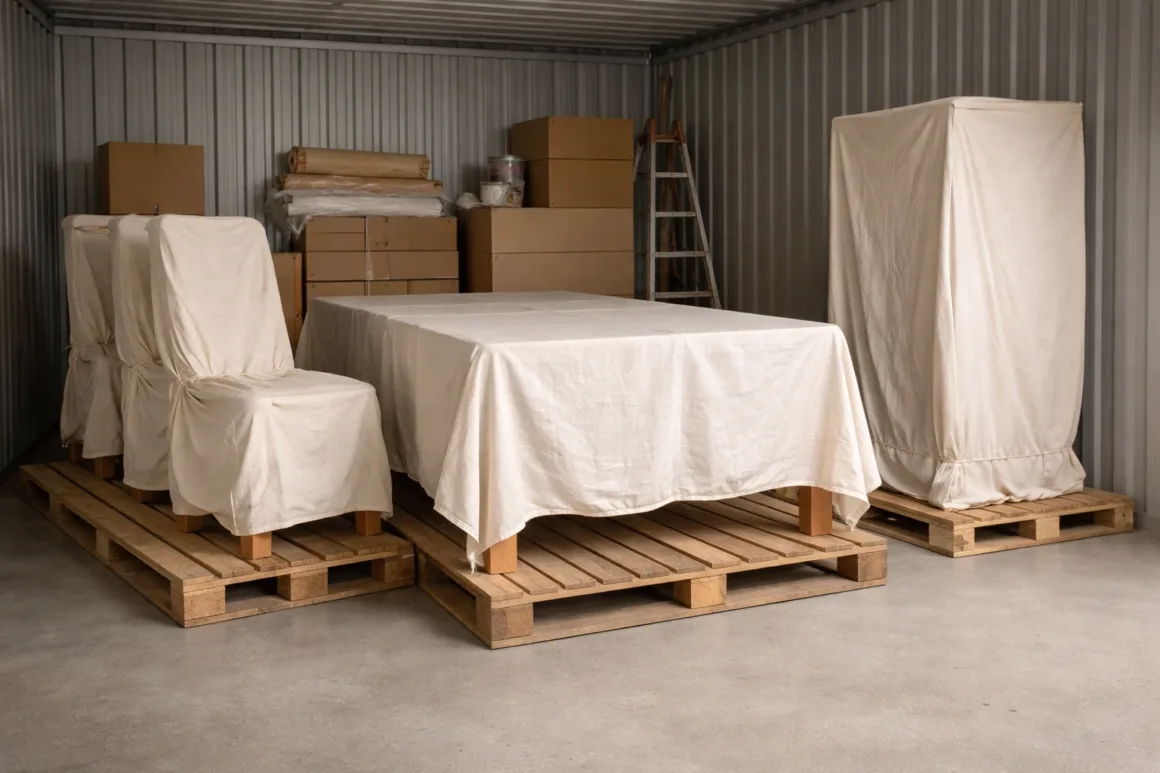
Table of Contents Show
Updated January 2026
During a remodel, furniture doesn’t just need somewhere to sit.
It needs a place where it won’t quietly become another problem waiting at the end of the project.
Dust, moisture, access limitations, and shifting timelines all affect how well furniture survives renovation work. Choosing the wrong storage option often isn’t obvious until weeks later—when items smell musty, finishes warp, or retrieving a single piece becomes harder than expected.
If you’re deciding where to store furniture whilst re-modelling, the question isn’t just where it fits, but how the storage choice supports the way renovations actually unfold.
Before any work begins, renovation planning often focuses on layouts and materials. But decisions about furniture storage—much like broader home renovation planning choices—tend to shape day-to-day stress levels far more than expected.
Common Furniture Storage Options During a Remodel
Most homeowners consider a similar set of options once renovation work begins. Each can work—but each comes with trade-offs that are easy to underestimate.
On-site containers or POD-style storage
On-site containers can feel convenient at first, especially when space allows. Over longer timelines, however, exposure to fluctuating temperatures and moisture increases risk—conditions known to accelerate wood movement and surface stress in enclosed environments.
Research from the U.S. Forest Products Laboratory notes that repeated humidity changes are a primary cause of warping and joint failure in wooden furniture.
Friends’ garages or spare rooms
Storing furniture with friends or family can work for very short renovations. In practice, access is rarely consistent, conditions vary widely, and furniture often ends up scattered—making monitoring and retrieval more difficult as projects stretch on.
Professional self-storage facilities
Professional self-storage introduces a predictable monthly cost, but it also offers stable conditions, controlled access, and flexibility as renovation schedules shift—factors that tend to matter most once timelines stop being precise.
A Practical Comparison: Cost, Duration, and Risk
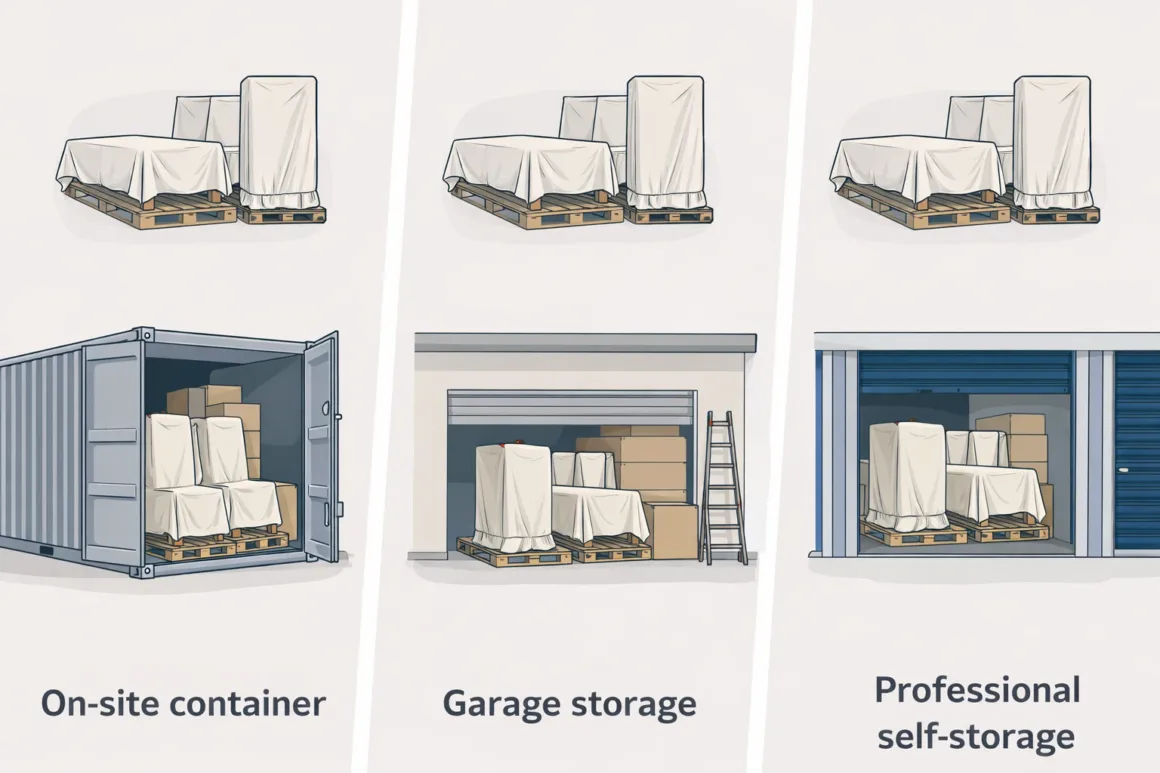
Storage decisions aren’t just about upfront price. They’re about total cost over time—including access friction, damage risk, and the likelihood that plans will change.
- On-site containers may appear economical early on, but extended exposure increases the risk of moisture damage and limits access during active construction.
- Friends’ or family storage often has no rental fee, yet inconsistent access and uncontrolled environments can introduce hidden relocation or repair costs.
- Professional self-storage carries a steady fee, but stable conditions and predictable access often reduce secondary costs tied to damage or delays.
What Matters Most When Storing Furniture During Renovation
Across renovation projects we’ve reviewed, storage issues rarely stem from a single mistake. They usually appear when a few fundamental criteria are overlooked.
- Dry, stable conditions — fluctuating humidity is one of the most common causes of odor, warping, and fabric damage.
- Reliable access — renovation work rarely follows a straight line, and delayed access often creates unnecessary disruption.
- Security and controlled entry — renovation already introduces uncertainty without adding concern over who can access stored belongings.
- Flexibility to extend or adjust space — projects run long; storage plans that assume perfect timelines tend to fail first.
When Climate-Controlled Storage Is Worth It
Climate control isn’t always necessary—but for certain materials, it’s often the difference between furniture that simply waits and furniture that degrades.
Wood furniture, leather upholstery, and older finishes tend to react poorly to temperature swings. Conservation guidance from the Smithsonian Museum Conservation Institute highlights how unstable environments accelerate material breakdown in organic furnishings.
For very short projects involving sealed composite, metal, or plastic pieces, standard dry storage may be sufficient. The goal is matching conditions to materials—not paying for features that don’t meaningfully reduce risk.
Preparing Furniture for Short-Term or Mid-Term Storage
How furniture is prepared often matters just as much as where it’s stored. Many storage issues stem from rushed packing rather than poor facilities.
Cleaning surfaces before storage helps prevent odors from setting in. Simple steps like keeping furniture dust-free remove residue that can linger during weeks of storage.
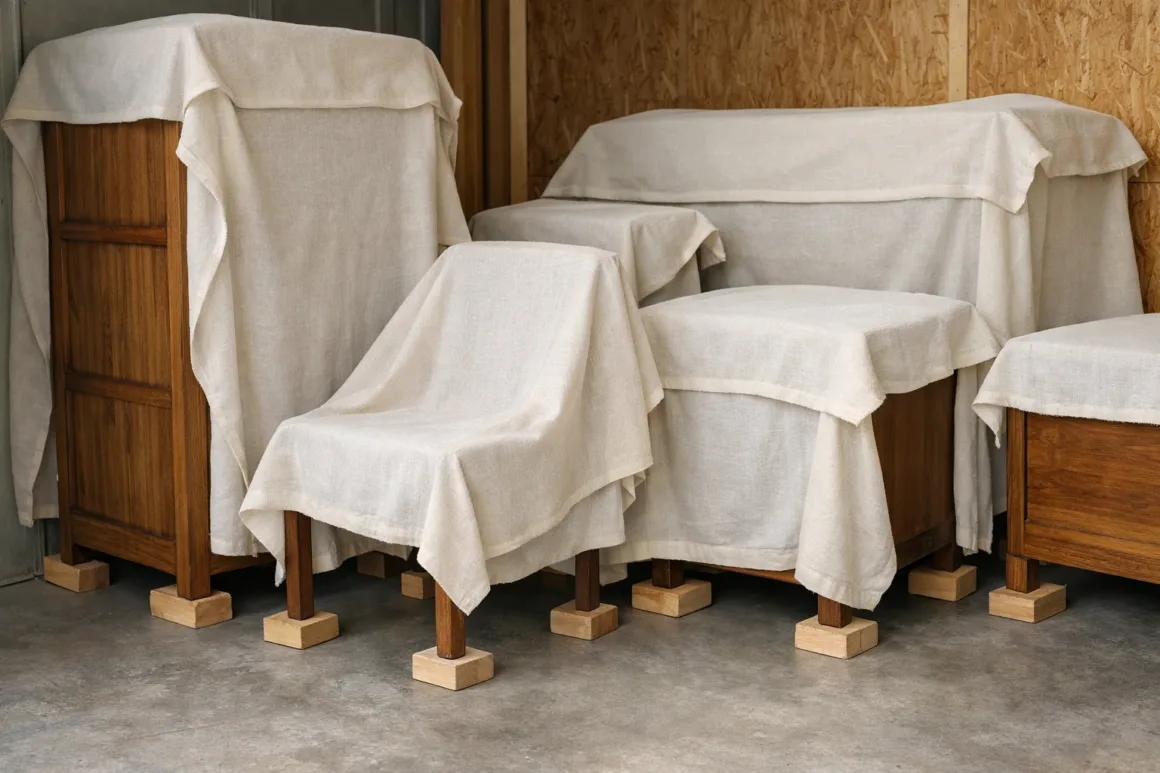
Using breathable covers instead of plastic, elevating items slightly off the floor, and planning layout carefully—following proven approaches for packing a storage unit efficiently—significantly reduces damage risk.
So, Where Should Furniture Be Stored Whilst Re-Modelling?
For most renovation scenarios lasting more than a few weeks, local self-storage offers the most balanced combination of protection, access, and flexibility.
When storage stops demanding attention, homeowners can focus on progress rather than damage control. That’s why professional storage solutions often emerge as the most reliable choice in renovation contexts—similar to other self-storage use cases where control and predictability matter.
Author & Editorial Review
Author: Perla Irish is a design and home-focused writer covering interior materials, everyday homeowner decisions, and real-world performance of residential finishes. Her work frequently examines how material behavior, renovation logistics, and storage conditions affect long-term outcomes in lived-in homes.
Editorial Review: This article was reviewed by the DreamlandsDesign editorial team with a focus on renovation decision-making, material behavior, accuracy, and long-term relevance, ensuring alignment with Google Helpful Content and E-E-A-T standards.