Table of Contents Show
Choosing a fireplace involves more decisions than most homeowners expect. Beyond style and placement, the fuel type shapes everything from installation cost to daily maintenance to how much actual heat a fireplace adds to a room. Understanding the differences between gas, electric, pellet, and wood-burning fireplaces makes it much easier to figure out which option actually fits a given home and lifestyle.
This guide walks through each fuel type in turn, along with the practical tradeoffs that tend to matter most once the initial excitement of a renovation project settles into everyday use.
Gas Fireplaces
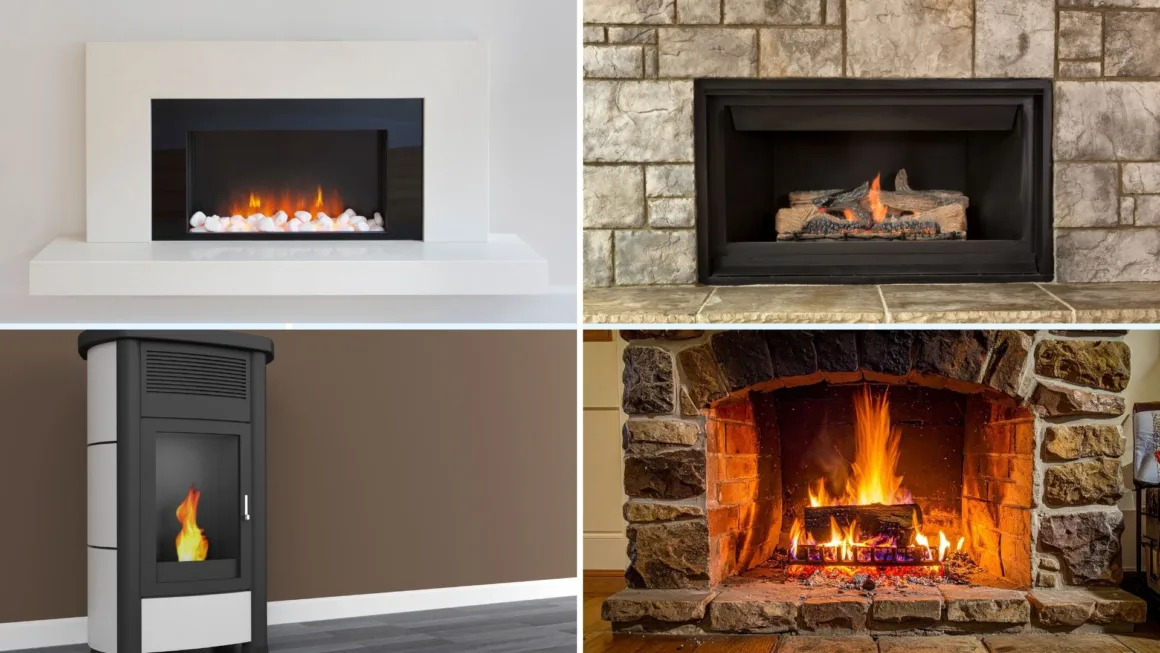
Gas fireplaces run on natural gas or propane and are one of the more popular choices for homeowners retrofitting an older, traditional wood-burning fireplace. Because gas fireplaces use a closed combustion system, they don’t produce sparks or embers, which makes them a safer option for households with young children or pets compared to an open wood fire.
Gas fireplaces are also considerably more efficient than wood-burning units, converting more of their fuel into usable heat rather than losing it up the chimney. Day-to-day operation is simple, typically controlled with a switch or remote, and there’s no need to chop, store, or clean up after firewood. Cleanliness is another advantage, since gas fireplaces generate far less ash and smoke than a traditional wood fire.
If you’re considering a gas unit, it’s also helpful to understand how to troubleshoot common gas fireplace problems before they become costly repairs.
Electric Fireplaces
Electric fireplaces use a heating element combined with LED lights or a similar visual effect to simulate the appearance of a real fire, without any actual combustion taking place. Because there’s no venting requirement, electric fireplaces can be installed almost anywhere in a home, including rooms where gas lines or a chimney aren’t available.
Safety is one of the biggest draws of electric fireplaces, since there’s no open flame, sparks, or embers involved, making them a particularly good fit for households with small children. Many models can run purely for visual ambiance without generating heat, or be switched on as a supplemental heat source for smaller rooms. Electric fireplaces also tend to be among the simplest and most affordable options to install, since they typically just require access to a standard electrical outlet.
Pellet Fireplaces
Pellet fireplaces burn compressed wood pellets, a byproduct of sawdust and wood waste, in a self-contained unit that’s often installed as an insert into an existing fireplace opening. These units tend to be highly efficient, frequently converting more than 80 percent of their fuel into usable heat, which makes them an appealing eco-friendly option for homeowners looking to reduce both their heating bills and their environmental footprint.
Pellet units are generally easier to operate than traditional wood stoves, since pellets can be loaded in bulk and burned steadily for hours without requiring constant attention. They still involve regular maintenance, including ash removal and periodic servicing, but avoid much of the chopping, hauling, and stacking that comes with burning cord wood.
Wood-Burning Fireplaces
Wood-burning fireplaces offer the traditional, authentic fire experience that many homeowners associate with the word “fireplace.” The crackle, scent, and visual appeal of a real wood fire are difficult to replicate with any other fuel type, which is a big part of their continued popularity despite being less efficient than gas, electric, or pellet alternatives.
The tradeoffs are real, though. Wood-burning fireplaces require a steady supply of firewood, regular ash cleanup, and ongoing chimney maintenance to remove creosote buildup, which poses a fire risk if left unaddressed. The EPA recommends regular inspections and proper maintenance to help reduce chimney fire risks and improve safe operation. They also lose a significant amount of heat up the chimney compared to closed-combustion alternatives, meaning much of the fire’s warmth doesn’t actually make it into the room.
Learning how to keep your fireplace clean throughout the heating season can improve both safety and long-term performance.
Comparing Cost, Maintenance, and Efficiency
Each fireplace type comes with a different balance of upfront cost, ongoing expense, and maintenance demands.
Electric fireplaces tend to have the lowest installation cost and the least ongoing maintenance, though they don’t replicate a genuine fire experience.
Gas fireplaces cost more to install, particularly if new gas lines are required, but offer strong efficiency with relatively low day-to-day maintenance.
Pellet fireplaces fall in a similar cost range to gas units and offer excellent efficiency, though they do require a consistent fuel supply and periodic cleaning.
Wood-burning fireplaces typically have the lowest equipment cost but carry ongoing costs in firewood, cleaning supplies, and professional chimney maintenance, along with being the least efficient option of the four.
Climate plays a role in this comparison as well. Homeowners in regions with long, cold winters tend to put more weight on efficiency and consistent heat output, which often favors gas or pellet options. In milder climates where a fireplace is used more for ambiance than serious heating, the lower-maintenance appeal of electric or the traditional charm of wood-burning may matter more than raw efficiency numbers.
Choosing the Right Type for Your Home
The right fireplace type depends heavily on what a homeowner values most. Someone prioritizing convenience and low maintenance will likely lean toward electric or gas. A homeowner focused on reducing environmental impact while still enjoying meaningful heat output may find pellet units the best fit. And for those who value the traditional experience of a real wood fire above efficiency or convenience, a wood-burning fireplace remains a strong option, provided they’re prepared for the upkeep involved.
Existing infrastructure matters too. A home without a chimney or gas line may find electric the simplest path forward, while a home with an existing masonry fireplace might be a good candidate for a gas, pellet, or wood-burning insert rather than a full renovation. Fireplace companies like The Grate Haus carry multiple fuel types, which makes it easier for homeowners to compare choices side by side against their specific home’s setup and heating needs.
Before making a final decision, it also helps to consider where to put a fireplace in your home to maximize both comfort and heating efficiency.
Final Thoughts
There isn’t a single best fireplace type, only the type that best matches a household’s priorities around efficiency, maintenance, ambiance, and existing home infrastructure. Weighing these factors before making a decision helps ensure the fireplace a homeowner ends up with is one they’ll actually enjoy using for years, rather than one that gets abandoned in favor of the thermostat once the novelty wears off.
If you’re looking for inspiration beyond fuel types, exploring modern fireplace design ideas can help you find a style that complements your home’s interior.
Taking the time to compare all four options against a home’s actual layout, budget, and daily habits tends to produce a far better long-term result than choosing based on appearance alone.
Author & Editorial Review
Author: Perla Irish is a home improvement writer and Content Manager at DreamlandsDesign. She specializes in practical home maintenance, HVAC systems, remodeling, indoor air quality, and residential design, with a focus on helping homeowners make informed decisions through clear, research-backed guidance.
Editorial Review: This article was reviewed by the DreamlandsDesign editorial team for technical accuracy, clarity, readability, and practical value to help ensure the information reflects current home maintenance best practices.