• Home Improvement
    • DIY
    • Remodeling
    • Woodworking
    • Home Design
      • Furniture
      • Organize
      • Tips
      • Decor
        • Interior
        • Exterior
    • Design Ideas
      • Bathroom
      • Bedroom
      • Dining Room
      • Living Room
      • Kitchen
  • Gardening
    • Backyard
    • Front Yard
    • Landscaping
  • Building Staircase
  • Categories
    • Home Improvement
    • Decor
    • Gardening
    • Woodworking
    • Lifestyle
    • Green Living
    • Real Estate
Dream Lands Design
  • Home Improvement
    • DIY
    • Remodeling
    • Woodworking
    • Home Design
      • Furniture
      • Organize
      • Tips
      • Decor
        • Interior
        • Exterior
    • Design Ideas
      • Bathroom
      • Bedroom
      • Dining Room
      • Living Room
      • Kitchen
  • Gardening
    • Backyard
    • Front Yard
    • Landscaping
  • Building Staircase
  • Categories
    • Home Improvement
    • Decor
    • Gardening
    • Woodworking
    • Lifestyle
    • Green Living
    • Real Estate
Featured image - Quick Actions to Take When Basements Floods

[Infographic] Quick Actions to Take When Basements Floods

  • Perla Irish
  • February 3, 2020
Total
5
Shares
0
0
5
0
0
Table of Contents Show
  1. Safety First for Water in Clean-up Basement
  2. Locating the Source of Flood Water
  3. Save and Discard What You Can
  4. Dry It Out

Most homeowners in Phoenix have to face the unpleasant event of flooded basement clean up when a big storm hits. When dealing with floodwaters, quick actions must be taken to limit the damage because a lot of water can pose a threat to our home and wellbeing.

Following are some safety measures which you can take during floods:

  1. Safety First for Water in Clean-up Basement

Standing water means an increased risk of an electrical shock if the water comes into contact with electrical outlets or wiring. If you have standing water in your basement, contact a flood damage restoration service provider.

This should be considered as the first step. During the clean-up process in the basement, only qualified plumbers or flood repair service providers can handle standing water.

  1. Locating the Source of Flood Water

It’s important to locate the source of the floodwater to stop water from flooding your basement. If you can do so safely check the area thoroughly to decide where the water is coming in.

If you can’t stop the water from coming on your own, a skilled specialist can help you in the repair of basement flooding as they can effectively plug up the source.


Read Also:

  • Five Mistakes Every Homeowner Must Avoid During Renovation Projects
  • A DIY Guide for Installing Basement Wall Waterproofing Membrane
  • Basement Waterproofing – When is the Ideal Time to get it Done?
  • Turn Your Basement Into the Ultimate Gaming Space
  • 5 Things to Do After a Hurricane Hits Your Home
  • How to Waterproof Your Basement in Just 6 Steps

  1. Save and Discard What You Can

Start unplugging all electronics and saving your belongings once it’s safe to enter the flooded area. Move as many possessions as possible to higher ground, prioritizing your most critical valuable items, such as documents, family heirlooms, and keepsakes.

  1. Dry It Out

The faster the area affected can be dried out, the faster the flooded basement cleanup process can be completed. Mops and buckets will do the job if the floodwater is relatively shallow, but you can use a submersible pump or a wet /dry vac if the standing water is more than one inch.

To protect your house and health from further damage, you should contact a flood damage restoration service provider as they know the right way to do their job.
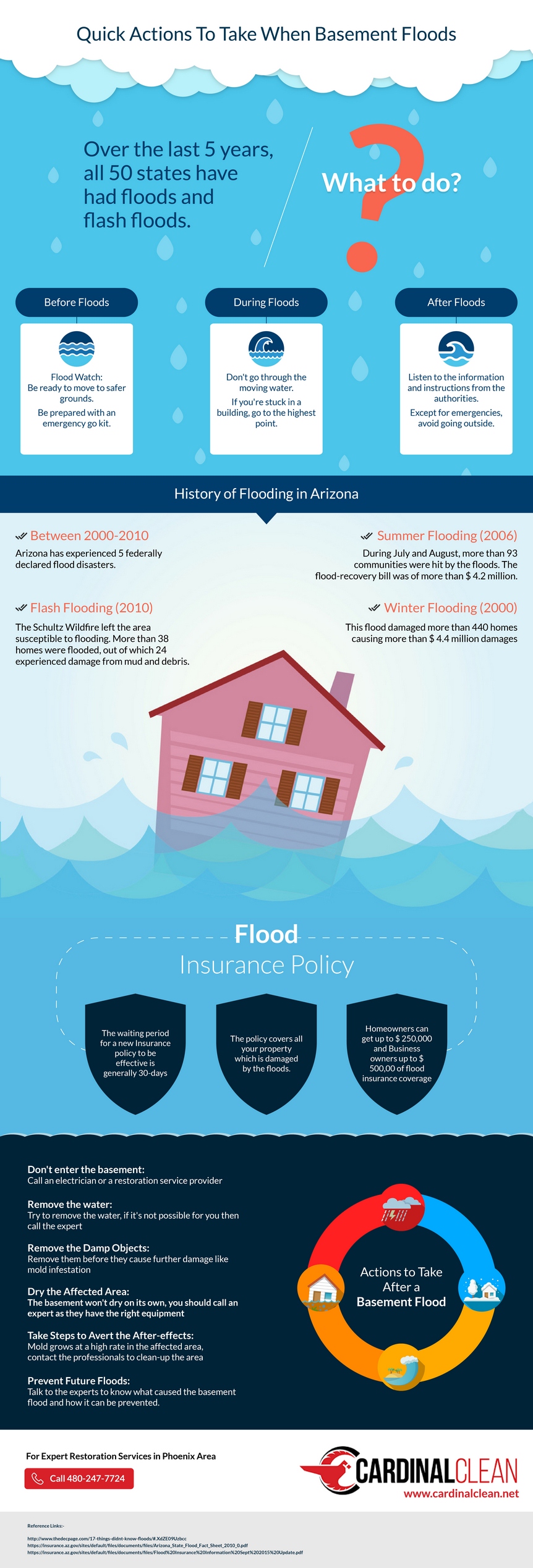

Infographic - Quick Actions to Take When Basements Floods

Total
5
Shares
Share 0
Tweet 0
Pin it 5
Share 0
Share 0
Previous Article
Featured image - The benefit of Hiring a Homecare Service Provider

Benefit of Hiring a Homecare Service Provider

  • Perla Irish
  • February 3, 2020
View Post
Next Article
Featured image - moving

How Much Does It Cost to Hire a Moving Company

  • Perla Irish
  • February 4, 2020
View Post

Subscribe

Subscribe now to our newsletter

You May Also Like
Modern household appliances including refrigerator, washer, dryer, and dishwasher inside a contemporary home interior
View Post

How Modern Home Appliances Changed Daily Life in Today’s Homes

  • March 7, 2026
Installed sump pump system in residential basement concrete floor basin
View Post

Sump Pump Maintenance Checklist: How to Keep Your System Ready Before the Next Storm

  • February 28, 2026
Wall-mounted ductless mini split air conditioner in a modern living room
View Post

Maintenance Practices That Extend Ductless Heating and Air System Life

  • February 14, 2026
Ceiling HVAC air vents integrated into a quiet residential living room
View Post

How HVAC Systems Actually Work (and Why They Often Feel Inefficient at Home)

  • February 4, 2026
Wall-mounted home thermostat and HVAC air vent in a quiet residential hallway
View Post

Understanding Home HVAC Systems: What Actually Matters, What Doesn’t, and When to Act

  • February 4, 2026
Air conditioner integrated into a calm residential living space during daytime
View Post

Why Your Air Conditioner Is Not Blowing Cold Air (And What That Usually Means)

  • January 31, 2026
Wall-mounted air conditioner in a quiet living room during daytime
View Post

Leaving the Air Conditioner On All Day: When It Helps, When It Quietly Backfires

  • January 31, 2026
Shower water flow in a bathroom affected by hard water
View Post

How to Soften Hard Water for Showering and Bathing

  • January 19, 2026

Leave a Reply Cancel reply

Your email address will not be published. Required fields are marked *

  • About
  • Privacy Policy
  • Terms of Use
  • Disclosure
  • Sitemap
  • Contact Us

Input your search keywords and press Enter.