Table of Contents Show
It’s what’s on the inside that counts especially when it comes to interior design! The beauty behind diving into interior design is being able to get creative about the elements that make up your home.

Yet, it’s not all about decor for interior design. Seasoned interior designers are aware that there are practical, functional elements to consider when finding the right style for yourself.
When it comes to finding your style, there are various components to consider to help bring about an interior design that’s distinct to you. Read on to find out how to find your interior design style and transform your home!
Creating Your Design
Before diving into your interior design project, you must consider interior design’s elements. These methods are a great starting point for helping you navigate what type of style you want.
Space
When thinking of space, you need to consider negative and positive spaces to understand how much of each type of space you prefer.
Negative spaces are empty spaces that give more of an ‘open’ feel, while positive spaces are filled with decor like a living room couch.
The idea is to ensure a balance between these two spaces, where it isn’t too busy or too sparse unless you’re going with certain interior design styles like maximalism or minimalism.
Lines
How do lines have anything to do with how you perceive your space? Quite a lot! There are three main types of lines: horizontal, vertical, and dynamic.
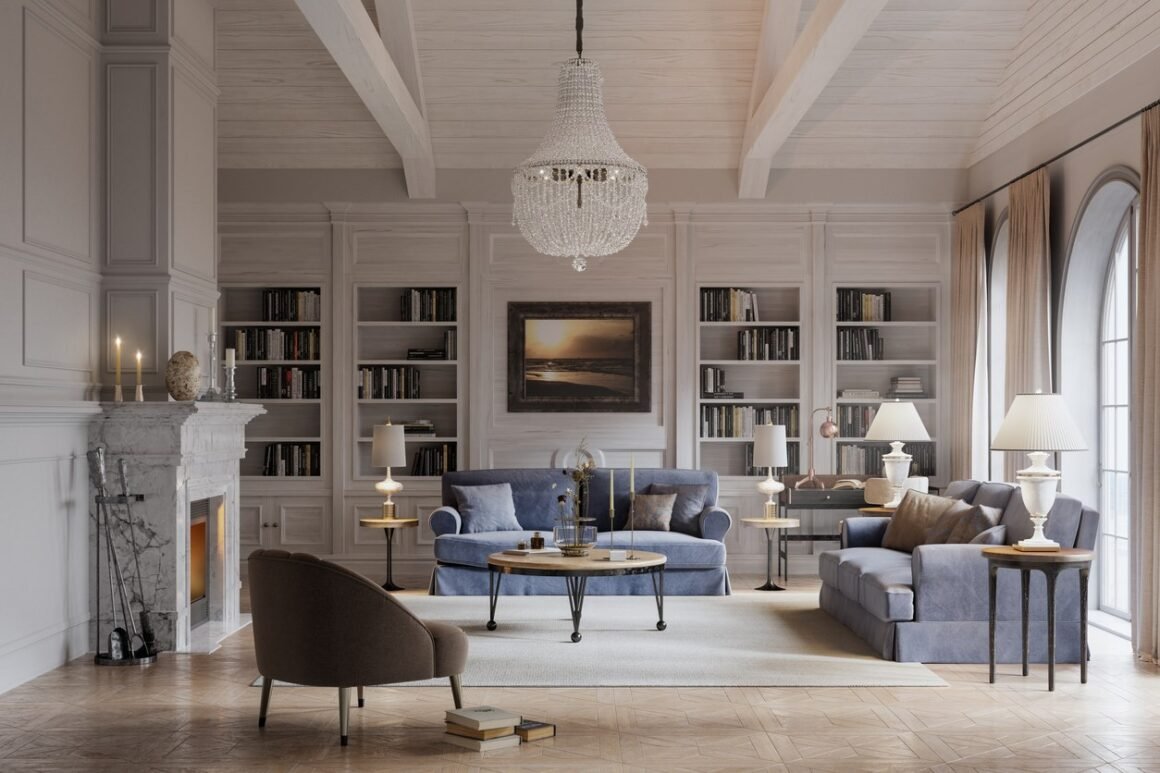
Horizontal lines make the space seem wider and expansive, making it more peaceful and cozier. Meanwhile, vertical lines endeavor to draw your eyes upward and make spaces airy.
Dynamic line encourages your line of sight in the direction of what’s to be noticed along with various spots.
Form
It amounts to the room in general by considering the shape of the space, furniture, decor, and light fittings. Forms are generally either geometric (angular) or natural (curved).
You see geometric forms through things that are manmade, like furniture. Meanwhile, natural forms are organic, like adding plants.
If you want to evoke a certain feeling, square shapes embody strength while curves and rounded shapes evoke softness.
Read Also:
Pattern
If you want to accentuate a certain part of your interior, be it the ceiling, stairs, or walls, you can do so through patterns.

You can get this effect by patterned wallpaper or a simple, boldly colored wall that will make it pop.
What’s great about considering patterns is how versatile it is – where adding them to your home has an array of possibilities.
Light
Lighting is everything since it can set the mood of a space. Opt for lighting with a whiter glow if you want a more open feel.
However, if you want a more ambient atmosphere, then consider lighting with a warmer glow to it. Usually, the best route with lighting is striking a balance with certain types of lighting.
Colour
There is nothing more fun than choosing colors for your space. When it comes to color, you want to play with either using it as a complementary or a contrasting element. In addition, you can use color psychology to evoke a certain feeling.
For example, blue is typically associated with being calming, and if you want to give that vibe in your home, then going with that color would be in your best interest.
Texture
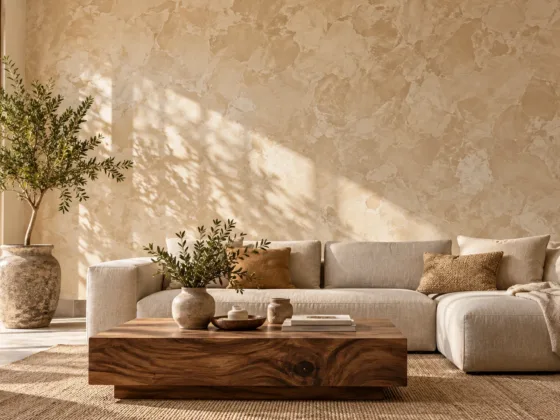
The texture is all about adding depth and interest through visual or actual means. Visual textures are based solely on appearance, like marble. Yet, actual textures can be seen and felt this is best exemplified through a material like leather.
Applying Your Design
After you have figured out your design, it’s important to consider the design principles since they can dictate how the design elements are used.
- Balance: Balance requires knowing the visual weight of your space and ensuring certain design elements don’t overpower or underwhelm one another.
- Emphasis: When it comes to emphasis, you want it to play the role of grabbing a person’s attention from a piece of furniture or specific art that you want to be noticed at first glance.
- Rhythm: This principle helps carry visual interest around the room, giving the flow of the space.
- Scale & Proportion: The size and dimension of the objects in a room should relate to one another proportionally so that they don’t look out of place.
- Harmony: It’s a sense of uniformity or harmony among the elements used in the design, like ensuring the same color scheme for textures and shapes.
- Contrast: Contrast is created when one combines two or more very different forms, like balancing a round mirror with a rectangular dining table.
- Detail: No detail is too small. For example, if you’re going for more of a seaside aesthetic, consider couch pillows with sea-faring designs or related knick-knacks to display.
Developing your home’s style can be fun with interior design. Hopefully, this article gave you the knowledge and means to find the perfect interior design style that best reflects you aesthetically!