Table of Contents Show
Designing a spa-inspired primary bathroom isn’t about trends—it’s about comfort, durability, and daily use. From spa-style layouts and porcelain vs. stone costs to CRI 90+ lighting and real-world budgeting, this guide breaks down what actually lasts.
Quick Answer: A luxury primary bathroom design typically emphasizes spa-inspired layouts, durable materials like porcelain slabs or natural stone, high-CRI layered lighting, and comfort features such as heated floors and walk-in or wet-room showers. Most luxury primary bathroom remodels cost between $40,000 and $80,000, with fully custom projects exceeding $100,000 depending on layout changes, materials, and wellness upgrades.
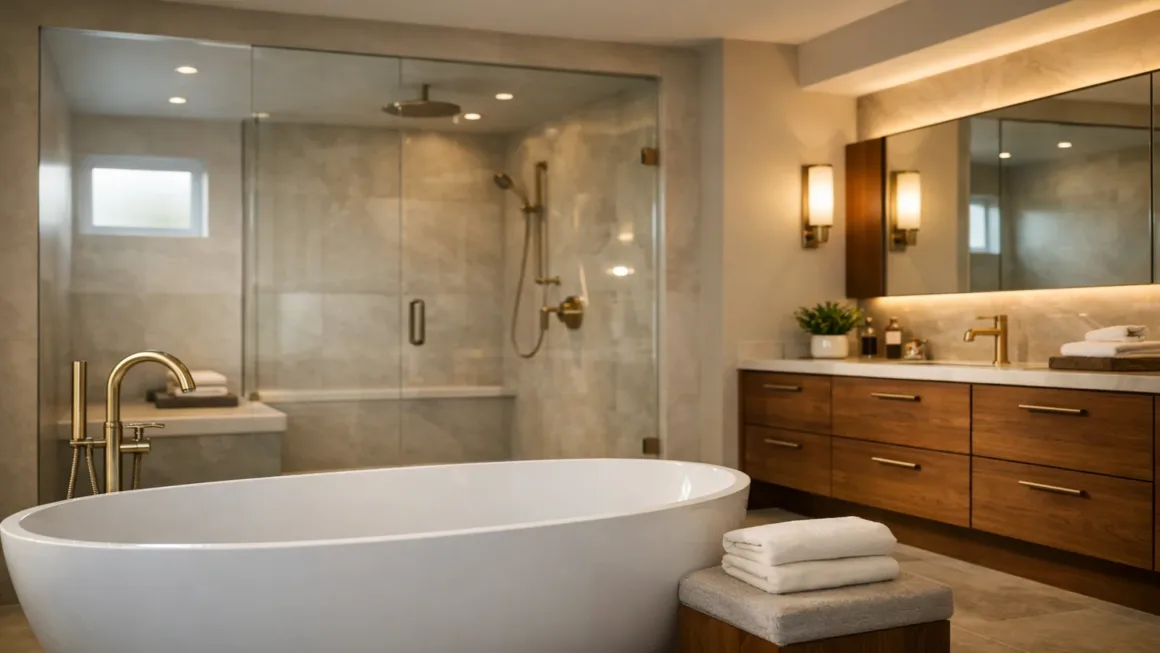
The primary bathroom has become one of the most intentional spaces in the modern home. If you’re planning a remodel, thoughtful luxury primary bathroom design focuses on circulation, material longevity, and lighting that performs for daily life — not just for photos.
Rather than chasing short-lived trends, today’s best spaces follow professional luxury bathroom design principles: efficient layouts, durable finishes, thoughtful lighting, and storage that supports real routines. These decisions make the bathroom easier to live with years after the remodel is complete.
How to Choose a Spa-Inspired Layout for Luxury Primary Bathroom Design
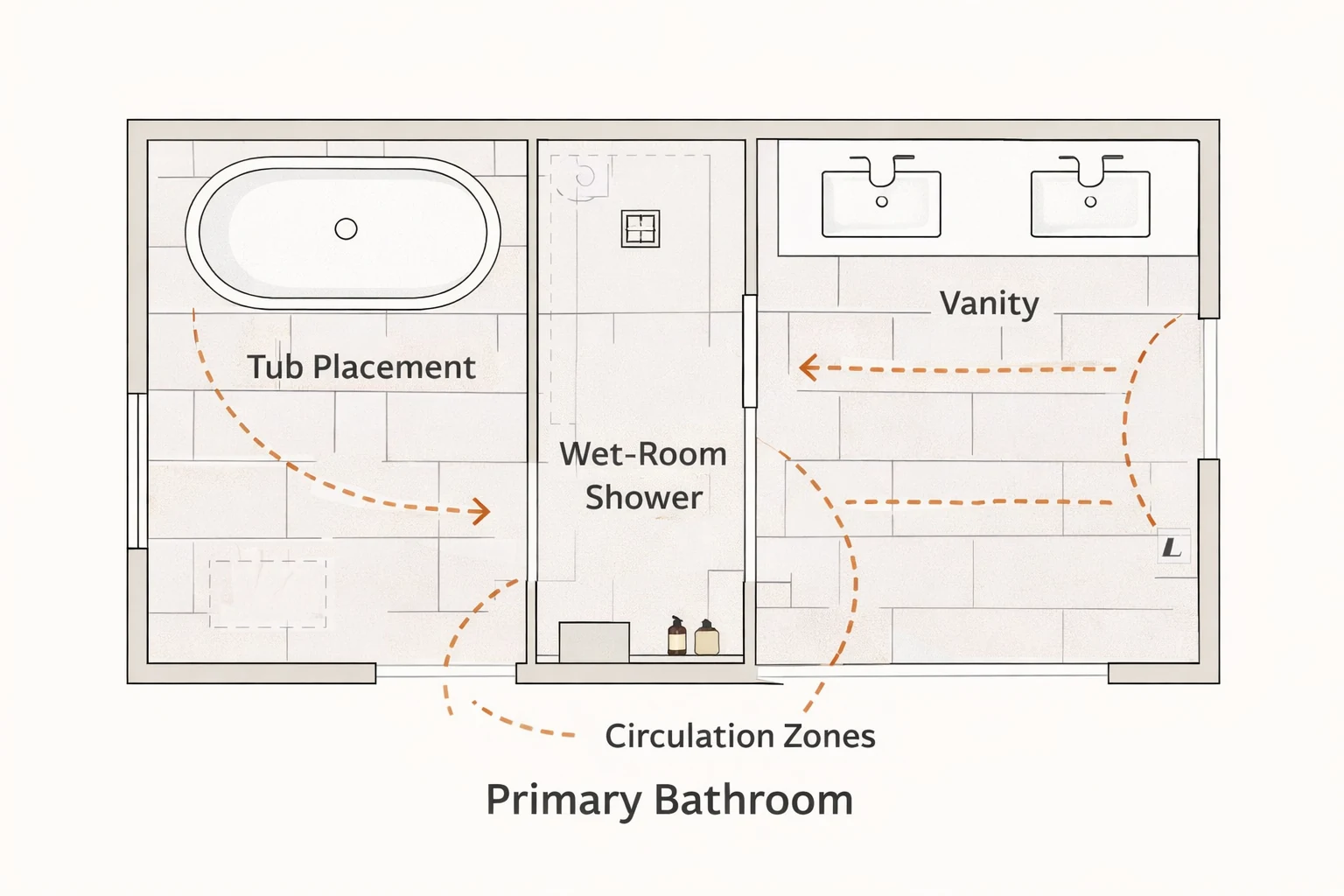
Layout is the foundation of successful luxury primary bathroom design. Wet rooms offer a seamless spa feel but require expert waterproofing and drainage. Walk-in showers are easier to maintain and appeal to a broader range of buyers. Dual-zone layouts separate wet and dry areas, protecting cabinetry and improving long-term durability.
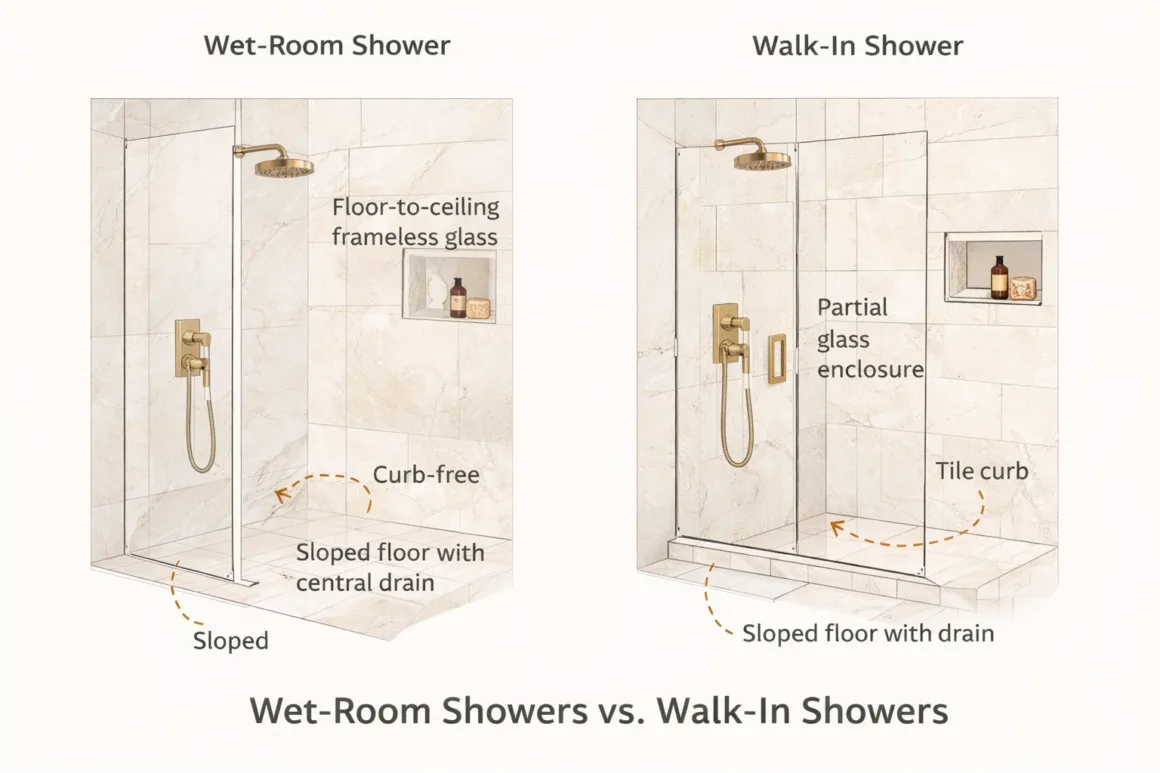
Wet-room showers create a fully waterproofed, open layout with seamless floor transitions, while walk-in showers use a defined enclosure and targeted waterproofing, often making them simpler to install and maintain.
If you’re planning circulation, clearances, and fixture placement, DreamlandsDesign’s bathroom remodeling tips provide practical guidance grounded in real remodel scenarios.
Materials That Deliver Luxury for Primary Bathroom Design — Cost & Tradeoffs
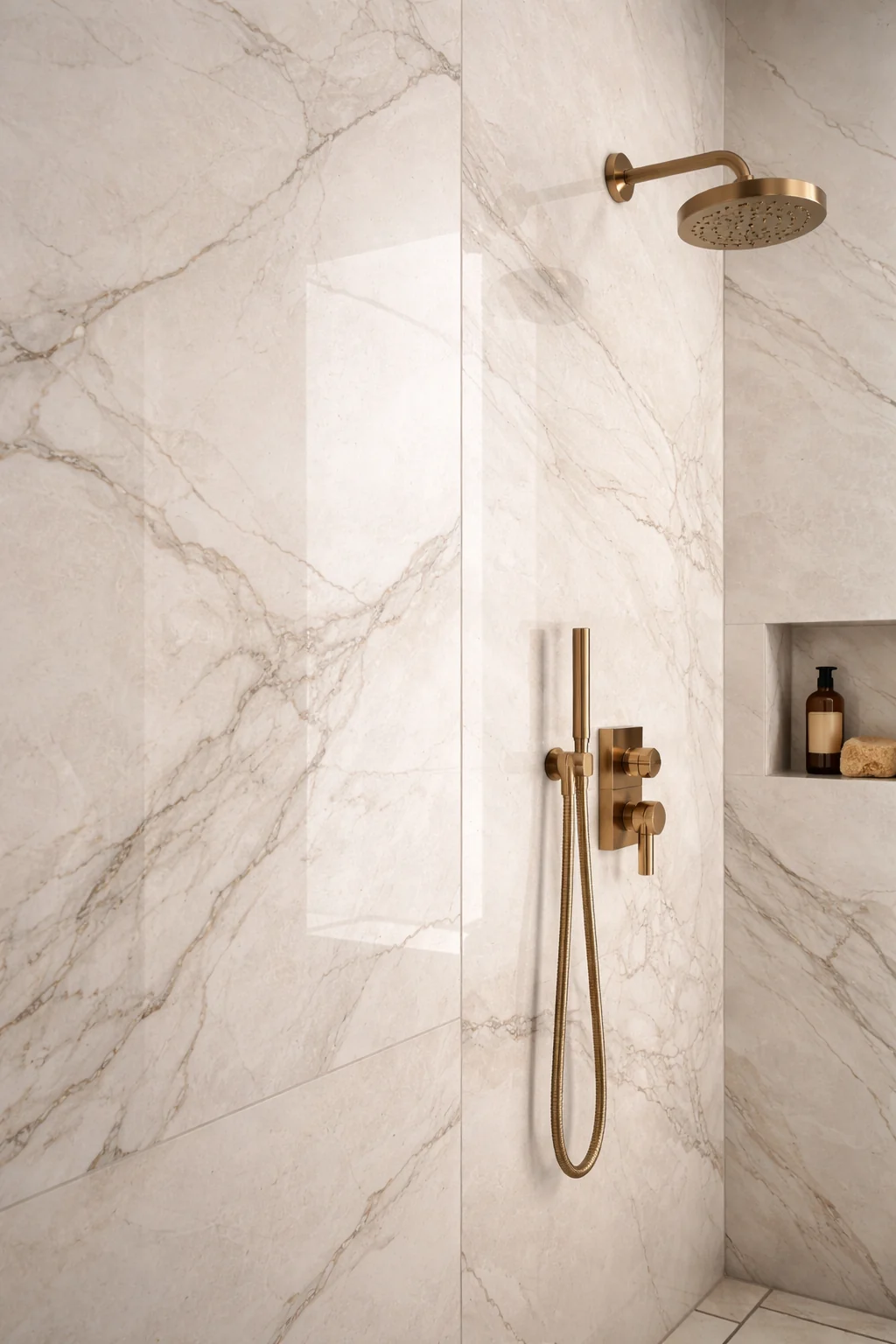
Choosing materials is one of the biggest decisions in luxury primary bathroom design. Balance aesthetic, lifecycle cost, and maintenance when choosing between porcelain slabs and natural stone. Below are realistic material-only price ranges homeowners commonly encounter:
- Porcelain slabs: approximately $15–$35 per sq ft (material). Durable, stain-resistant, and low maintenance.
- Natural stone: typically $20–$100+ per sq ft depending on stone type, finish, and origin.
Porcelain often delivers the best balance of appearance and longevity, while natural stone offers unique character at a higher cost and with greater maintenance requirements.
For examples of premium finishes used effectively, see luxury bathroom upgrades inspired by five-star hotels.
Emerging Trends in Luxury Primary Bathroom Design
Design forecasts for 2025–2026 point toward immersive spa-style features, such as frameless glass showers with chamber-effect layouts and deep soaking tubs that encourage relaxation. Cohesive surface treatments — sometimes referred to in design circles as “tile drenching” — are gaining traction for creating visual continuity from floor to ceiling.
Warm neutrals and minimalistic palettes paired with floating cabinetry help spaces feel larger and more serene. Smart fixtures like digital shower controls and moisture-sensing ventilation further blend comfort with long-term performance.
Lighting & Mirrors: Why CRI ≥ 90 Matters in Luxury Primary Bathroom Design
Color Rendering Index (CRI) measures how accurately lighting shows color, critical in luxury primary bathroom design where makeup, skincare, and finish-matching matter. Aim for CRI ≥ 90 for vanity/task areas and use layered lighting for mood.
Use warm ambient lighting (2700–3000K), vertical vanity lights to eliminate shadows, and dimmers to adjust mood throughout the day.
Comfort Technology: Steam Showers vs. Regular Showers
Steam showers provide a spa-level experience but require careful planning. Typical installation costs range from $2,800 to $25,000, depending on generator size, controls, waterproofing, and finishes. By comparison, a high-quality walk-in shower costs significantly less and delivers broader resale appeal.
Steam systems require sloped ceilings, sealed enclosures, and dedicated ventilation — factors that should be addressed before finishes are selected.
Storage & Millwork: Keeping the Space Calm
Luxury bathrooms stay uncluttered through intentional storage: deep drawers, recessed cabinets, and integrated linen storage allow surfaces to stay clear.
DreamlandsDesign highlights practical examples in its guide to bathroom remodeling storage solutions.
Freestanding Tub Placement & Layout Balance
A freestanding tub should be treated like furniture: test the footprint, allow cleaning access, and coordinate plumbing early. Floor-mounted fillers are sculptural but need early plumbing coordination; wall-mounted or deck-mounted fillers are less intrusive to install.
For a broader layout context, see DreamlandsDesign’s guide on arranging bathroom furniture.
Budgeting: Realistic Cost Ranges for Luxury Primary Bathroom Design
Most luxury primary bathroom design remodels fall between $40,000 and $80,000. Fully custom projects with structural changes, premium stone, or steam features often exceed $100,000. Spend on waterproofing, ventilation, and cabinetry — areas that prevent long-term failure.
Deep Dive — Material Cost Comparison & Lifecycle (worked example)
When budgets matter, homeowners need clear, comparable numbers and lifecycle expectations. Below are realistic material-only ranges often used in remodel planning, followed by a simple worked example to help you budget for 100 square feet of finished floor or wall surface.
- Porcelain slabs (large-format, material only): commonly cited at about $15–$35 per sq ft.
- Natural stone (marble, travertine, quartzite — material only): commonly ranges from $20–$100+ per sq ft, depending on rarity and finish.
Worked example — material-only costs for 100 sq ft:
- Porcelain slabs (100 sq ft): $15 × 100 = $1,500 up to $35 × 100 = $3,500. (Material only.)
- Natural stone (100 sq ft): $20 × 100 = $2,000, up to $100 × 100 = $10,000. (Material only; higher-cost natural stone options or limited-availability varieties can exceed this range.)
These material-only figures do not include labor, substrate preparation, cutting or fabrication, sealants, or edge work. In many projects, installation, substrate prep, and finishing costs can add significantly — sometimes doubling or tripling the material-only figure depending on complexity (waste, bookmatching, special patterns, or custom edgework).
Lifecycle & maintenance trade-offs
- Porcelain: Low maintenance (no sealing), good stain resistance, minimal grout when slabs are used — best where durability and low upkeep are priorities.
- Natural stone: High visual value and patina; requires sealing for porous stones, routine maintenance, and sometimes professional repolishing over decades.
How to use this in budget talks with contractors
- Ask suppliers for a line-item quote breaking out material, fabrication, and installation.
- Request a small-sample mock-up or sample wall to confirm the final look and waste factors.
- Include expected sealing/reseal schedules for natural stone in your maintenance planning.
Case Study: A Real-World Luxury Primary Bathroom Remodel (What Worked & What Didn’t)
Project overview: This 180 sq ft remodel is a practical example of luxury primary bathroom design focused on durability, accessibility, and long-term comfort.
Original issues: Poor lighting at the vanity, a cramped shower with a step-over curb, insufficient storage, and finishes that showed water staining within five years.
Key design decisions:
- Replaced the enclosed tub/shower combo with a curbless walk-in shower
- Chose large-format porcelain slabs instead of marble to reduce maintenance
- Specified CRI 95 vanity lighting with vertical fixtures on both sides of the mirror
- Added radiant floor heating only in the vanity and shower zones
Cost breakdown (rounded):
- Demolition & prep: $6,500
- Porcelain slab materials: $4,800
- Tile installation & waterproofing: $14,200
- Custom vanity & storage: $11,000
- Lighting & electrical upgrades: $4,600
- Fixtures & glass: $7,900
Total project cost: approximately $49,000
Lessons learned: Spending more on waterproofing and lighting prevented the most common long-term regrets. The homeowners skipped a steam shower after reviewing cost-to-use value, reallocating budget toward storage and lighting quality instead.
Contractor Bid Template: What to Ask for (and What to Avoid)
Luxury bathroom remodels often go over budget because bids lack detail. Use this checklist to compare contractors accurately.
- Waterproofing system: brand, method, warranty length
- Tile scope: square footage, waste factor, pattern complexity
- Lighting specs: fixture models, CRI rating, color temperature
- Ventilation: CFM rating and humidity controls
- Plumbing rough-ins: confirmation before tile install
- Permits & inspections: explicitly included or excluded
Red flags: lump-sum pricing with no line items, refusal to name waterproofing products, or bids that omit electrical and ventilation details.
Regional Cost Guide: Luxury Primary Bathroom Remodels (Typical Ranges)
Costs vary significantly by region due to labor rates, permit fees, and material availability. The table below reflects typical ranges for a full luxury primary bathroom remodel.
| Region | Typical Cost Range |
|---|---|
| Midwest / Southern US | $35,000 – $65,000 |
| East Coast (non-metro) | $45,000 – $80,000 |
| West Coast / Major metros | $60,000 – $110,000+ |
Structural changes, steam systems, imported stone, and custom cabinetry can push costs beyond these ranges.
Product Picks: Reliable Luxury Bathroom Components (What Designers Specify)
- Porcelain slabs: ≥6mm thickness, rectified edges, slip rating suitable for wet areas
- Vanity lighting: CRI ≥ 90 (preferably 95), 2700–3000K, dimmable
- Shower valves: thermostatic with independent volume control
- Ventilation fans: quiet rating ≤1.0 sones with humidity sensor
- Glass enclosures: low-iron glass for clearer appearance
When comparing products, prioritize specifications over brand names. Performance ratings often matter more than aesthetics alone.
Maintenance & Lifecycle Planning: What Luxury Really Costs Over Time
Long-term upkeep determines whether a luxury bathroom remains enjoyable or becomes a maintenance burden.
- Porcelain surfaces: routine cleaning; no sealing required
- Natural stone: resealing every 1–3 years, depending on usage
- Steam showers: generator inspection every 1–2 years
- Ventilation systems: annual fan and duct cleaning
When budgeting, factor maintenance into 5- and 10-year ownership costs. A slightly higher upfront investment in durable materials often reduces long-term expenses and frustration.
Frequently Asked Questions
What defines a luxury primary bathroom?
A luxury primary bathroom is defined less by trends and more by how well it supports daily routines. Common features include a spa-inspired layout, durable materials such as porcelain slabs or natural stone, layered lighting with high color accuracy, and storage that keeps surfaces uncluttered. The goal is long-term comfort and usability rather than visual impact alone.
Is a steam shower worth adding to a primary bathroom?
A steam shower can be worthwhile for homeowners who plan to use it regularly and are comfortable with the added installation and maintenance requirements. It offers a wellness-focused experience, but it also requires proper waterproofing, ventilation, and ongoing care. For many households, a well-designed walk-in shower delivers broader everyday value.
How does porcelain compare to natural stone in a luxury bathroom?
Porcelain is often chosen for its durability, stain resistance, and lower maintenance needs. Natural stone offers a unique visual character but typically comes with higher material costs and ongoing care, such as sealing. In many high-end primary bathrooms, porcelain is selected to achieve a refined look with fewer long-term upkeep demands.
Why is CRI lighting important in bathrooms?
Color Rendering Index, or CRI, measures how accurately a light source shows colors. In bathrooms, lighting with a CRI of 90 or higher helps skin tones appear natural and makes grooming tasks like makeup application or shaving easier. High-CRI lighting also prevents finishes from looking different under artificial light than they do in daylight.
What is a realistic budget for a luxury primary bathroom remodel?
Most luxury primary bathroom remodels fall between $40,000 and $80,000, depending on layout changes, materials, and feature selection. Projects that include custom cabinetry, structural changes, or wellness upgrades such as steam systems can exceed that range. Budget planning should prioritize waterproofing, ventilation, and lighting before decorative elements.
Which upgrades add the most long-term value?
Upgrades that improve daily comfort and durability tend to offer the most lasting value. These include efficient layouts, high-quality waterproofing, quiet ventilation, layered lighting, and well-designed storage. Features that require frequent maintenance or are rarely used often provide less return over time.
References
- National Kitchen & Bath Association — 2025 Bath Trends Report
- HomeAdvisor — Steam Shower Installation Cost Guide
- OnyxA — Porcelain Slab Cost Guide
- Marble.com — Natural Stone Cost Overview
- U.S. Department of Energy — LED Basics & CRI
Author & Editorial Review
Author: Perla Irish is a design and home-focused writer covering interior materials, everyday homeowner decisions, and real-world performance of residential finishes in consultation with licensed contractors and industry standards where applicable. Her work emphasizes clarity, practical context, and long-term usability over trends or transactional advice.
Editorial Review: This article was reviewed by the DreamlandsDesign editorial team with a focus on homeowner decision-making psychology, behavioral context, accuracy, and long-term relevance. Content is evaluated to ensure balanced explanations, clear intent, and alignment with Google Helpful Content and E-E-A-T quality standards.
Last updated: February 2026