Table of Contents Show
Water damage rarely announces itself in advance. It shows up as a wet basement after a storm, a frozen outdoor spigot that cracks a pipe, or a sump pump that quietly failed months before anyone noticed. Most of this damage is preventable with a basic understanding of how a home’s sump pump and outdoor plumbing systems work together to keep water where it belongs.
Homeowners who understand these systems tend to catch small problems early, long before they turn into a flooded basement or a costly repair bill.
Why Sump Pumps and Outdoor Plumbing Are Connected
It’s easy to think of a sump pump and outdoor plumbing as separate systems, but they’re both part of the same job: managing water before it becomes a problem. A sump pump handles water that collects underneath or around a home’s foundation. Outdoor plumbing, including hose bibs, exterior drainage, and grading, manages water at the surface before it ever has a chance to reach the foundation in the first place.
When both systems are working properly, water gets redirected away from a home efficiently. When either one fails, whether it’s a sump pump that can’t keep up or poor drainage sending water toward the foundation instead of away from it, the other system often ends up compensating, sometimes past its actual capacity.
How Sump Pumps Protect Your Home
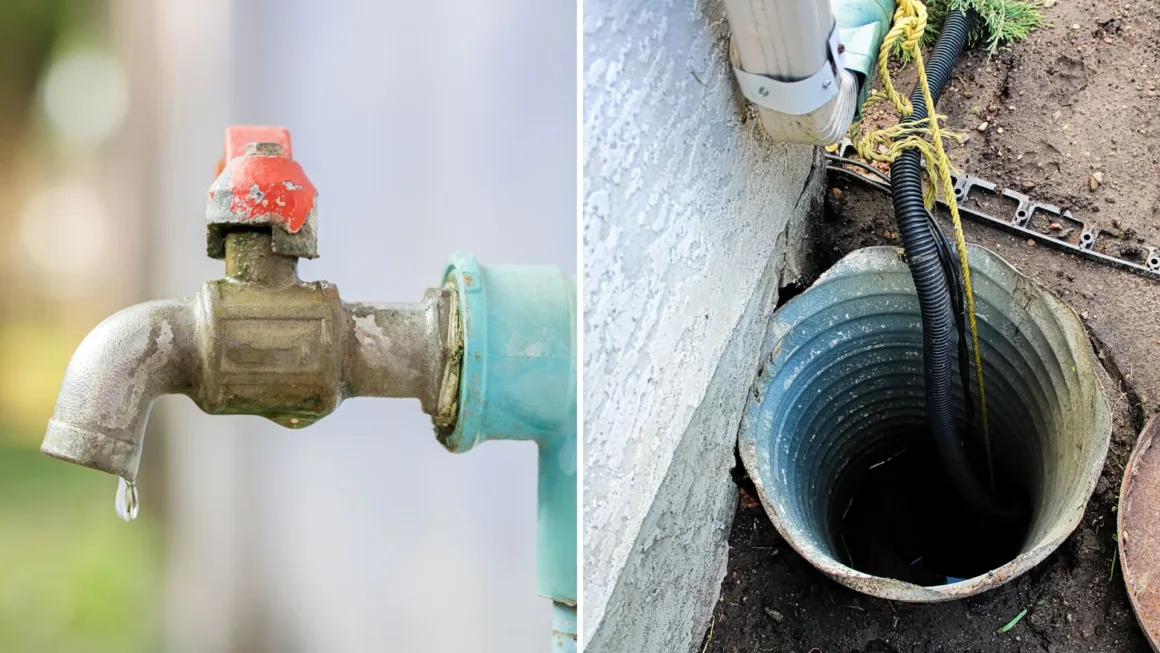
A sump pump sits in a basin, often called a sump crock, typically installed in a basement or crawl space at the lowest point of a home. As groundwater or storm runoff collects in this basin, a float switch triggers the pump to activate, moving that water through a discharge pipe and away from the home’s foundation.
Homes with basements that have experienced flooding, or those in low-lying areas with poor drainage, benefit most from a reliable sump pump system. Some models include battery backup and alarm features, which keep the system running during a power outage and alert homeowners if the basin is filling faster than the pump can handle.
If you’re relying on an older system, it’s worth learning what are the symptoms that my sump pump is not functioning properly so you can spot early warning signs before a major failure occurs.
Common Sump Pump Problems
A handful of issues account for the vast majority of sump pump failures. A stuck float switch is one of the most common, preventing the pump from activating even when water is present in the basin. Clogged discharge lines are another frequent culprit, causing water to back up and rendering an otherwise functional pump ineffective. Pump motors themselves can also burn out over time, particularly in homes where the system runs frequently during wet seasons.
Winter introduces an additional risk: a frozen discharge pipe. If the exterior portion of the discharge line freezes, water has nowhere to go, which can cause the pump to run continuously without actually clearing the basin, sometimes leading to burnout or backup into the basement.
Sump Pump Maintenance Basics
Most sump pumps only need a check-in once or twice a year to stay reliable, but that maintenance genuinely matters. A basic check includes pouring water into the basin to confirm the float switch triggers the pump properly, checking the discharge line for clogs or damage, and confirming the pump activates and drains the basin fully. Older pumps benefit from more frequent inspection, since components naturally wear down with age and are more likely to fail without warning.
A simple sump pump maintenance checklist can help homeowners stay on top of routine inspections throughout the year.
Homeowners with battery backup systems should also periodically test the battery itself, since a backup system is only useful if the battery still holds a charge when the power actually goes out.
Outdoor Plumbing: Hose Bibs and Frost-Free Spigots
Outdoor hose bibs are a common source of water damage, particularly in colder climates. A standard hose bib left connected to a hose over winter can trap water in the pipe, which then freezes, expands, and cracks the pipe, often without any visible sign of damage until the spigot is used again in spring.
Frost-free hose bibs are designed to prevent this by placing the actual shutoff valve further inside the home’s warmer interior wall, rather than at the exterior spigot itself. Disconnecting hoses before the first freeze and allowing any standing water to drain from the line remains an important habit even with frost-free fixtures, since a connected hose can still trap water at the outdoor end.
Exterior Drainage and Grading
Beyond fixtures, the ground itself plays a significant role in keeping water away from a home. Proper grading, meaning the slope of the soil around a foundation, should direct water away from the house rather than toward it. Over time, settling soil, landscaping changes, or added hardscaping can alter this slope in ways that redirect water toward the foundation instead.
Gutters and downspouts work alongside grading to move roof runoff away from the foundation. Downspouts that empty directly next to the foundation, rather than extending several feet away, are a common and easily fixable contributor to basement moisture problems.
If runoff continues to collect around your foundation despite proper grading, installing a French drain system is another effective way to redirect excess groundwater.
Seasonal Prep Checklist
A few habits, repeated each season, go a long way toward preventing water damage:
- Test the sump pump before spring rains and again before winter
- Disconnect and drain outdoor hoses before the first hard freeze
- Clear gutters and confirm downspouts extend away from the foundation
- Check the grading around the home after any major landscaping work
- Inspect the sump discharge line for clogs or ice buildup each winter
When You Should Call a Professional
Some issues are straightforward enough to handle without help, but a sump pump that’s failing repeatedly, a basement that floods despite a working pump, or persistent moisture issues tied to outdoor drainage are worth having a professional evaluate. A professional sump pump service can diagnose whether the issue is the pump itself, the discharge line, or a larger drainage problem that a pump alone can’t solve, and recommend the right fix rather than a temporary patch.
Many costly emergencies can be avoided by recognizing common plumbing problems before they develop into structural water damage.
Final Thoughts
Sump pumps and outdoor plumbing work together as a home’s first line of defense against water damage. Understanding how each system functions, keeping up with basic seasonal maintenance, and knowing when an issue has moved beyond a simple fix all help keep a home dry through every season, rather than dealing with the more expensive consequences of water damage after the fact. A little routine attention throughout the year is almost always cheaper, and far less stressful, than repairing the damage a neglected system eventually causes.
Author & Editorial Review
Author: Perla Irish is a home improvement writer and Content Manager at DreamlandsDesign. She specializes in practical home maintenance, HVAC systems, remodeling, indoor air quality, and residential design, with a focus on helping homeowners make informed decisions through clear, research-backed guidance.
Editorial Review: This article was reviewed by the DreamlandsDesign editorial team for technical accuracy, clarity, readability, and practical value to help ensure the information reflects current home maintenance best practices.