Table of Contents Show
Buying a home is exciting until the first heatwave arrives. An air conditioner suddenly runs almost nonstop, utility bills climb higher than expected, and small plumbing issues that never seemed urgent start demanding attention. For many homeowners in desert climates, those first few months quickly reveal that maintaining a house in a hot, dry environment is different from maintaining one almost anywhere else.
Extreme summer temperatures, mineral-rich water, seasonal dust storms, and short but intense monsoon seasons all place extra demands on the systems that keep a home comfortable. Left unchecked, these conditions gradually reduce efficiency, shorten equipment lifespan, and increase the likelihood of costly repairs. Fortunately, most of these problems develop gradually rather than all at once. That gives homeowners time to spot small issues early, often before they turn into expensive repairs.
This guide focuses on the HVAC and plumbing habits that matter most in desert regions, with examples drawn from communities across Arizona’s West Valley, including Surprise. Whether you’re settling into your first home or maintaining one you’ve owned for years, these practical routines can help reduce unexpected repairs while keeping essential systems running efficiently.
Why Desert Homes Age Differently
Every climate leaves its mark on a home. In northern states, freezing temperatures threaten exposed pipes and force heating systems to work overtime. Desert homes face a different challenge. Months of relentless heat, airborne dust, and naturally hard water create steady wear that often goes unnoticed until comfort, efficiency, or performance begins to decline.
Air conditioning systems bear the brunt of those conditions. Instead of running only occasionally, they may operate every day for months at a time. Compressors, blower motors, capacitors, and other components accumulate wear with every cooling cycle, making even small efficiency losses noticeable during the hottest weeks of summer.
Water quality adds another layer of maintenance. Minerals naturally present in many municipal water supplies gradually collect inside water heaters, plumbing fixtures, and household appliances. Unlike a burst pipe or a failed air conditioner, these deposits build up quietly over time, reducing efficiency long before homeowners realize anything has changed.
That’s why seasonal maintenance tends to be far more effective than waiting for visible problems. Small inspections completed throughout the year often prevent the emergency repairs that are both more disruptive and far more expensive. If you’re putting together a maintenance schedule for a recently purchased property, these important home maintenance tasks for new homeowners provide a solid foundation that complements the recommendations in this guide.
Heat Places Constant Pressure on HVAC Systems
Air conditioners rarely fail without warning. More often, they lose efficiency little by little. Cooling cycles become longer, airflow feels weaker, certain rooms stay warmer than others, or electricity bills increase even though your thermostat settings haven’t changed.
Those subtle changes are easy to dismiss, especially when outdoor temperatures keep climbing. In reality, they’re often the first indication that the system is working harder than it should. Dust coating condenser coils, clogged filters, worn capacitors, and restricted airflow all force HVAC equipment to consume more energy while delivering less cooling.
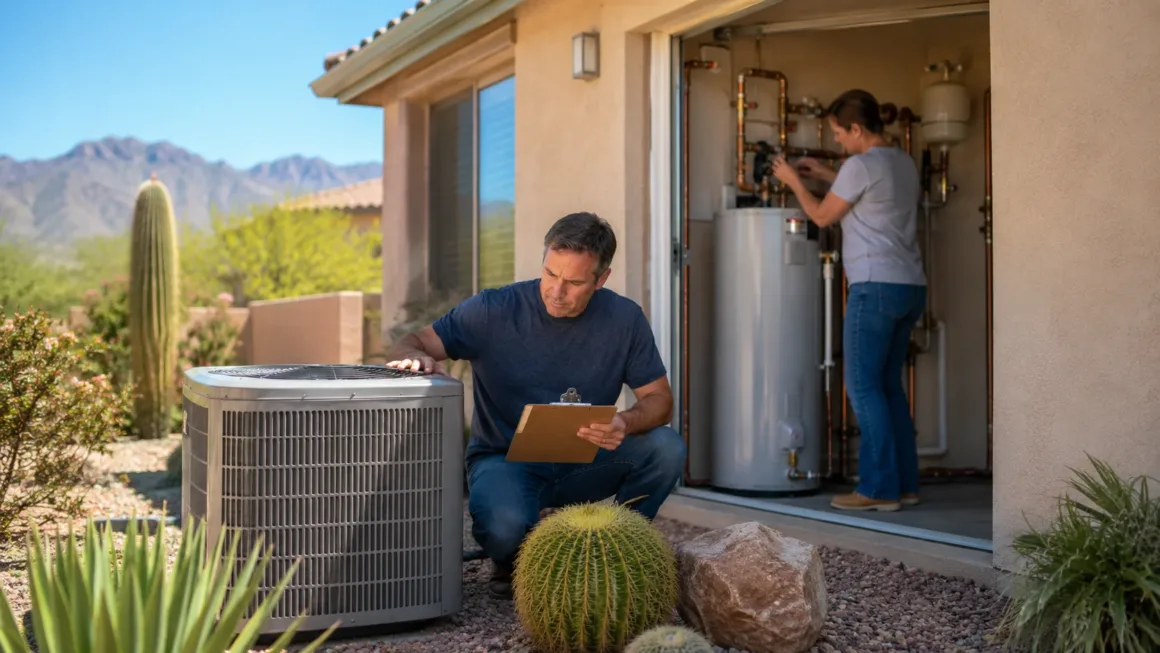
Scheduling preventive maintenance before summer arrives gives technicians the chance to clean coils, inspect electrical connections, verify refrigerant performance, flush condensate drains, and identify components showing early signs of wear. Addressing these issues in spring is almost always easier than arranging emergency repairs during a prolonged heatwave.
Learning to recognize these early warning signs makes it easier to schedule maintenance before a minor issue becomes an expensive repair. Our guide on how HVAC problems show up before systems fail highlights several warning signs homeowners frequently overlook.
Professional servicing works best alongside a few simple habits. Replacing air filters on schedule, keeping the outdoor condenser free of debris, and making sure supply vents stay unobstructed all help the system operate more efficiently. For a month-by-month approach, see our guide to monthly HVAC maintenance.
Hard Water Is a Slow-Moving Problem You Shouldn’t Ignore
Not every plumbing problem announces itself with a burst pipe or a leaking faucet. Hard water is different. It works quietly in the background, leaving mineral deposits inside pipes, water heaters, faucets, showerheads, and household appliances one layer at a time.
Hard water contains naturally occurring calcium and magnesium that slowly settle inside plumbing fixtures and appliances as mineral scale. The water itself is generally safe to use, but the buildup forces equipment to work harder. Water heaters lose efficiency, showerheads clog more quickly, and reduced water pressure often becomes noticeable long before homeowners suspect hard water is the cause.
Because the buildup happens so gradually, it’s easy to miss until utility bills increase or hot water doesn’t last as long as it used to. By that point, efficiency has often been declining for months.
Routine flushing of a storage water heater is one of the simplest ways to slow that process. Combined with periodic inspections of valves, supply lines, and plumbing fixtures, this maintenance helps preserve efficiency while reducing unnecessary wear throughout the home’s plumbing system.
If hard water is a recurring issue where you live, addressing the source can make everyday maintenance much easier. Our guide on softening hard water for showering and bathing compares several practical treatment options and explains when each solution makes the most sense.
A Seasonal Maintenance Routine Saves More Than Emergency Repairs
Understanding what causes wear is only the first step. The bigger advantage comes from checking your home’s systems before they begin showing symptoms. That’s where a seasonal maintenance routine pays for itself.
Spring is the ideal time to prepare cooling equipment for months of continuous operation. Fall offers another opportunity to evaluate how the system handled the summer and to catch small problems before the next cooling season arrives. Plumbing benefits from the same approach. Annual inspections often reveal slow leaks, worn valves, or sediment buildup long before they become expensive repairs.
Most maintenance tasks take only a few minutes when they’re done on schedule. Replacing a filter, flushing a water heater, or spotting a small leak early is far easier than dealing with an unexpected breakdown during the hottest week of summer.
Keeping up with home maintenance is much easier when you break it into seasonal tasks instead of tackling everything at once. This checklist provides a practical schedule you can refer to throughout the year.
Spring
- Schedule a professional HVAC inspection before temperatures begin climbing.
- Replace or inspect air filters before the cooling season starts.
- Check the outdoor condenser for leaves, dust, and debris left over from winter.
Summer
- Monitor airflow and cooling performance during periods of extreme heat.
- Inspect the outdoor unit after major dust storms and replace heavily clogged filters if necessary.
Before Monsoon Season
- Clean the condensate drain to reduce the risk of water backups.
- Inspect refrigerant line insulation and clear debris around the condenser.
Once a Year
- Flush the water heater to remove sediment caused by hard water.
- Inspect visible plumbing fixtures, shut-off valves, and outdoor hose connections for slow leaks or corrosion.
No maintenance routine can eliminate every repair, but these small habits dramatically reduce the chances of being surprised by an expensive problem when your HVAC or plumbing system is under the greatest demand.
That same preventive approach applies whether your home is decades old or only recently built. Even brand-new houses benefit from regular inspections before small issues have time to develop into larger ones.
Don’t Skip Maintenance Just Because Your Home Is New
Many first-time buyers assume a newly built house can go several years without much attention. In reality, the first year is one of the best opportunities to establish maintenance habits that help prevent small issues from becoming long-term problems.
Construction dust can remain inside ductwork, loose fittings may settle after months of use, and plumbing systems begin collecting mineral deposits from the day water starts flowing through them. None of that necessarily points to poor construction—it’s simply part of how a new house settles into everyday use.
As part of that routine, consider scheduling a professional inspection once your home has been through its first full year. By then, technicians can identify developing issues that may not have been visible when the house was brand new.
Including this first-year inspection in your long-term maintenance plan creates a solid baseline for future service and helps catch small issues while they’re still inexpensive to fix.
Seasonal Weather Creates Year-Round HVAC Challenges
Extreme heat may dominate life in the desert, but it isn’t the only weather homeowners need to plan for. Dust storms and the annual monsoon season each leave behind conditions that can affect HVAC performance long after the skies clear. Building a few seasonal inspections into your maintenance routine helps keep those short-lived weather events from turning into long-term problems.
Dust Storms Leave More Behind Than Dirty Windows
After a desert dust storm, the first things people notice are usually the dirty car, dusty patio furniture, and a layer of grit covering outdoor surfaces. What many don’t see is what that same dust does to the HVAC system.
That dust doesn’t simply disappear once the skies clear. Much of it settles inside air filters or across the outdoor condenser, where it gradually restricts airflow. One storm rarely causes noticeable damage, but repeated exposure forces the cooling system to run longer and less efficiently throughout the summer.
That’s why filter replacement schedules should be treated as a guideline rather than a fixed rule. In particularly dusty areas, checking the filter every month is a better habit than assuming it will last the full recommended interval. If a filter looks heavily coated after a major dust event, replacing it early is inexpensive insurance against reduced efficiency.
After a major dust storm, take a moment to inspect the outdoor condenser as well. Windblown sand and debris can collect between the fins, restricting airflow and making it harder for the unit to release heat. A quick visual check every few weeks during summer is often enough to keep the system operating efficiently.
Cleaner filters don’t just benefit the equipment. They also improve indoor air quality by reducing the amount of dust that circulates throughout the home. If you’re looking beyond HVAC maintenance alone, our guide to improving your home’s indoor air quality explores additional ways to create a healthier living environment.
Prepare for Monsoon Season Before the First Storm Arrives
After months of dry weather, monsoon season changes conditions almost overnight. Higher humidity, heavy rain, and strong winds place new demands on HVAC systems that have already spent the summer working hard.
As indoor humidity rises, air conditioners remove more moisture from the air, increasing the amount of water flowing through the condensate system. A drain line that handled spring cooling without any trouble can quickly become a problem if algae, dirt, or debris has accumulated inside it.
It’s easy to overlook the condensate drain when everything appears to be working normally. Once humidity rises, however, even a partially blocked drain can back up and cause indoor water damage. Cleaning the drain line and checking that water flows freely takes only a few minutes but may prevent a much larger repair later.
Before the monsoon season settles in, take a few minutes to inspect refrigerant line insulation, replace a dirty filter if needed, and clear away any dust or debris that has collected around the outdoor unit during the long summer. Small tasks completed before humidity arrives are usually far easier than scheduling emergency service after a summer storm.
Know When It’s Time to Call a Professional
Routine maintenance covers many jobs homeowners can safely handle themselves, including replacing filters, checking for visible plumbing leaks, cleaning around the outdoor condenser, and monitoring water pressure. Electrical faults, refrigerant issues, hidden leaks, and failing mechanical components, however, usually require the tools and experience of a trained technician.
Replacing inexpensive parts one after another may seem like a cheaper solution, but it often adds unnecessary cost without fixing the underlying problem. A professional diagnosis usually identifies the real cause much sooner, saving both time and money. When unusual noises, inconsistent cooling, water pressure changes, or recurring leaks begin appearing, a professional inspection is usually the fastest and most cost-effective way to identify the underlying issue.
For residents across Arizona’s West Valley, choosing technicians who regularly work in desert conditions offers an added advantage. Providers specializing in HVAC and plumbing services in Surprise, AZ understand how prolonged heat, hard water, seasonal dust storms, and monsoon weather affect residential systems throughout the year. That local experience often leads to maintenance recommendations that reflect real operating conditions rather than generic service schedules.
A Little Prevention Keeps Small Problems From Becoming Expensive Ones
Owning a home in the desert comes with a unique set of maintenance challenges, but none of them should come as a surprise. Heat, dust, hard water, and seasonal storms all follow familiar patterns, making it possible to stay ahead of problems with a consistent maintenance routine instead of reacting after something breaks.
You don’t need specialized tools to stay on top of routine maintenance. Consistency matters far more. Replacing air filters before they’re clogged, flushing the water heater each year, checking for slow leaks, and scheduling inspections before peak cooling season are simple habits that can prevent expensive surprises later.
Living in a desert climate means your home will face the same challenges every year—intense heat, blowing dust, hard water, and seasonal storms. The good news is that predictable conditions are also easier to prepare for. A consistent maintenance routine won’t eliminate every repair, but it can significantly reduce unexpected breakdowns while helping your HVAC and plumbing systems perform reliably for years to come.
For more practical maintenance advice, these related Dreamlands Design guides are worth reading next:
- How Much Does It Cost to Service an HVAC?
- Home Spring Cleaning Plumbing Maintenance: 6 Plumbing Tips Every Homeowner Should Know
- How to Maintain Your Drainage System to Avoid Costly Repairs
Author & Editorial Review
Author: Perla Irish is a home improvement writer who focuses on practical maintenance, remodeling, and homeowner education. Her work translates technical subjects into clear, actionable guidance that helps readers make informed decisions about caring for their homes.
Editorial Review: This article has been reviewed by the DreamlandsDesign editorial team for clarity, factual consistency, homeowner relevance, and long-term usefulness. Recommendations are intended to support routine home maintenance and should be adapted to the specific age, condition, and requirements of each property.