Table of Contents Show
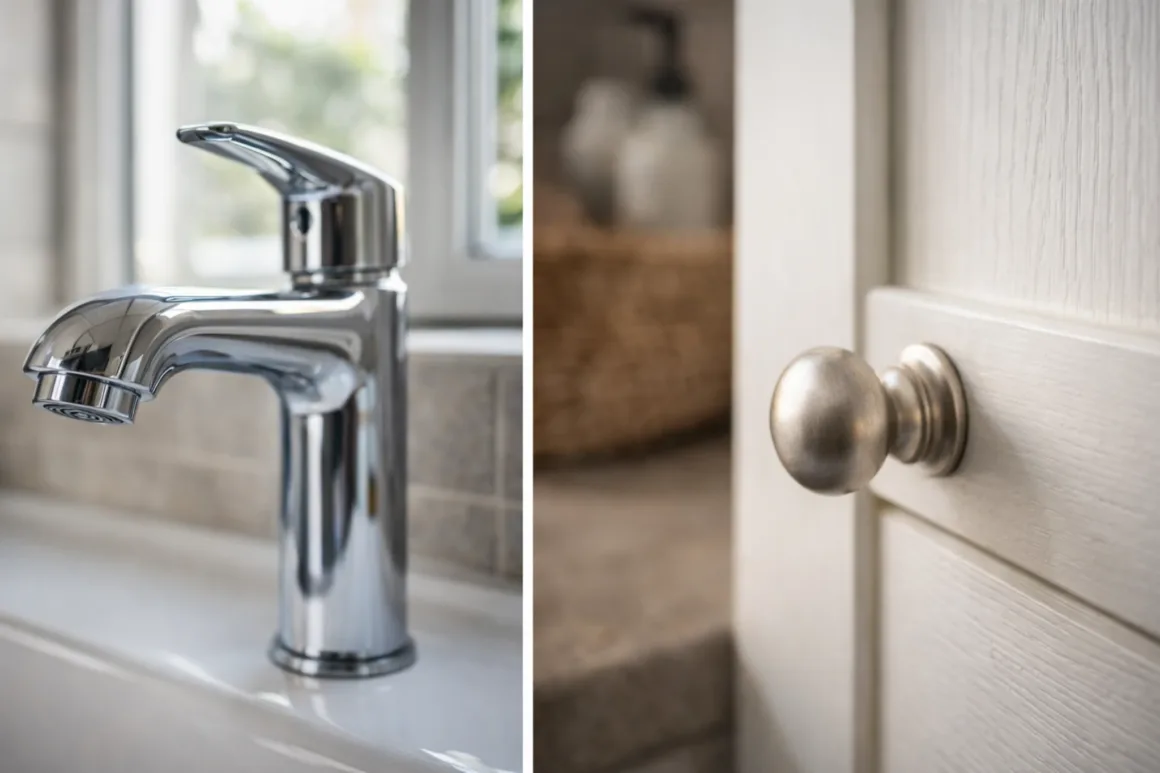
At first, choosing a finish for your kitchen or bathroom feels like a visual decision. That changes once you start using it every day. Water spots, fingerprints, lighting, and cleaning habits slowly become more noticeable than whatever caught your eye in a showroom.
Chrome and nickel are two of the most common options, especially in apartments and smaller homes. While they’re often treated as interchangeable, they behave quite differently over time. Understanding those differences early can save you from small annoyances that tend to show up after a few weeks of use.
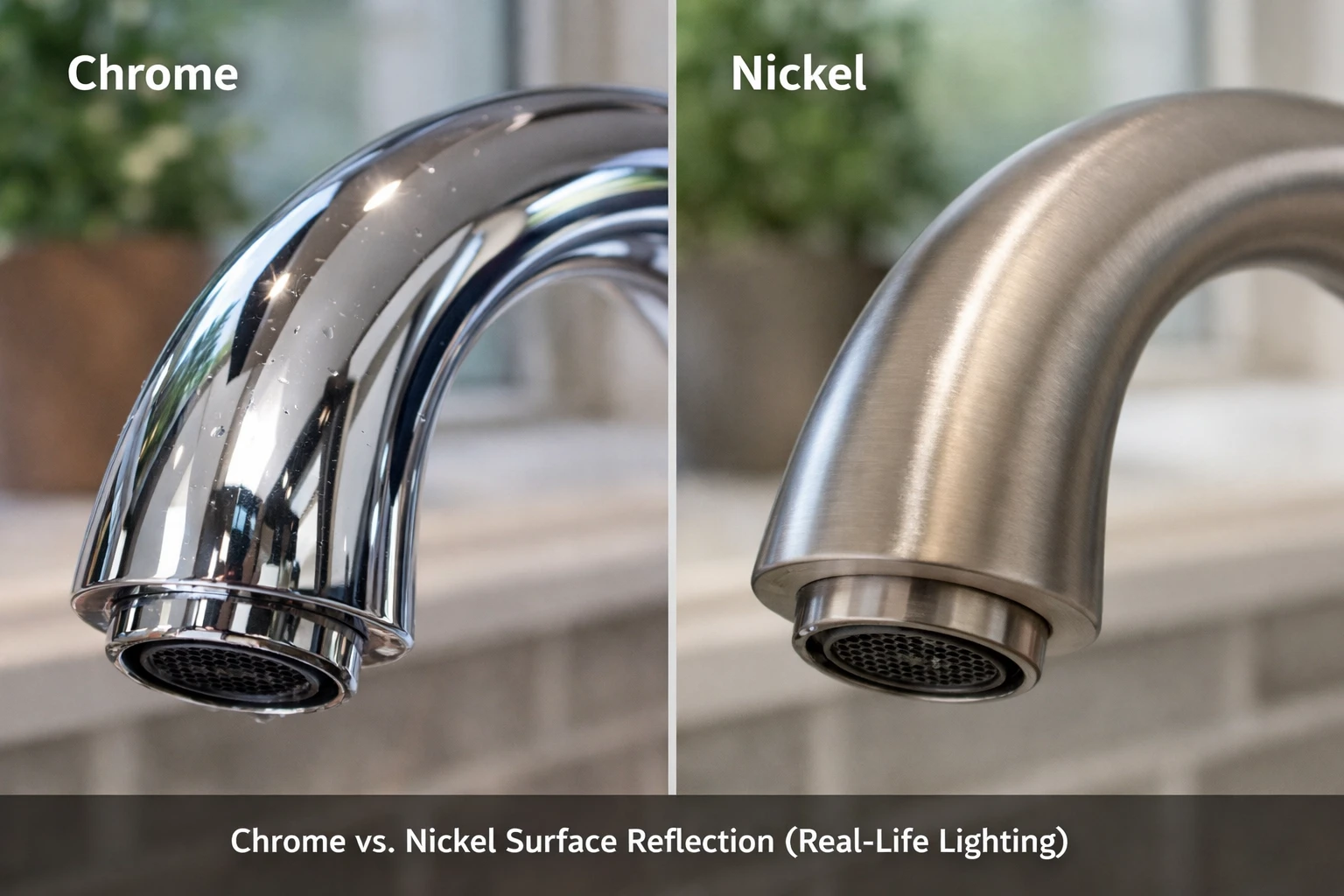
Before getting into the details, here’s a quick side-by-side view of how chrome and nickel usually behave in real homes. This isn’t about lab specs — it’s about what people tend to notice after living with these finishes day to day.
| Aspect | Chrome | Nickel |
|---|---|---|
| Overall look | Bright, crisp, highly reflective | Warmer, softer, more muted |
| Light reflection | High — reflects light sharply | Lower — diffuses light gently |
| Fingerprints & water spots | More visible, especially under strong light | Less noticeable; blends in more easily |
| Daily maintenance | Needs more frequent wiping to stay shiny | Looks acceptable with less frequent cleaning |
| How it ages over time | Keeps a sharp look but shows marks sooner | Softens gradually and evenly |
| Best suited for | Modern, bright, high-contrast interiors | Warm, calm, or lived-in spaces |
How plated finishes actually work in everyday conditions
Both chrome and nickel finishes are created through a plating process, where a thin metal layer is applied over a base material such as brass or steel. That outer layer affects how reflective the surface looks, how it reacts to moisture, and how it slowly changes with regular use.
In quality fixtures, plating is not just decorative. It serves as a protective barrier that helps slow corrosion and wear. In manufacturing, these coatings are typically applied following standardized industrial practices for thickness and adhesion, which helps explain why well-made fixtures can last for many years in normal household conditions.
How chrome behaves in real daily use
Chrome plating is known for its bright, mirror-like appearance and relatively hard surface. In most household fixtures, the chrome layer sits on top of nickel, which helps with adhesion and long-term durability.
In everyday use, chrome tends to look sharp and clearly defined, especially under direct light. This can make small kitchens or bathrooms feel more open and structured.
The trade-off is that fingerprints, water spots, and soap residue tend to show up faster than on softer finishes. People who gravitate toward chrome usually like things to look precise and visually clean, even if that means wiping surfaces a bit more often.
Chrome also pairs naturally with stainless appliances and modern layouts. If you’re still deciding on fixture basics or want context on how finishes affect usability, this guide on how to choose a faucet for your home can help frame those decisions.
How nickel finishes age and feel over time
Nickel finishes tend to appear warmer and more muted than chrome. Depending on how the surface is treated, they may look softly reflective rather than mirror-bright.
One reason many people prefer nickel is that it’s more forgiving in daily life. Smudges, fingerprints, and light water marks blend in more easily, which can make a space feel calmer between cleanings.
As nickel ages, it may lose a bit of its initial brightness, but this usually happens evenly. Most homeowners describe this change as a gentle mellowing rather than visible wear or damage.
Everyday differences you actually notice
You usually notice the difference between chrome and nickel through daily use, not by reading product labels or technical sheets.
- Chrome feels cool, crisp, and highly reflective. It emphasizes light, edges, and contrast.
- Nickel feels warmer and visually quieter, blending more naturally with surrounding materials.
Neither option is automatically the “right” one. Each supports a different rhythm of living and maintenance.
Durability and wear in normal household use
When made well, both finishes are suitable for kitchens and bathrooms. Chrome has a relatively hard surface that helps resist fine scratches. Nickel is slightly softer but tends to disguise small marks because of how it diffuses light.
In real homes, long-term durability depends less on the finish itself and more on how it’s cleaned. Abrasive pads and harsh chemicals usually cause more damage than moisture or regular hand contact.
This becomes especially noticeable in bathrooms, where hardware finishes interact closely with glass surfaces, lighting, and daily moisture. In those spaces, choosing the right glass shower door structure often matters just as much as the finish itself.
Cleaning habits that actually work long term
In practice, both finishes hold up best with simple, regular care.
- Use a soft cloth or sponge
- Clean with mild soap and water
- Rinse thoroughly and dry afterward
- Avoid abrasive or acidic cleaners
Chrome benefits from more frequent wipe-downs to keep its shine. Nickel usually looks acceptable even when cleaned less often.
Where each finish tends to work best
- Kitchens: Chrome often works well with modern appliances and can make compact kitchens feel brighter. Nickel helps soften visual noise in busier layouts or spaces with warmer materials. For a broader overview of decision factors, see our guide on factors to consider when choosing kitchen faucets.
- Bathrooms: Nickel often feels calmer in shared or low-light bathrooms, while chrome can make smaller bathrooms feel cleaner and more defined. If you’re planning updates, our overview of bathroom remodel ideas covers practical upgrades that pair well with either finish.
A few common assumptions that don’t always hold up
- “Shinier means higher quality.” Shine reflects style, not durability. Quality depends on how the plating is applied and maintained.
- “Nickel won’t change over time.” It can soften slightly in appearance, which many people find natural rather than negative.
- “Chrome is hard to live with.” It simply shows marks more clearly; it isn’t fragile.
- “Mixing finishes is a mistake.” Mixing can work well when done intentionally and with balance.
A quick reality check before choosing
- How often will you realistically clean the fixture?
- Is your space brightly lit or softly lit?
- Do you prefer contrast or subtle blending?
- Will this surface be touched constantly?
Final thoughts
In the end, choosing between chrome and nickel comes down to how you actually live with your space. Chrome brings clarity and structure. Nickel brings calm and flexibility.
When the choice reflects your daily habits rather than a catalog image, the finish tends to feel right for much longer.
Author: Perla Irish — design writer covering interior materials, everyday home decisions, and how finishes perform in real living environments. Her work focuses on translating material behavior into practical guidance for homeowners.
Editorial Review: This article was reviewed by the DreamlandsDesign editorial team to ensure clarity, accuracy, and alignment with internal quality standards. The review emphasizes real-world usability, balanced explanations, and long-term relevance for homeowners and renters.
We welcome contributors who enjoy exploring design choices in a similar, real-world context. Our editorial guidelines explain how submissions are reviewed.