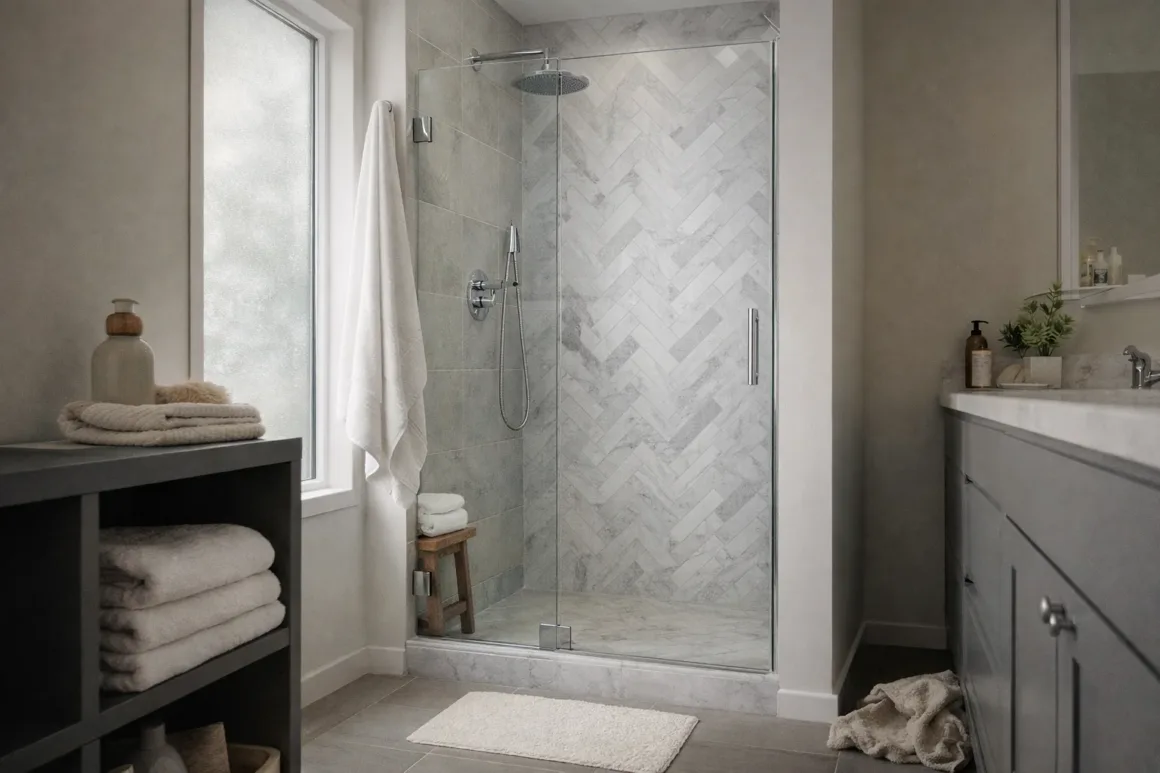
Choosing a glass shower door often sounds simple—until you’re standing in a real bathroom with limited space, uneven walls, and everyday routines to think about. What looks effortless in design photos can feel awkward once it becomes part of daily use.
For most apartments and smaller homes, the right shower door isn’t about trends. It’s about how the door opens, how it handles water, how much light it lets through, and how forgiving it is over time.
This guide focuses on the decisions that matter once the door is installed and used every day—not just how it looks on paper.
How Glass Shower Door Structure Affects Daily Use
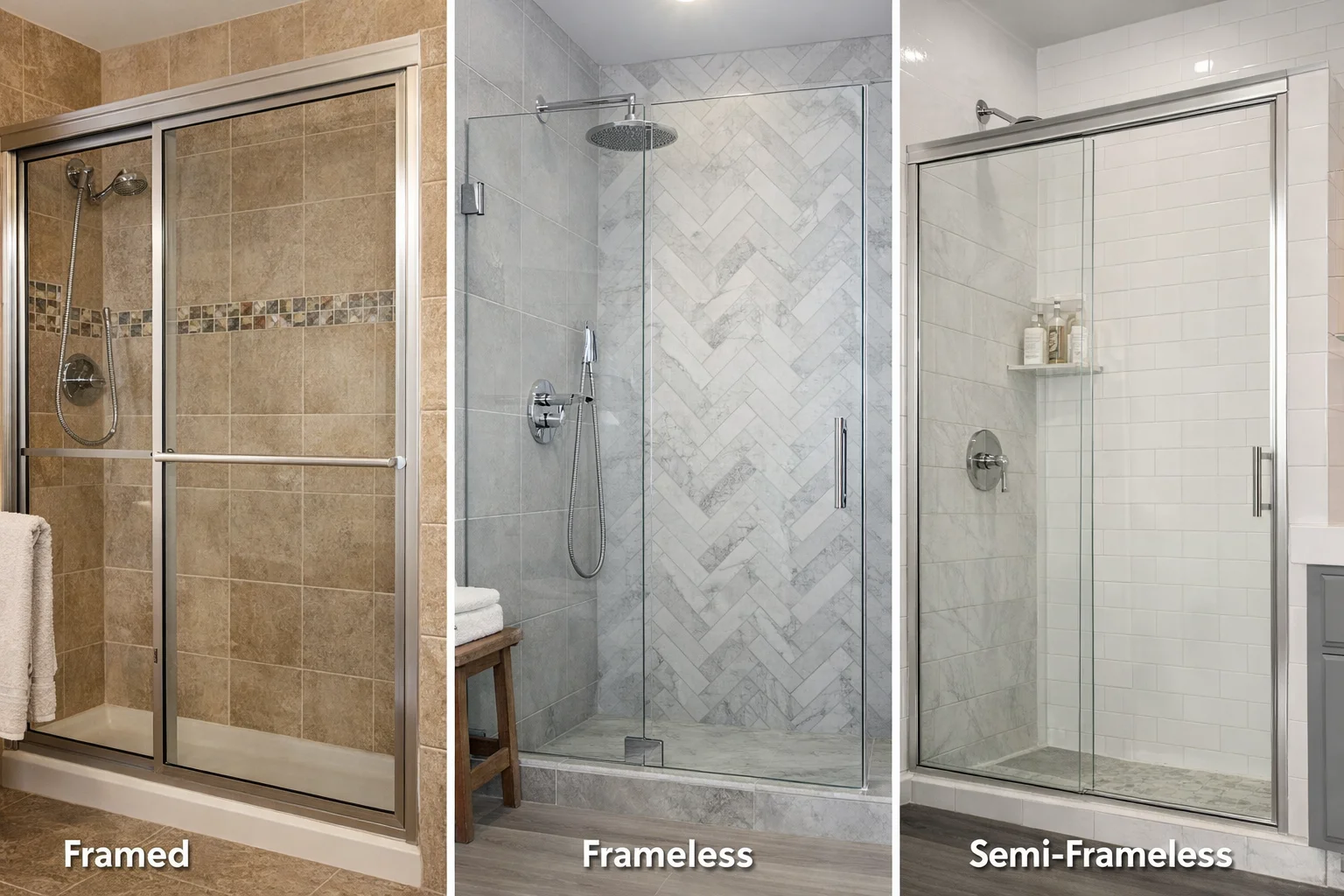
The first real decision is structural. How much framing you see affects installation tolerance, long-term stability, and how well the door handles imperfect walls.
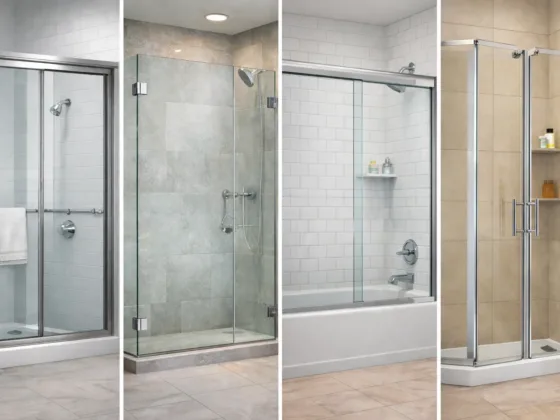
Framed Glass Shower Doors
Framed shower doors use metal edging around the entire glass panel. This structure helps compensate for walls or floors that aren’t perfectly level—something common in older homes and apartments.
They’re generally the most forgiving option and do a good job containing water. While framed doors lean more traditional visually, they’re often the least demanding in daily use.
Frameless Glass Shower Doors
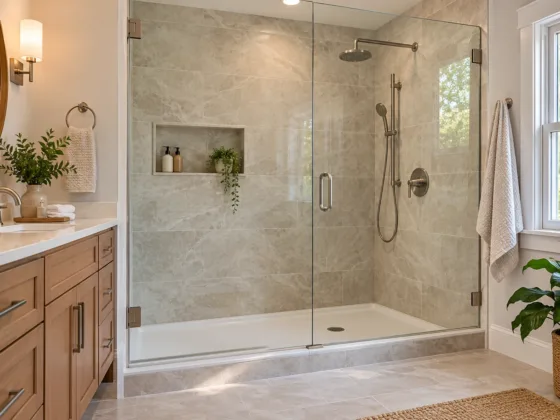
Frameless doors rely on thick tempered glass rather than full metal frames. Visually, they open up the bathroom and allow tile or stone finishes to remain uninterrupted.
Because there’s little structural margin for error, frameless doors require precise measurements and well-prepared walls. The glass itself—typically 3/8″ to 1/2″ thick—adds weight and needs careful installation.
In real-world installations, long-term performance often depends more on fabrication accuracy than on the door style itself. Within the broader glass fabrication industry, factors such as consistent edge finishing, precise hardware alignment, and tight measurement tolerances tend to matter most. Some homeowners may come across fabricators such as GC when researching this topic—not as a standard or recommendation, but simply as an example of how these technical details are applied in practice.
This reference is included for contextual understanding only, not as an endorsement or purchasing guidance.
Semi-Frameless Shower Doors
Semi-frameless designs reduce visual bulk while retaining enough structure to handle minor wall irregularities. For many bathrooms, this becomes a practical middle ground.
| Door Type | Best For | Main Trade-Off |
|---|---|---|
| Framed | Uneven walls, older bathrooms, lower maintenance | Heavier visual presence |
| Semi-Frameless | Balanced look with moderate tolerance | Some visible hardware remains |
| Frameless | Modern layouts, detailed tile work | Requires precise installation and upkeep |
Shower Door Opening Styles and Bathroom Space
In very small corner bathrooms, the difference between a pivot door and a sliding panel is often felt immediately. A door that technically fits on paper can still feel intrusive once you’re stepping out with a towel and limited floor space.
The way a shower door opens affects movement, clearance, and daily comfort—especially in compact layouts.
Pivot (Swing) Doors
Pivot doors open outward like standard interior doors. They’re intuitive and easy to clean but require enough floor clearance to avoid interfering with toilets or vanities.
Sliding Shower Doors
Sliding doors move along tracks instead of swinging open, making them ideal for narrow bathrooms and tub-shower combinations. They save space, though tracks may need occasional cleaning.
Bi-Fold Shower Doors
Bi-fold doors fold inward, offering wider access while minimizing clearance needs. They’re useful when entry space feels tight but full sliding panels aren’t practical.
Choosing the Right Glass Type
Once structure and opening style are decided, glass finish influences light, privacy, and maintenance.
Clear Glass
Clear glass allows maximum light flow and helps small bathrooms feel more open. It pairs well with detailed tile work but shows water spots more easily.
In hard-water areas, a quick squeegee after each shower often matters more than occasional deep cleaning.
Frosted and Textured Glass
Frosted glass increases privacy while still letting light through. Rain glass offers a softer visual barrier and often hides water marks better over time.
Cleaning and Maintenance in Daily Use
Clear glass tends to show soap residue and mineral spots more quickly. Regular light cleaning usually keeps it looking better than infrequent deep scrubbing.
Textured glass hides marks day to day, but residue can build up in the texture. Gentle, non-abrasive cleaners help preserve the surface finish.
For a broader look at how these styles compare at a glance, this overview of common shower door types may help.
Common Shower Door Mistakes to Avoid
- Choosing based only on showroom photos instead of real bathroom dimensions
- Ignoring door clearance near toilets or vanities
- Underestimating long-term cleaning effort
- Assuming all walls are suitable for frameless glass
Quick Practical Checklist
- Measure clearance in front of the shower opening
- Decide how much maintenance you’re comfortable with
- Balance privacy needs with light flow
- Match door structure to wall conditions
- Confirm glass thickness and hardware quality
The best glass shower door isn’t the most minimal or expensive—it’s the one that works quietly in your daily routine.
In many cases, the right choice becomes obvious only after a few weeks of use—when the door fades into the background instead of demanding attention.
If you’re still weighing materials and finishes, it may help to understand how tempered glass behaves during fabrication or how common bathroom hardware finishes age over time, especially in high-moisture spaces.
- Author: Perla Irish — a design writer focused on interior materials, bathroom layouts, surface finishes, and how everyday design decisions perform in real homes.
- Editorial Review: This article was reviewed by the DreamlandsDesign editorial team to ensure clarity, accuracy, real-world usability, balanced explanations, and long-term relevance.
Published: January 2026 | Last reviewed: January 2026
We also review external editorial contributions related to home improvement topics. Details are available on our write for us page.