Table of Contents Show
How do I Cut Very Long Grass? — Did you know that cutting an overgrown lawn to a lovely carpet of grass doesn’t need any extra effort except for a little planning and understanding before you take on this lawn transformation? Well, assuming you choose to handle the task on yourself, here are tips for mowing your lawn efficiently.
How do I Cut Very Long Grass?
Efficient Planning and Understating of the Tasks
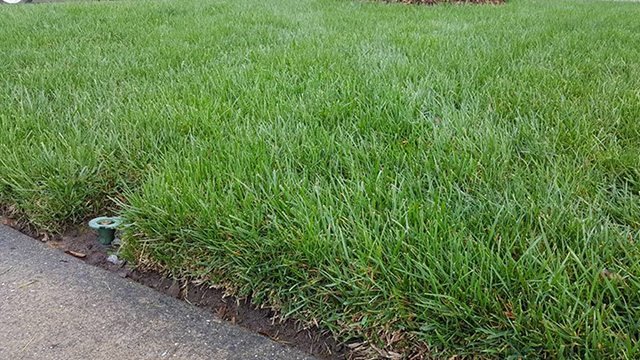
You need to understand the task, the terrain and come up with a good plan. To plan efficiently, you’ll need to understand your routes visually. You can use a map or just appreciate your terrain traditionally.
You also need some data on the lawn-mower. How fast can the lawn-mower move? How long does it take to make a turn? And how fast does lawn mower go when pulled backward?
Read Also:
Why Did You Need to Eliminate the High Grass and Weed First?
Weeds often grow taller than grass, and removing them separately is easier. You can pull them out by hand or use the weed trimmer that helps you save time and still trim the high grass. Weed trimmers work best if the overgrown lawn has passed or approaching knee height.
In situations where the lawn is approaching or has passed knee height, it’s recommended you cut the grass (lawn) back to half its present height with the trimmer, and give the lawn some time to heal. This can take about three days.
Once the lawn has repaired, use the trimmer to cut it down until it reaches 6 – 8 inches tall. Allow the lawn to recuperate for a couple of days, and repeat the process till it reaches a height that your lawn mower can handle.
Remember, this process only applies to overgrown lawns that have reached the knee height. Once you complete every stage of trimming, I commend watering the lawn thoroughly and giving it at least a week to recover.
Using the Lawn Mower for Second Trimming
Once you’ve given the lawn enough time to recover, it’s time for the second trim. At this stage, your lawn will be at a favorable height that you can efficiently use a lawnmower on it. However, you’ll need to set the lawn mower to the highest setting before you start.
Set the mower such that it cuts down a third of the lawn’s present height. Trim the lawn with intersecting (overlapping) passes to make sure you have an even, uniform cut. Once you’re done, water the lawn thoroughly, and give it enough time (4 – 5 days) to recuperate.
I know the lawn may look dreadful after mowing. You don’t have to worry about that because it will improve over the next few days.
Make sure you mow the lawn after every three to five days (or weekly) until it reaches your desired height. Adjust the mower blades down to a third every time you trim. It is also recommended that you mow the lawn in different directions during every mowing session to promote straight blades.
Always remember to water the lawn deeply and evenly after every mowing session except during rainy seasons.
Mowing An Overgrown Lawn Safely
From a layman’s point of view, the very nature of mowing and removing weeds may seem like injuring the plants and leaving the cuts exposed to pathogen invasion. However, it’s essential for you to understand that when you follow the right mowing procedure, the plants will have the right energy to develop new leaves healthily.
To avoid damaging the lawn, you’ll need to trim the grass in stages to gradually reduce the mowing height as you give the plants ample spaces to recuperate. That’s why it’s widely recommended that you water the lawn and add fertilizer after mowing. Remember to consult an expert before you go adding fertilizer.
Just as aforementioned, mowing overgrown lawn should about 2 – 3 months as you subsequently reduce the mowing height to your desired height. As you keep reducing mowing heights, the lawn’s crowns will naturally start to grow deeper inside the thatch level where it’s cooler and shaded.
Any time the lawn appears brown and scalped after mowing, further height reduction must be stopped awaiting the lawn to green up and repair itself. As soon as the lawn has recuperated, then regular height reductions can start again.
Why Does it Need to be Done Regularly and in Steps?
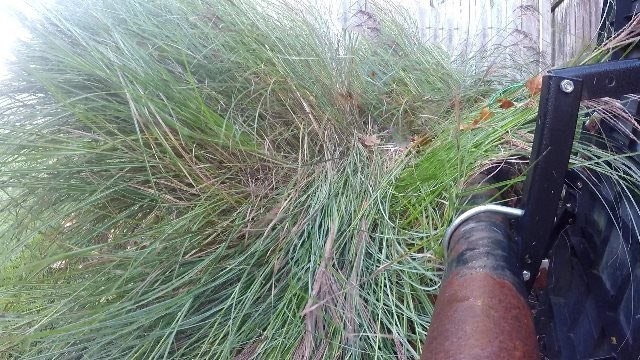
The right approach to cutting long grass and keeping it maintained at a more desirable height for a long time is by reducing the lawn’s height in stages.
According to PennState, College of Agricultural Science, regular cutting of overgrown lawns helps you to achieve your preferred bush height without any damages. You can adjust your mowing frequency depend on the season. During summer, you can mow the lawn once in three weeks, and once a week in spring and autumn.
It’s never advisable to mow your lawn in winter. The lawn’s regrowth is likely to fail during winter because it might go into a dormancy phase during the cold season.
The gradual reduction process of the mowing height makes sure the lawn stays alive, remains healthy, and after every mowing session, it will gradually look better until we have realized the ultimate result.
The One Third Rule
This rule states that you should never trim more than one-third of the grass (leaf blade) during any lawn mowing session. Cutting more than one-third of the grass not only weakens the plant, it hinders the development of the roots, producing a small, superficial root system.
According to Bob Vavrek, Agronomist, abiding by the one-third rule, helps us mow frequently enough with the aim of stimulates lateral growth and supporting the lawn’s healthy development.
That said, there several factors like grass species and personal preferences needed to be considered when determining the optimal height of trimming for roughs at a specific facility.
Remember to service your mower regularly, especially at the beginning of every growing season for a clean, quality cut. Blunt blades are likely to bruise the leaf blades and can cause straw-colored die-back.
Conclusion: How to Cut Long Grass
Lawn mowing is an essential part of proper backyard care. It keeps your grass healthy, saves you money, an opportunity to tidy your lawn to your liking, keeping your body healthy and gives you the special chances to know your yard.
Bonus Video
Watch this video guide on how to mow an overgrown grass.