Table of Contents Show
Most homeowners think hardscaping is about adding patios, walkways, or stone features. That’s not the real role.
Hardscaping defines how an outdoor space actually works—how people move through it, where they gather, and how surfaces hold up over time. Without that structure, even good materials fail. Layout feels awkward, drainage becomes a problem, and maintenance shows up sooner than expected.
Before choosing materials or features, the real decision starts here.
Hardscaping Is Not Decoration—It’s Structure
Hardscaping controls movement.
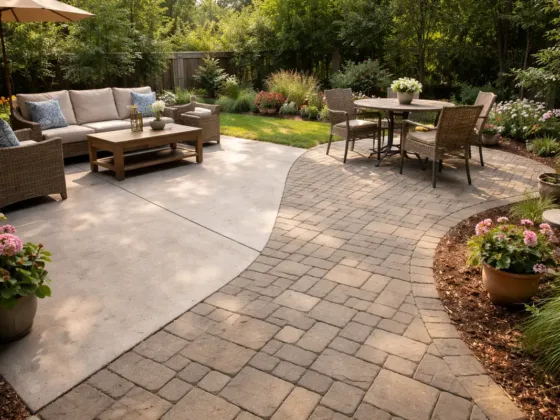
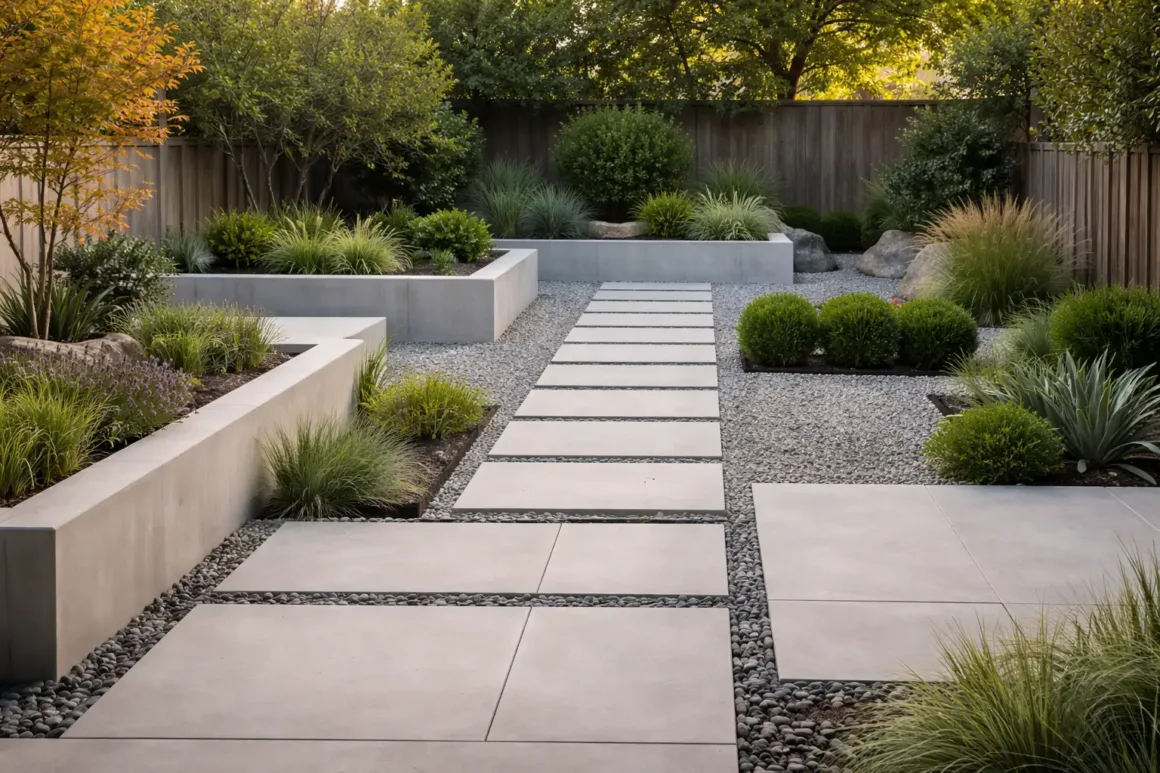
Walkways determine how people enter and cross the space. Patios define where people stop and stay. Edges, borders, and transitions shape how different areas connect.
Without that structure:
- Spaces feel disconnected
- Furniture placement becomes awkward
- Traffic cuts through unintended areas
This is why outdoor layouts fail more often than materials do. The surface might look good, but the space doesn’t function.
What Hardscaping Actually Controls in a Backyard
Hardscaping decisions show up in how the space behaves—not how it looks.
- Movement: Where people naturally walk and gather
- Flow: How different areas connect or feel separated
- Boundaries: Where one function ends and another begins
- Drainage: How water moves across surfaces
- Load distribution: How weight and pressure are handled over time
When these elements are ignored, problems don’t show immediately. They show after use—when surfaces shift, layouts feel awkward, or maintenance becomes constant.
Why Material Choice Fails Without Layout
Choosing between materials too early is where most projects go wrong.
Concrete and pavers don’t solve the same problems. One prioritizes speed and simplicity. The other allows flexibility and long-term adjustment. But neither works well if the layout itself is unclear.
Most material decisions fail because they ignore how the space will actually be used. How to choose between pavers and concrete based on layout and use becomes easier once movement, spacing, and long-term pressure on the surface are clear.
Material choice only makes sense after:
- Movement paths are clear
- Zones are defined
- The purpose of the space is established
Without that, the wrong decision feels right—until the space is actually used.
How Hardscaping Affects Durability Over Time
Durability is not just about material strength. It’s about how the system handles stress.
Ground movement, water flow, and daily use all affect outdoor surfaces. Hardscaping determines how those forces are distributed—or concentrated.
When layout and structure are wrong:
- Water collects in the wrong places
- Surfaces shift unevenly
- Stress builds where it shouldn’t
This is why some patios fail early even with “durable” materials.
Durability questions usually come down to how different surfaces fail over time—not just how strong they are at the start. That’s where the difference between concrete and pavers becomes clearer.
What actually determines whether concrete or pavers last longer outdoors comes down to failure patterns, not initial strength.
Real-World Applications: Where It Actually Shows Up
Hardscaping decisions become visible in how the space is used—not how it looks on day one.
A patio that feels too tight, a walkway that cuts through seating, or a surface that becomes uneven after a season—these are layout problems, not material problems.
Design ideas only work when they follow the structure of how people actually use a space.
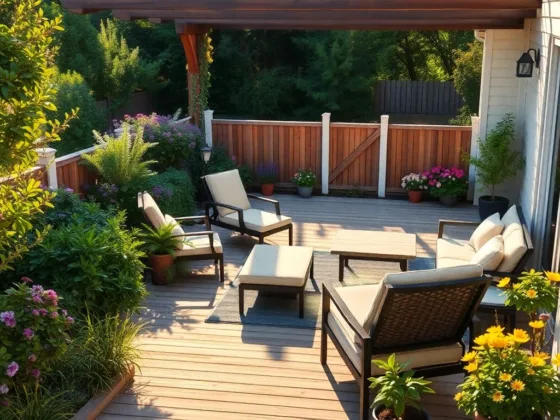
You can see how these choices play out in real spaces in these hardscape design ideas, where placement and purpose determine whether a feature actually works.
Good hardscaping makes a space feel natural to use. Bad hardscaping makes it feel forced, no matter how good it looks.
Why Good Materials Still Fail in Bad Layouts
Many homeowners assume better materials automatically mean better results. In reality, layout determines whether those materials succeed or fail.
A well-installed concrete slab can still crack if water collects underneath. A high-quality paver system can shift if the base and edge restraints are wrong.
The failure doesn’t come from the material—it comes from how the system is designed.
This is why surface comparisons only tell part of the story. Without structure, even the “right” material becomes the wrong choice over time.
What Failure Actually Looks Like Over Time
Most hardscaping problems don’t show up right after installation. They appear months later, when the space is already in use.
- A patio that slowly develops uneven edges where water collects
- Pavers that begin to shift along high-traffic paths
- Concrete surfaces that crack where stress was never accounted for
- Walkways that feel awkward because they ignore how people actually move
These issues are rarely caused by the material itself. They come from decisions made before installation—when layout, flow, and long-term use were not fully considered.
Where Most Projects Go Wrong
Most mistakes happen before installation even begins.
- Choosing materials before defining layout
- Ignoring drainage and slope
- Overfilling small spaces with too many features
- Designing for appearance instead of use
These problems don’t show immediately. They appear over time—when surfaces shift, water collects, or the space simply doesn’t work the way it should.
Fixing them later costs more than getting the structure right from the start.
Final Thought
Hardscaping decisions don’t fail immediately. They fail gradually—through movement, wear, and changing use.
The difference between a space that works and one that doesn’t rarely comes down to the material itself. It comes from whether the structure was right from the beginning.
Author & Editorial Review
Author: Perla Irish is a design and home-focused writer covering interior materials, everyday homeowner decisions, and real-world performance of residential finishes in consultation with licensed contractors and industry standards where applicable. Her work emphasizes clarity, practical context, and long-term usability over trends or transactional advice.
Editorial Review: This article was reviewed by the DreamlandsDesign editorial team with a focus on homeowner decision-making psychology, behavioral context, accuracy, and long-term relevance. Content is evaluated to ensure balanced explanations, clear intent, and alignment with Google Helpful Content and E-E-A-T quality standards.
Last updated: April 2026