Table of Contents Show
If you’re trying to decide between a heat pump and a furnace, you’re not the only one. Both systems can keep a home comfortable, but they work in very different ways, come with different running costs, and make more sense in some climates than others.
On paper, “heat pump vs furnace: which one is best?” sounds like a simple either/or question. In real life, the better question is, “Which one is best for my climate, fuel options, and budget?” This guide walks through how each system works, where each one shines, and what to ask an HVAC pro before you commit.
We’ll look at climate, energy prices, installation costs, comfort, lifespan, and environmental impact. By the end, you should have a clear enough picture to compare quotes, ask better questions, and avoid ugly surprises on your energy bills.
Quick Answer: Heat Pump vs Furnace at a Glance
If you just want a starting point before diving into the details, here’s how the decision usually breaks down for most homeowners.
Choose a Heat Pump if…
- You live in a region with mild or moderately cold winters rather than months of deep-freeze temperatures.
- Electricity prices are reasonable, and you’d like to reduce your overall energy use.
- You also need air conditioning and like the idea of one system that can both heat and cool.
- You care about shrinking your home’s carbon footprint and want a non-combustion option.
- You don’t have a gas line, and running one to your home would be expensive.
Choose a Furnace if…
- You have long, very cold winters where temperatures regularly plunge well below freezing.
- Your home already has a gas line, venting, and ductwork in good condition.
- You want strong, high-temperature heat that can warm the home quickly during a cold snap.
- Local gas prices are low compared with electricity, so gas heat is cheaper to run where you live.
In many “in-between” climates, homeowners pick a hybrid or dual-fuel setup: a heat pump handles most of the heating, and all of the cooling, and a high-efficiency gas furnace only kicks in on the coldest days. That way, you’re not overpaying for fuel when the weather is mild, but you still have backup for those deep-winter nights.
How a Heat Pump and Furnace Work
You don’t need to memorize every component in your HVAC system, but having a simple mental picture of how each one works makes the pros and cons much easier to weigh.
Heat Pump
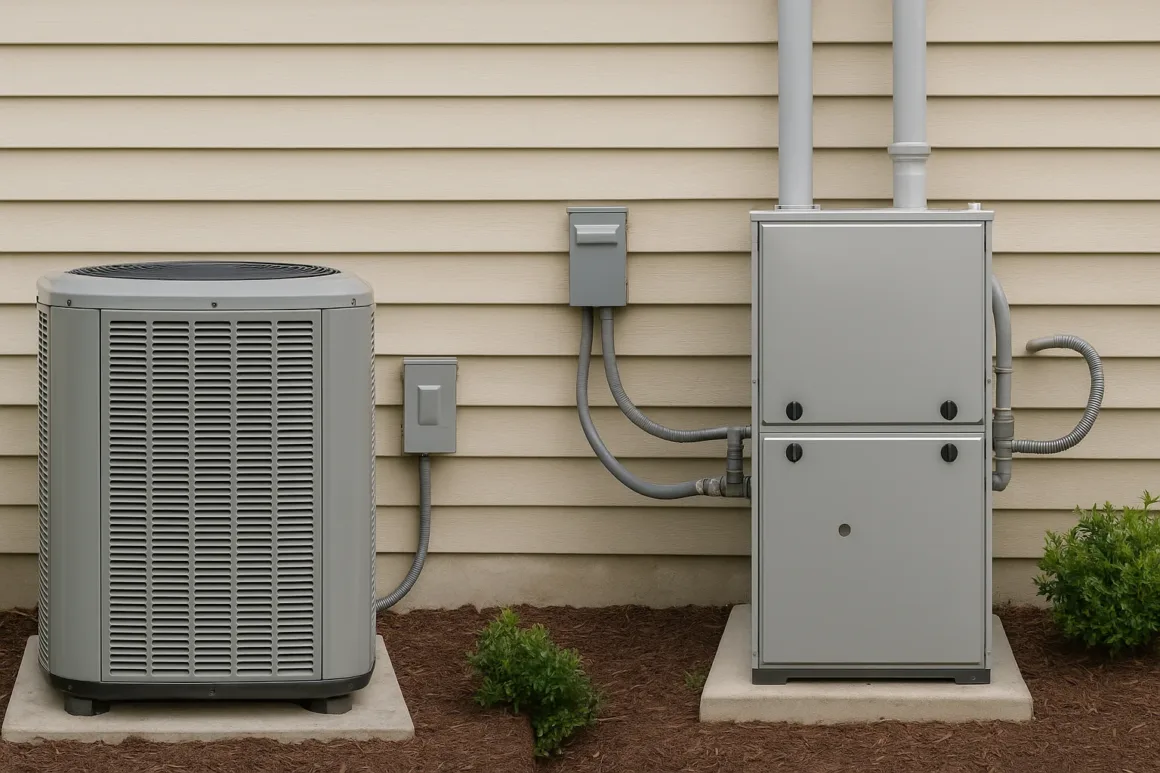
In simple terms, a heat pump is a “reverse” air conditioner. A standard AC moves heat from inside your home to the outdoors. A heat pump uses a reversing valve so it can flip that process and pull heat from the outside air into your home during winter.
A refrigerant circulates between the indoor and outdoor units. In heating mode, the outdoor unit absorbs low-temperature heat from the air, compresses it to a higher temperature, and then sends that heat indoors. In cooling mode, the system reverses and works like a central air conditioner you may already be familiar with.
Because a heat pump moves heat instead of creating it, a modern air-source heat pump can deliver several units of heat for every unit of electricity it uses, when sized and installed correctly. That’s why it can be more efficient than electric resistance heaters or older, low-efficiency furnaces in suitable climates.
There are several different types of heat pumps: ducted systems that tie into a central air handler, ductless mini-splits for room-by-room control, and even ground-source (geothermal) systems that tap into stable underground temperatures. The basic idea is the same, but installation costs and performance vary by type.
Standard air-source heat pumps do lose capacity as outdoor temperatures drop, although newer “cold-climate” models are specifically engineered to perform better at low temperatures than older units. When you’re comparing quotes, ask each contractor how the proposed model performs at your typical winter lows—not just on a mild day.
Moreover, because your heat pump serves a dual purpose, heating and cooling, regular maintenance is essential to keep it running efficiently year-round. Fortunately, with the growing popularity of heat pumps, it’s easier than ever to find reputable experts specializing in heat pump repair, giving you confidence that your system will be properly serviced whenever needed.
Furnace
A furnace is a combustion-based heating appliance. It burns fuel—usually natural gas, propane, or heating oil—or uses electric resistance elements to generate heat. A blower fan pushes air across the heat exchanger or heating coils and distributes the warm air through your ductwork.
Combustion furnaces are rated by AFUE (Annual Fuel Utilization Efficiency), which tells you how much of the fuel’s energy turns into usable heat over a typical season. An older gas furnace might be around 70–80% AFUE, while modern high-efficiency gas furnaces can reach the 90–97% AFUE range when installed and vented properly.
If you’re specifically weighing an 80% vs 95% gas furnace, our in-depth guide to 80% vs 95% furnace efficiency breaks down what actually changes, how much gas you could save, and when a 95% model really pays off.
Electric furnaces convert nearly 100% of the electricity they use into heat, but because electricity is often more expensive per unit of energy than gas, their operating costs can be higher unless you have very low-cost power or rooftop solar offsetting your usage.
Heat Pump vs Furnace: Key Factors to Compare
With the basics in mind, here are the trade-offs you’ll actually feel in your home and see on your monthly bills.
Climate and Location
Climate is the single biggest factor in the heat pump vs furnace decision. In regions with milder winters, a properly sized heat pump can often cover almost all of your heating needs and also handle cooling in summer. In very cold climates where winter temperatures regularly sit well below freezing, a gas furnace still tends to offer more reliable, high-output heat.
If you live somewhere “in between”—cold winters, but not weeks at a time below zero—a cold-climate heat pump paired with a backup furnace (dual-fuel system) can give you the best of both worlds: efficient electric heating most of the year and gas heat only when temperatures plunge.
Fuel availability matters as well. Without a gas line, running on propane or oil can get expensive. In that situation, a high-efficiency heat pump can often beat a standalone electric furnace or plug-in space heaters on both comfort and long-term cost.
If you’re still at the “big picture” stage, our overview of the most effective home heating systems shows where heat pumps and furnaces sit alongside options like boilers, radiant floors, and pellet stoves.
Upfront Cost
Upfront cost depends heavily on what you already have: ductwork, electrical panel capacity, venting, and whether you’re doing a straightforward replacement or a full system change.
- If you already have gas and decent ductwork, swapping an old furnace for a modern high-efficiency model is often the lowest initial cost.
- A new ducted heat pump can cost more upfront, especially if you also need duct changes or an electrical panel upgrade, but it may replace both your old furnace and your central AC.
- Ductless mini-split heat pumps can be a cost-effective option in smaller, well-insulated homes or additions where running new ducts would mean opening up walls and ceilings.
If your existing air conditioner is near the end of its life, a heat pump is worth pricing out because it can handle both heating (in the right climate) and cooling. Then you’re buying and maintaining one main system instead of two.
Operating Costs and Energy Efficiency
Running costs are where people usually feel the difference. Because heat pumps move heat instead of generating it, many modern air-source heat pumps can deliver several units of heat energy for each unit of electricity they consume under typical conditions. Even a very efficient gas furnace, by contrast, always loses a small slice of energy through its venting.
Whether a heat pump or furnace is cheaper to run in your situation depends mainly on three things:
- Climate: how cold your winters are and how many days they last.
- Fuel prices: your local cost of electricity vs gas (or propane/oil).
- System quality: the actual efficiency ratings and how well the system was sized and installed.
In many mild-to-moderate climates, a high-efficiency heat pump will have lower yearly operating costs than a gas furnace plus central AC. In frigid climates with cheap gas and expensive electricity, a high-efficiency furnace or dual-fuel setup can still come out ahead on lifetime cost.
Don’t overlook your building envelope. Air sealing, insulation upgrades, and smart thermostat settings often deliver savings on the same order of magnitude as switching equipment. If your home is drafty or poorly insulated, it usually makes sense to tackle those basics before investing in a top-of-the-line furnace or heat pump.
Comfort, Noise, and Air Quality
Many people like the “toasty” blast of hot air from a furnace. Furnaces typically deliver higher-temperature supply air, which can feel very warm when it first comes out of the vents.
Heat pumps usually run longer, gentler heating cycles. The air they blow doesn’t feel as hot to the touch, but the temperature around the house tends to be more even with fewer swings between “too warm” and “a bit chilly.” Once people live with a heat pump for a season or two, many prefer that more stable comfort.
Combustion furnaces produce carbon monoxide and other exhaust gases as a byproduct of burning fuel. A properly installed, well-maintained furnace vents these safely outdoors, but cracked heat exchangers, blocked flues, or poor maintenance can raise safety risks. Heat pumps don’t burn fuel, so there are no flue gases generated inside the home.
Both systems need clean filters and regular maintenance to keep indoor air quality healthy. If someone in your household has asthma, allergies, or other respiratory issues, bring that up with your HVAC pro and discuss filtration, ventilation, and humidity control alongside your choice of equipment.
Environmental Impact
From an emissions perspective, heat pumps are increasingly favored because they run on electricity and can benefit as the grid gets cleaner over time. In many regions, a high-efficiency heat pump can significantly reduce the carbon emissions from home heating compared with an older gas, oil, or propane furnace—especially if part of your electricity comes from renewables.
Gas, oil, and propane furnaces burn fossil fuels on site, which directly releases CO and other pollutants. A modern high-efficiency furnace can still be part of a lower-carbon strategy in very cold climates, but it will usually have a higher emissions footprint than an efficient heat pump on a reasonably clean grid.
If cutting your home’s climate impact is a priority, an efficient heat pump paired with weatherization upgrades (air sealing, insulation, window improvements) and cleaner electricity is currently one of the strongest combinations available for typical homes.
Lifespan, Maintenance, and Repairs
In general, a gas furnace often lasts around 15–20 years with regular maintenance, while many heat pumps fall in the 10–15 year range. One reason: heat pumps usually run year-round for both heating and cooling, so they rack up more operating hours.
Both systems need routine care: filter changes, annual professional service, and basic housekeeping, like keeping outdoor units clear of leaves and snow, and making sure supply and return vents are not blocked by furniture.
If your system is short-cycling, making loud or new noises, or struggling to reach the set temperature, it’s a good idea to have it checked sooner rather than later. Our guide to professional heat pump repair explains common warning signs, typical repair costs, and what technicians check. For recurring issues, always bring in a professional heat pump repair rather than guessing at fixes or ignoring the problem.
On the furnace side, annual tune-ups and safety checks are critical to spot problems like cracked heat exchangers or venting issues early. When your furnace is older, and repairs are piling up, look at age, efficiency, and repair history together—not just the cost of the next part—when deciding whether to repair or replace.
Space, Ductwork, and Installation Practicalities
Furnaces typically live indoors—basement, garage, mechanical closet, or attic—and need safe clearances, combustion air, and proper venting. If your home already has a furnace and ductwork that’s in decent shape, replacing like-for-like is often straightforward.
Heat pumps include an outdoor unit and, for ducted systems, an indoor air handler connected to your ductwork. In homes without ducts, ductless mini-split heat pumps can be an excellent option, providing zoned comfort without tearing into walls to add new ducts.
If you’re planning a larger project—adding cooling for the first time, finishing a basement, or doing a deep energy retrofit—ask your contractor how a heat pump, furnace, or hybrid system fits into the bigger picture of your home: room-by-room loads, airflow, and future plans.
Incentives, Rebates, and Tax Credits
In many areas, governments and utilities now offer rebates or tax incentives for high-efficiency heating systems—especially electric heat pumps and high-efficiency gas furnaces. These programs can narrow the upfront price gap between basic equipment and premium, high-efficiency models.
Before you sign a contract, check:
- Local utility rebates for heat pumps, furnaces, smart thermostats, and insulation.
- State or national tax credits for qualifying high-efficiency equipment (where available).
- Whether your installer will help with rebate paperwork or if you’ll handle it yourself.
These incentives change over time, so rely on up-to-date information from your local energy office, utility website, or a reputable installer.
How to Decide: Heat Pump vs Furnace for Your Home
Every house, budget, and set of priorities is a bit different, but this simple framework can help you move from “I have no idea” to a clear plan.
- Map your climate. Look at how often winter temperatures drop below freezing and how long cold snaps last. Local building officials or energy offices usually have quick climate summaries.
- Compare energy prices. Pull out recent utility bills and note your local gas, propane, oil, and electricity rates. Even a rough comparison can show which fuels are more cost-effective where you live.
- Assess your home. How old is your current furnace or heat pump? How well insulated is your home? Do you already have ductwork, and is it in good condition?
- Clarify your priorities. Are you optimizing for the lowest upfront cost, lowest monthly bills, comfort, emissions, or some balance of all four?
- Get at least two quotes. Ask one contractor to price a high-efficiency furnace (plus AC if you need cooling) and another to price a high-efficiency heat pump or dual-fuel system. Make sure both quotes include any code-required upgrades.
- Ask better questions. How will this system perform in a cold snap? What are the estimated yearly operating costs? What maintenance is required? What are the parts and labor warranties?
If you’re not sure how to evaluate contractors, our HVAC company hiring checklist and home HVAC essentials guide walk you through red flags, must-ask questions, and basic system checks.
There’s also nothing wrong with taking a phased approach. In some homes, the most practical path is keeping a newer furnace, adding a heat pump to reduce fuel use and provide cooling, and then letting older equipment naturally age out instead of replacing everything at once.
Frequently Asked Questions About Heat Pumps vs Furnaces
Is a heat pump cheaper to run than a gas furnace?
Often yes, especially in mild-to-moderate climates where winters aren’t brutal and electricity prices are reasonable. A high-efficiency heat pump can move more heat energy than the electrical energy it uses, while even a very efficient gas furnace has built-in fuel losses. In regions with very cheap gas and high electricity rates, a high-efficiency gas furnace may still be competitive or cheaper. That’s why it’s important to compare your local utility rates and real equipment options instead of relying on national averages alone.
Do heat pumps work in very cold climates?
Yes, but you need the right equipment and design. Modern cold-climate heat pumps are built to deliver reliable heat at much lower outdoor temperatures than older models. In very cold regions, many homeowners still keep a backup heat source—a gas furnace, electric resistance heat, or a high-efficiency wood or pellet stove—for peace of mind during extreme cold snaps or outages.
Which lasts longer, a heat pump or a furnace?
A gas furnace often has a slightly longer typical lifespan—around 15–20 years—while many heat pumps land in the 10–15 year range. That’s not a hard rule, though. Installation quality, maintenance, how hard the system has to work, and plain luck all play big roles in how long any individual unit lasts.
Can I switch from a furnace to a heat pump and keep my existing ducts?
In many homes, yes. A ducted heat pump air handler can often reuse existing ductwork, provided the ducts are reasonably sized, sealed, and balanced. Your contractor should actually inspect the ducts, test airflow, and recommend any upgrades, not just assume everything will work perfectly with the new equipment. In homes with very old, leaky, or undersized ducts, ductless mini-splits or new ductwork might be a better long-term choice.
Whether you end up with a heat pump, a furnace, or a hybrid system, the goal is the same: a comfortable, safe home with predictable bills. Use the pros and cons above as a starting point, then work with a qualified local HVAC pro who understands your climate, codes, and utility rates.
Reviewed by
Bryan Orr, HVAC educator and co-founder of Kalos Services and HVACR School. For over a decade, Bryan has trained technicians on heat pumps, furnaces, airflow, commissioning, and real-world troubleshooting. You can see more of his work on his LinkedIn profile and at HVACR School. This article is for general education only and is not a substitute for design, sizing, or safety advice from a licensed local contractor.