Table of Contents Show
If there’s one room that can quietly upgrade your day from the moment you wake up, it’s the bathroom. Right now, more homeowners are using remodels to create calm, efficient spaces that feel like a retreat instead of a rushed pit stop. Think warmer finishes, smarter layouts, better storage, and just enough technology to make mornings easier—not more complicated.
This guide walks through the latest bathroom design trends, updated cost ranges, layout tips, planning steps, and sustainability ideas. You’ll also see where it makes sense to bring in a professional—such as a professional bathroom remodeling contractor in Newtown, PA—to handle waterproofing, plumbing, and code compliance so the space still looks and performs well years from now.
Quick snapshot: Most bathroom remodels land somewhere between modest five-figure budgets and full spa-level investments. The “right” number depends on your home, your goals, and how long you plan to stay.
Why Bathroom Remodeling Is a Smart Move This Year
1. Wellness and mental health are now core design goals
Bathrooms are no longer just “get in, get out” spaces. Homeowners are asking for rooms that genuinely help them decompress: warmer lighting, softer finishes, quieter fans, and layouts that don’t feel cramped or chaotic.
Features that support this wellness-first mindset include:
- Soft, warm color palettes instead of stark white everywhere
- Walk-in showers, soaking tubs, and even steam for deeper relaxation
- Layered lighting that feels bright and energizing in the morning, then calm and cozy at night
- Better acoustics, quieter fans, and thoughtful door placement for privacy
If you’re still deciding whether a remodel is worth the disruption, pair this guide with DreamlandsDesign’s article on what you need to know before your next bathroom renovation to get clear on timing, scope, and expectations.
2. Updated bathrooms still pull their weight on resale
National remodeling reports often show that midrange bathroom projects recoup a solid portion of their cost when it’s time to sell, especially when they replace bathrooms that are visibly dated or damaged. Buyers notice when a bath has clean tile, modern lighting, and a layout that actually functions.
Fresh finishes don’t just help listing photos; they also reassure future buyers that behind-the-scenes systems—like waterproofing, ventilation, and plumbing—are more likely to be in good shape. For deeper cost breakdowns specific to primary suites, take a look at DreamlandsDesign’s guide on how much a master bathroom remodel costs.
3. Smart features are more reliable (and less gimmicky)
Bathroom technology has matured. Instead of novelty gadgets, you now see simple, reliable upgrades like:
- Digital shower controls that store your preferred temperature
- Occupancy-sensor faucets and nightlights
- Humidity-sensing exhaust fans that run long enough after a hot shower
- Heated floors on timers so you’re not wasting energy all day
Paired with efficient LED lighting, these small systems make the room more comfortable while quietly trimming long-term utility and maintenance costs.
4. Sustainability and “future you” design are mainstream now
More homeowners are planning with both the environment and aging-in-place in mind. Common choices include:
- Water-efficient faucets, showerheads, and toilets
- Curbless showers and wider doorways for better accessibility
- Blocking in the walls for grab bars, even if you don’t install them yet
- Low- or zero-VOC paints and finishes for healthier indoor air
The result is a bathroom that’s safer, easier to live with, and less expensive to operate—without looking clinical.
Current Bathroom Design Trends: What’s Actually Showing Up in Homes
1. Warm organic minimalism instead of stark white
The icy, all-white box look is softening. Homeowners are leaning into warmer, more grounded palettes that still feel clean but not cold.
You’ll see a lot of:
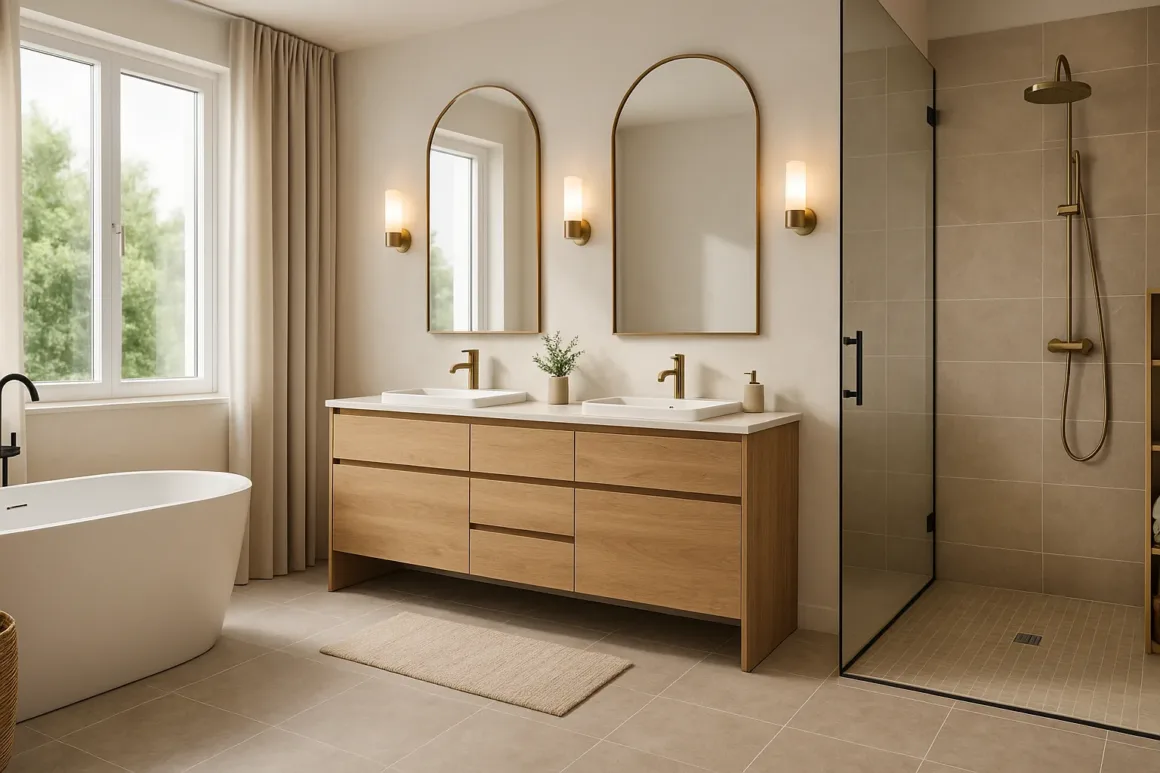
- Warm neutrals like greige, mushroom, clay, and soft taupe
- White oak, walnut, or ash on vanities and shelving
- Matte stone-look porcelain and quartz for easier maintenance
- Soft contrast with black, bronze, or brushed brass hardware
If you want more visual ideas before choosing finishes, browse DreamlandsDesign’s bathroom remodeling tips and trends for layouts and material combinations that still feel current.
2. Walk-in showers, wet rooms, and steam as the focal point
Oversized corner tubs are disappearing. In many remodels, the main event is now a generous walk-in shower or a compact wet room that combines shower and tub in one fully waterproofed zone.
- Curbless entries that are easier to use and clean
- Large-format porcelain slabs with minimal grout lines
- Linear drains and subtle slopes for better drainage
- Steam generators, body sprays, and built-in benches in higher-end projects
In small bathrooms, a well-planned wet room can make the space feel more open while still checking accessibility and storage boxes.
3. Lighting that matches real life, not just photos
Good lighting can make an average bathroom feel expensive—and bad lighting can make even a beautiful remodel feel flat. A typical modern plan layers:
- Ambient lighting: slim LED ceiling fixtures or recessed cans
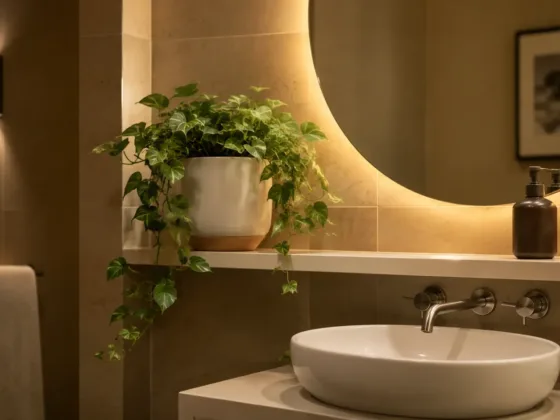
- Task lighting: sconces or backlit mirrors at eye level for shaving and makeup
- Accent lighting: shower niche lights, under-vanity strips, or soft floor-level lighting for nighttime trips
- Controls: dimmers and, in some cases, tunable-white lighting that feels bright and cool in the morning and warm in the evening
This doesn’t have to be complicated, but it does need to be planned before drywall goes up.
4. Smart tech that quietly earns its keep
Not every bathroom needs a fully connected home hub. The smart features that make the most sense tend to be the simple ones:
- Occupancy sensors for nightlights or toe-kick lighting
- Humidity-sensing exhaust fans to keep mirrors clear and reduce mold risk
- Timers and programmable thermostats on heated floors and towel warmers
- Water-monitoring shut-off valves to catch leaks before they spread
These upgrades are easy to forget about once installed—which is exactly the point.
5. Spa-level comfort underfoot
Radiant heat under tile is no longer reserved only for luxury builds. In colder climates and primary suites, it’s becoming a standard request. Homeowners typically pair it with:
- Textured porcelain that mimics stone or terrazzo
- Wide-format tiles for a calmer, less “busy” floor
- Slip-resistant finishes in wet areas for added safety
Step onto a warm bathroom floor on a winter morning once, and you’ll understand why this upgrade keeps showing up in project wishlists.
6. Storage that hides everyday clutter
Open shelves and styled trays look great in photos. In daily life, most households need more closed storage than they think. Smart solutions include:
- Full-height cabinetry or linen towers instead of wasted wall space
- Deep, organized drawers in vanities rather than a tangle of doors
- Recessed medicine cabinets with outlets for toothbrushes and razors
- Generously sized shower niches designed for real bottles, not minis
For more layout ideas, see DreamlandsDesign’s roundup of the best bathroom remodeling storage solutions. It’s a helpful companion as you’re sketching where everything will actually live.
Bathroom Remodeling Costs: Updated Ranges & What Drives Them
No two bathrooms are priced exactly the same, but national cost studies give useful reference points. Treat the numbers below as ballpark ranges for planning conversations with local contractors, not fixed quotes.
| Bathroom Type | Typical Cost Range* |
|---|---|
| Small Bathroom / Powder Room | $5,000 – $12,000 |
| Standard Full Bath | $15,000 – $35,000 |
| Primary / Master Bathroom | $30,000 – $80,000+ |
| Luxury Spa-Level Suite | $60,000 – $140,000+ |
If you’re specifically remodeling a primary suite, cross-check these numbers with DreamlandsDesign’s article on how much a master bathroom remodel costs. That piece breaks down scenarios and cost drivers in more detail.
Key cost drivers to keep in mind
- Scope of work
Cosmetic refreshes (new fixtures, paint, minor tile work) are far less expensive than full gut renovations that rework plumbing, insulation, and electrical. - Layout changes
Moving toilets, showers, or drains, or adding a second vanity, often has a bigger impact on cost than swapping surface finishes. - Waterproofing and tile system
Quality membranes, backer board, and large-format porcelain or slabs cost more up front but drastically reduce the risk of leaks and grout maintenance. - Electrical and smart systems
New circuits for heated floors, towel warmers, and layered lighting add labor and materials but can improve safety and long-term comfort. - Finish level and custom work
Custom cabinetry, frameless glass, stone slabs, and designer fixtures quickly move you from midrange to luxury budgets.
Working with a clear budget from day one helps your designer or contractor steer you toward smart trade-offs. For ideas on stretching your dollars further, pair this guide with DreamlandsDesign’s piece on bathroom remodel ideas that won’t break the bank.
7-Step Bathroom Remodeling Plan
Step 1: Get clear on your purpose and non-negotiables
Before you look at tile samples, write down what this remodel needs to do for you:
- Is the main goal comfort, resale, or a bit of both?
- Do you need better lighting, more storage, a bigger shower—or all three?
- Are there must-have features (heated floor, freestanding tub, makeup station) you’re willing to cut other items for?
Taking 15–20 minutes to write this out seems simple, but it makes later decisions much, much easier.
Step 2: Study your current layout and pain points
Walk through the bathroom with a notepad and be brutally honest. Common complaints:
- A dark, cave-like shower
- An awkwardly placed toilet
- Too many people are crowding one small vanity
- No obvious home for towels, toiletries, or cleaning supplies
Sketch the room with plumbing locations, door swings, and windows. Then compare what you see with the advice in DreamlandsDesign’s article on three things to consider before undertaking a bathroom remodel. It’s a quick way to catch layout issues early.
Step 3: Choose your style direction early
You don’t need a design degree, but you do need a clear theme. Simple phrases like “warm Scandinavian spa,” “soft modern minimalism,” or “earthy resort-style” are enough to guide decisions.
- Save 10–15 inspiration photos that genuinely feel like your home.
- Notice recurring patterns: cabinet colors, hardware finishes, tile sizes, and mirror shapes.
- Decide which trends you love and which you’re happy to skip.
Early clarity here reduces change orders later—one of the most common sources of budget creep.
Step 4: Prioritize durable, waterproof materials
Bathrooms take more abuse than almost any other room. The materials you choose should stand up to water, heat, and cleaning products without constant worry. Many pros recommend:
- Porcelain tile or slabs instead of soft, porous stone in heavy-use showers
- Quartz or quartzite counters with proper edge details
- Engineered wood vanities with quality finishes instead of unsealed solid wood
- Stone-resin or quality acrylic tubs that retain heat and are easy to clean
For more designer-level ideas on mix-and-match materials, see DreamlandsDesign’s article on innovative bathroom remodel ideas from interior designers.
Step 5: Treat lighting and ventilation like core systems
A beautiful tile job won’t matter if the room is dim and stuffy. As you plan, make sure you have:
- Task lighting at the mirror that doesn’t cast harsh shadows
- Dimmable overhead lighting for general use
- Accent lighting (niches, under-vanity, or floor-level) for safe night use
- A quiet, properly sized exhaust fan vented outdoors—not just into the attic
Good ventilation is one of the simplest ways to prevent peeling paint, musty smells, and premature failure of finishes and grout.
Step 6: Decide what you’ll DIY and where you need a pro
It’s tempting to DIY everything, but bathrooms pack plumbing, electrical, and waterproofing into a small footprint. Many homeowners happily tackle:
- Careful demolition
- Painting walls and ceilings
- Simple fixture swaps like faucets or accessories
Most will still bring in licensed pros for:
- Drain and vent changes
- Shower pan installation and full waterproofing systems
- New electrical circuits, GFCI/AFCI protection, and complex lighting plans
- Detailed tile work and custom glass
In Bucks County, for example, many homeowners work with a professional bathroom remodeling contractor in Newtown, PA or an experienced bathroom remodeler in New Hope, PA to coordinate design, permits, inspections, and trades. The goal is simple: a bathroom that looks great and passes inspection the first time.
Step 7: Set a realistic timeline (and give yourself a cushion)
Once demolition starts, most households are without that bathroom for at least several weeks. A typical sequence looks like:
- Design and selections: 2–4 weeks
- Ordering and lead times: 2–6+ weeks, especially for custom glass and vanities
- On-site construction: 3–7 weeks for a standard remodel; longer for major layout changes or large primary suites
It’s wise to budget an extra 10–20% in both time and money for surprises—especially in older homes where plumbing, wiring, or framing may not match what’s on paper.
Eco-Friendly Bathrooms: Water, Energy & Healthier Materials
Water-smart fixtures
Water-efficient products have become the default choice in many remodels. Look for:
- Water-saving showerheads that still feel comfortable
- Faucets with aerators and flow restrictors
- High-efficiency or dual-flush toilets with lower gallons-per-flush ratings
Small upgrades across several fixtures can add up to thousands of gallons saved per year, plus reduced energy use for hot water.
Energy-efficient lighting and heat
In most bathrooms, there’s no reason to use anything but LEDs now. They use a fraction of the energy of incandescent bulbs and last much longer. Pair them with:
- Dimmers in key zones
- Motion sensors for low-level night lighting
- Programmable thermostats on heated floors and towel warmers
These simple controls help keep the room comfortable without leaving things running all day.
Healthier paints and finishes
Because bathrooms tend to be small and steamy, finishes matter. Whenever possible, choose:
- Low- or zero-VOC paints and sealers
- Mildew-resistant products for ceilings and shower-adjacent walls
- Materials that can be cleaned with gentler products instead of harsh chemicals
Combine that with solid ventilation, and you’ll have a room that looks good and smells fresh for much longer.
Common Bathroom Remodeling Mistakes (and How to Avoid Them)
- Cutting corners on waterproofing
Using bargain backer board, skipping membranes, or taking shortcuts around niches and benches is a fast track to leaks and mold. - Ignoring ventilation
A stunning shower with a weak or improperly vented fan will start showing moisture problems faster than you think. - Choosing tile only by looks
High-polish stone on floors, slippery finishes in wet zones, or tiny mosaics that are impossible to keep clean may look good on day one, but quickly become frustrating. - Underestimating storage
Pedestal sinks, tiny vanities, and too much open shelving leave you with nowhere to put real-life items. - Skipping future-friendly details
No blocking for future grab bars, narrow doorways, and high curbs can all make the space harder to use later.
If you’re still on the fence about whether now is the right time to tackle a full project, DreamlandsDesign’s guide to key signs it’s time for a bathroom renovation is a helpful companion read.
Is a Bathroom Remodel Worth It? (Quick FAQ)
Is a bathroom remodel still a good investment?
For many homeowners, yes. National reports often show that midrange bathroom remodels recoup a meaningful share of their cost at resale. The rest of the value comes from daily comfort, better storage, improved safety, and fewer repair headaches. Exact numbers vary by region and market conditions, so always ask local real estate pros how buyers are reacting in your area.
How much should I budget for a small bathroom?
For a small full bathroom or powder room, a realistic starting range is around $5,000–$12,000, depending on whether you’re doing mostly cosmetic updates or a full tear-out with new tile and fixtures. Get at least two or three local quotes to see where your specific project lands.
How long will my bathroom be out of service?
Once work begins, it’s common to be without that bathroom for three to seven weeks. Complex layouts, older homes, or custom materials can stretch the schedule, so always plan for a backup bathroom or temporary setup.
Final Thoughts: Turning Your Bathroom into a Daily Wellness Engine
A well-planned bathroom remodel is about more than chasing trends. When you match the design to your routines, invest in solid waterproofing, and layer in smart but simple technology, you get a room that quietly improves your mornings, evenings, and long-term home value.
Whether you’re planning a modest refresh or a full spa-level suite, the fundamentals stay the same: thoughtful design, durable materials, and skilled installation. For many homeowners, partnering with a trusted local contractor in places like Newtown or New Hope, PA, is the difference between “good enough for now” and a bathroom that still feels right ten years from today.
Author — Perla Irish
Perla is a Home Improvement Editor at DreamlandsDesign, with a focus on practical remodeling guidance for bathrooms, kitchens, and whole-home upgrades. She specializes in turning technical concepts—waterproofing, ventilation, lighting, and layout planning—into plain-language advice homeowners can actually use. You can see more of her work and background on her Muck Rack profile.
Reviewed by — Roger Wakefield, Master Plumber
Roger Wakefield is a licensed Master Plumber with decades of experience in residential and commercial plumbing, including bathroom remodels, leak detection, and code-compliant installations. He is also known for educating homeowners and tradespeople through his online content and speaking. Learn more about his work at RogerWakefield.com or connect with him on LinkedIn.