Table of Contents Show
With the cost of living still high, many homeowners are turning to DIY for everyday home improvements and repairs. Whether you’re touching up paintwork, draught-proofing windows, or installing new lighting, it’s likely a ladder will be involved at some point.
While most DIY projects are routine, ladder-related accidents remain one of the most common causes of serious home injuries. In many cases, incidents happen not because the task is complex, but because basic safety steps are skipped or rushed.
This guide is intended for general household DIY safety and does not replace professional training or site-specific risk assessments.
Ladder safety isn’t a single rule set that applies equally to every situation. The right approach depends on the task, the environment, and the person using the ladder. This guide is designed as a central reference for everyday DIY ladder use, covering the core principles that apply to most home maintenance scenarios.
The guidance below focuses on practical, real-world ladder safety for everyday home use, outlining the core principles that apply to most household tasks. It is not intended for professional trade scenarios, but instead provides a shared safety foundation that can be adapted to different situations around the home.
Together, these principles form the starting point for making safer choices before any ladder is even set up.
Choose the Right Ladder for the Task
Using the wrong type of ladder is a frequent cause of falls and injuries. Before starting any DIY work, it’s worth considering which ladder size, height, and material best suit the job.
For example, tasks near electrical fixtures are better suited to fibreglass ladders, which do not conduct electricity. It’s also important that the ladder is tall enough to reach the work area comfortably, without overreaching or standing on the top rungs.
Ladders are often listed as part of a basic household toolkit, reinforcing how many routine projects rely on having the right equipment available. This is also discussed in The 7 Essential Components of a Basic Home Tool Set, where ladder choice is framed as a practical safety decision rather than a convenience.
Inspect the Ladder Before Each Use
A quick inspection before climbing can help prevent avoidable accidents. Even small issues — such as cracks in the stiles, worn feet, or residue on the rungs — can compromise stability.
- Check rungs and rails for cracks, bends, or looseness
- Ensure locking mechanisms engage fully
- Confirm rubber feet and grips are intact
- Look for signs of rust, grease, or material wear
Different ladder types come with different failure points, which is why inspection matters regardless of whether you’re using a step ladder, extension ladder, or scaffold-style design. This distinction is explored further in Different Types of Scaffold Ladders.
If a ladder feels unstable during setup, it’s best not to use it — even for quick or seemingly low-risk tasks.
Set Up on Stable, Level Ground

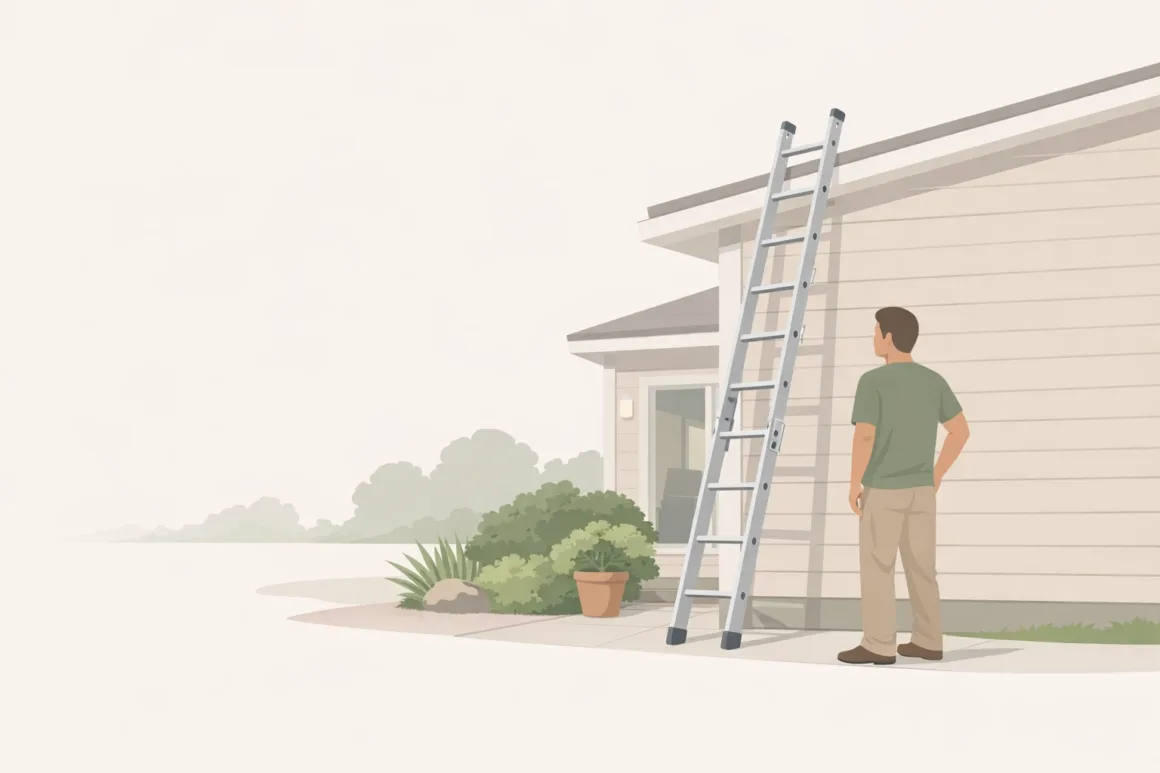
Incorrect setup is one of the leading causes of ladder-related injuries. Always position ladders on firm, level ground and avoid makeshift supports such as boxes, bricks, or uneven paving.
For extension ladders, follow the 4:1 rule — for every four units of ladder height, place the base one unit away from the wall. Step ladders should always be fully opened with spreaders locked in place.
Safety guidance such as the 4:1 setup rule is consistent with recommendations from recognised workplace safety authorities. In the UK, the Health and Safety Executive (HSE) provides official guidance on working at height, including ladder positioning and material selection — such as using non-conductive ladders near electrical work — to help reduce fall-related injuries (HSE work at height guidance).
Stability becomes even more important when working outdoors or on uneven surfaces, particularly for older homeowners or those with limited mobility. This is discussed in more detail in Ladders for Seniors – Safe at Height Even in Old Age, where setup and positioning are treated as key safety factors.
Follow Safe Climbing Practices
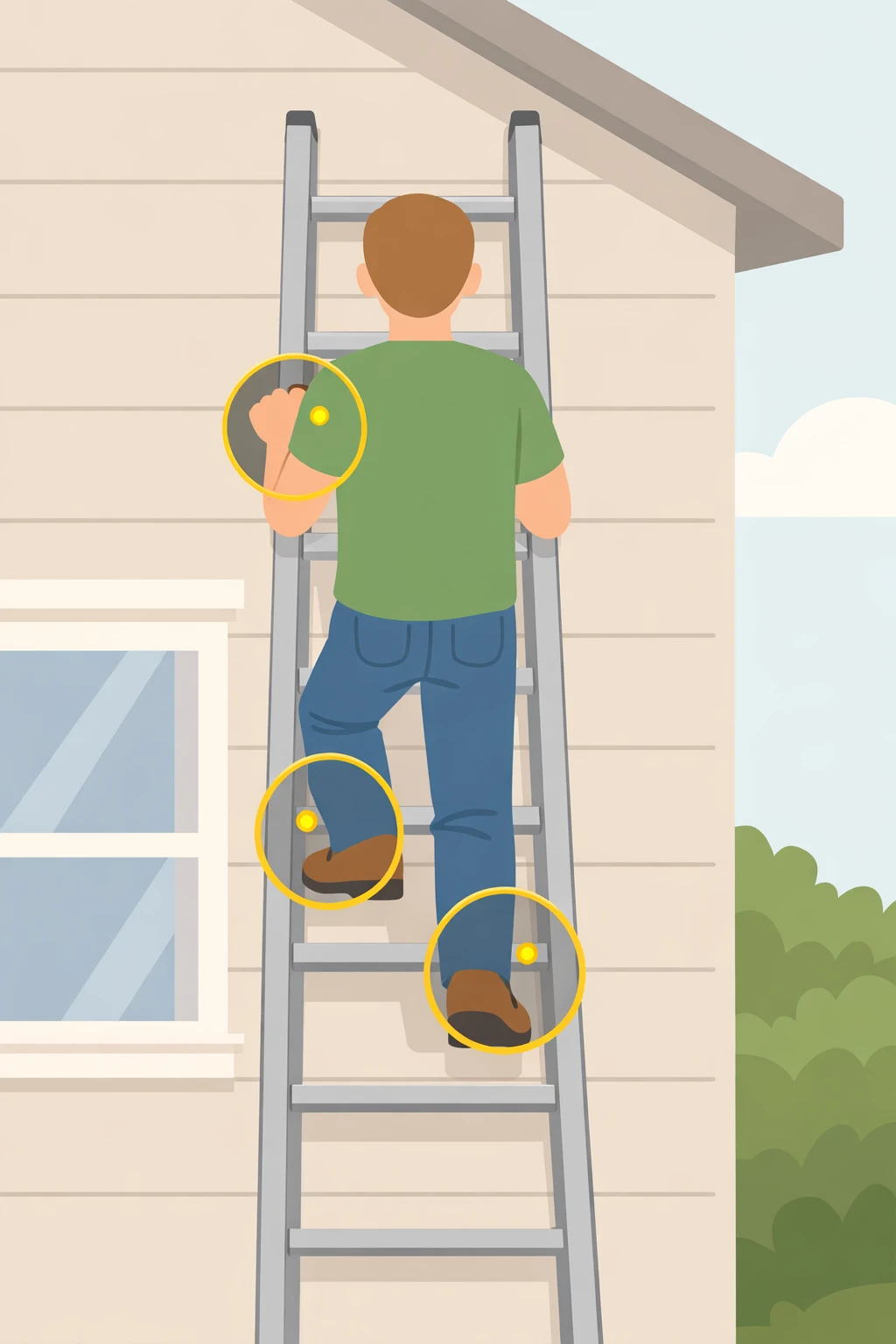
- Maintain three points of contact at all times when climbing or working.
- Follow the “belt buckle rule” by keeping your body centred between the ladder’s side rails.
- Climb down and reposition the ladder rather than leaning or overreaching.
Carrying Tools and Materials Safely
One common DIY mistake is attempting to carry too many tools or materials while climbing. Items that restrict your grip or affect balance significantly increase the risk of falls.
- Use a tool belt or bucket with a secure handle instead of carrying items by hand.
- Keep both hands free while climbing whenever possible.
- Raise heavier tools separately using a rope or pulley once the ladder is stable.
Use Appropriate Safety Accessories
Simple accessories such as stabiliser bars, ladder levelers, or non-slip footwear can significantly improve safety, particularly during outdoor work or longer tasks.
When choosing equipment for domestic use, understanding ladder types, load ratings, and general safety standards matters more than brand preference. Some homeowners reference specialist suppliers such as ladder providers when comparing options for everyday DIY tasks.
Store Ladders Safely After Use
Ladder safety doesn’t end when the task is complete. Proper storage helps prevent damage and reduces the risk of trips or falls.
Storing ladders off the floor — ideally on wall racks — helps keep them stable and out of the way. A cool, dry storage area also reduces the risk of rust, warping, or long-term material degradation.
When to Consider Alternatives
If a task requires extended time at height, awkward positioning, or both hands consistently off the ladder, it may be safer to use scaffolding, a work platform, or seek professional assistance.
Ladders are tools, not workspaces. Recognising their limits is part of using them responsibly.
Final Thoughts
Most ladder-related injuries happen during routine DIY tasks, not major projects. Simple decisions—such as choosing the right ladder, checking its condition, and recognising when a task is pushing safe limits—often make the difference between a straightforward job and a preventable accident.
For everyday home maintenance, taking a few extra minutes to slow down, set up carefully, and reassess conditions is a small investment compared to the potential cost of injury. Safe ladder use is less about getting the job done quickly and more about knowing when conditions call for extra caution—or a different approach altogether.
Ladder safety at home is ultimately about recognising limits as much as following instructions. The principles outlined here are intended to support everyday DIY decisions, but some situations require additional consideration—such as changes in mobility, working alone, or tasks that introduce higher risk. In those cases, applying more specific guidance or choosing safer alternatives is often the more responsible option.
Where ladder use involves added complexity or personal risk factors, exploring situation-specific safety guidance can help clarify when adjustments—or different approaches altogether—are more appropriate.
Disclosure: This article may include contextual references to products, services, or providers for general informational purposes. All content is written independently and reflects editorial judgment focused on clarity, safety, and real-world relevance.
Author & Editorial Review
Author: Perla Irish is a design and home improvement writer covering interior materials, everyday home decisions, and real-world finish performance. Her work focuses on practical guidance shaped by how people actually use and maintain their homes.
Editorial Review: This article was reviewed by the DreamlandsDesign editorial team to ensure clarity, accuracy, and real-world usability. The review process prioritizes balanced explanations, safety-aware guidance, and long-term relevance for homeowners undertaking everyday DIY and maintenance projects. This guidance reflects current UK household safety recommendations at the time of review.