Table of Contents Show
Most homeowners think about paint colours, budgets, and contractor quotes before starting a renovation. Safe access rarely makes the list until someone needs to work several metres above the ground.
That moment arrives quickly during roof repairs, second-storey painting, chimney work, window replacement, or loft conversions. A repair that looked simple from the driveway suddenly feels different once someone needs to spend hours working above a conservatory, roofline, or upper windows.
Sometimes, the bigger problem is not safety alone. A ladder that looked manageable at first starts slowing the work down or making simple tasks harder than expected. The difference comes down to the scale of the work, the amount of time spent at height, and how much movement the job requires.
Why Ladders Are Not Always Enough
Ladders work well for quick inspections or small repairs. Cleaning a section of gutter or checking roof flashing may not require anything more.
The problem starts when workers need to spend hours moving between tools, materials, and different areas of the property. Constant repositioning increases fatigue and creates more opportunities for mistakes. Carrying materials while climbing also changes the level of risk significantly.
Longer renovation jobs involve constant movement across roof sections, windows, chimneys, or exterior walls. At that point, ladders stop feeling practical very quickly.
If you’re unsure where ladders stop being practical, our guide on Scaffold Ladders for Home Use: When They Make Sense (and When They Don’t) explains where homeowners commonly underestimate the risks.
When Scaffolding Actually Makes Sense
Not every project needs a full access system, but some jobs become safer and easier when contractors have a stable platform to work from.
- Roof replacements or structural roof repairs: Roofing work usually means several workers, heavy materials, and extended time at height.
- Second-storey painting: Exterior painting becomes harder when ladders need constant repositioning around walls and windows.
- Chimney repairs: Chimney work creates awkward positions that quickly become difficult to manage safely from a ladder.
- Loft conversions: Projects involving roofing changes or dormer installation require consistent access for multiple trades.
- Window replacements: Upper-level window replacements become harder once installers start working around awkward angles or limited footing.
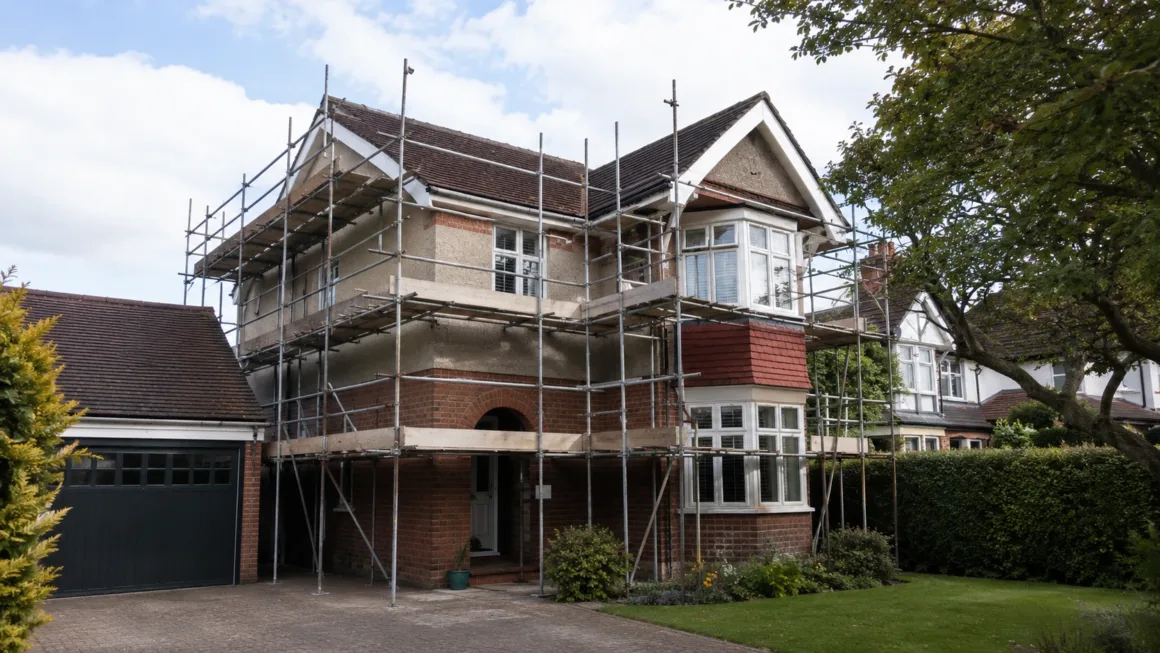
In tighter urban spaces, contractors sometimes recommend temporary access systems after checking surrounding space, ground stability, and how long the work will take. For homeowners dealing with tighter residential layouts or exterior projects requiring temporary access solutions, those factors often shape what setup makes practical sense.
When It May Not Be Necessary
There are also situations where full scaffolding feels excessive.
- Minor gutter maintenance
- Small one-day repairs
- Short-duration inspections
- Replacing a single accessible fixture
- Quick cleaning tasks
A bigger setup does not automatically solve a safety problem. Sometimes, the better choice is simply the setup that makes the work easier to manage.
Smaller jobs still need planning — just less equipment and fewer moving parts.
For smaller DIY jobs, safe ladder use matters just as much. Before attempting elevated work yourself, it’s worth reviewing our Home Guide to Ladder Safety for DIY Projects.
How Safe Access Can Help Prevent Property Damage
Safety discussions usually focus on workers, but access systems can also reduce unnecessary strain on your property. Most property damage happens by accident, not because anyone expected it.
Repeated ladder movement against gutters, painted walls, siding, or window frames increases the chance of accidental scuffs, dents, or cracks. On older homes, fragile surfaces may already be under stress before renovation work even begins.
A secure working platform also means fewer awkward angles and less pressure placed against fragile parts of the house. Rather than leaning equipment against multiple surfaces, workers can move tools and materials more predictably.
Some larger projects also use temporary protective coverings during roofing work or loft conversions. This becomes especially useful when weather changes unexpectedly before exterior work is complete.
Why Access Problems Quietly Slow Renovation Projects
Renovation delays wear people down quickly. Extra labour costs matter, but constant disruption matters too — especially when parts of the house become difficult to use for weeks longer than expected.
One overlooked reason jobs slow down is inefficient access. Contractors repeatedly climbing up and down ladders lose time repositioning equipment, moving materials, and working around limited reach.
For larger exterior jobs, stable working areas reduce interruptions and make movement easier between sections of the house. Roofers, painters, bricklayers, and window installers usually need access to several points at once, especially during larger exterior renovations.
Delays still happen. Weather changes, materials arrive late, and schedules shift. Better access will not fix every problem, but it removes one avoidable source of disruption.
Why Installation Quality Matters
Not all temporary access setups are equal. Poor installation creates new problems rather than reducing them.
Experienced contractors assess ground stability, access points, surrounding space, and project demands before recommending any structure. Not every property creates the same challenges. Sloped driveways, uneven ground, landscaping features, or narrow property lines can all affect what works safely.
Professional installation also matters because conditions change throughout a project. Heavy rain, strong winds, or several weeks of repeated use may affect stability. Regular inspections help identify issues before they become serious problems.
Homeowners preparing for more extensive exterior work may also find it helpful to review our Renovation Guide to Home Scaffolding for broader planning considerations.
Common Mistakes Homeowners Make
- Assuming ladders are always cheaper: Short-term savings sometimes lead to slower projects or avoidable repairs.
- Waiting until work starts: Many homeowners leave access planning too late during contractor discussions.
- Choosing based on price alone: Poor installation increases risk for both workers and property.
- Ignoring neighbouring space: Tight driveways, shared boundaries, or narrow access routes can change what setup makes sense.
The Real Question Is Whether the Job Demands It
Scaffolding is not necessary for every renovation project. Small repairs and quick maintenance jobs may only require safe ladder access.
Once work becomes more complex, longer in duration, or spread across several upper-level areas, stable access stops being an optional extra and becomes part of doing the job properly. Homeowners rarely regret planning access too early. More often, the regret comes halfway through a project when the original setup no longer feels practical.
FAQs
Do all home renovations require scaffolding?
Not always. Small repairs or inspections may only need safe ladder access. Once workers spend several days moving around roofs, upper walls, or windows, more stable access starts making practical sense.
Is scaffolding safer than ladders?
For longer jobs, yes. Once workers spend hours moving between tools, materials, and multiple roof or wall sections, ladders become harder to use safely.
Can scaffolding help prevent property damage?
Sometimes. Projects that rely less on ladders create fewer opportunities for accidental contact with gutters, painted surfaces, and window frames.
Who decides if scaffolding is necessary?
Contractors assess the project scope, height, duration, and property conditions before recommending the safest access method.
Author & Editorial Review
Author: Perla Irish — A design and home improvement writer covering interior materials, everyday home decisions, safety-aware planning, and real-world performance.
Editorial Review: This article was reviewed by the DreamlandsDesign editorial team for clarity, accuracy, balanced explanations, safety awareness, real-world usability, and long-term relevance.