Table of Contents Show
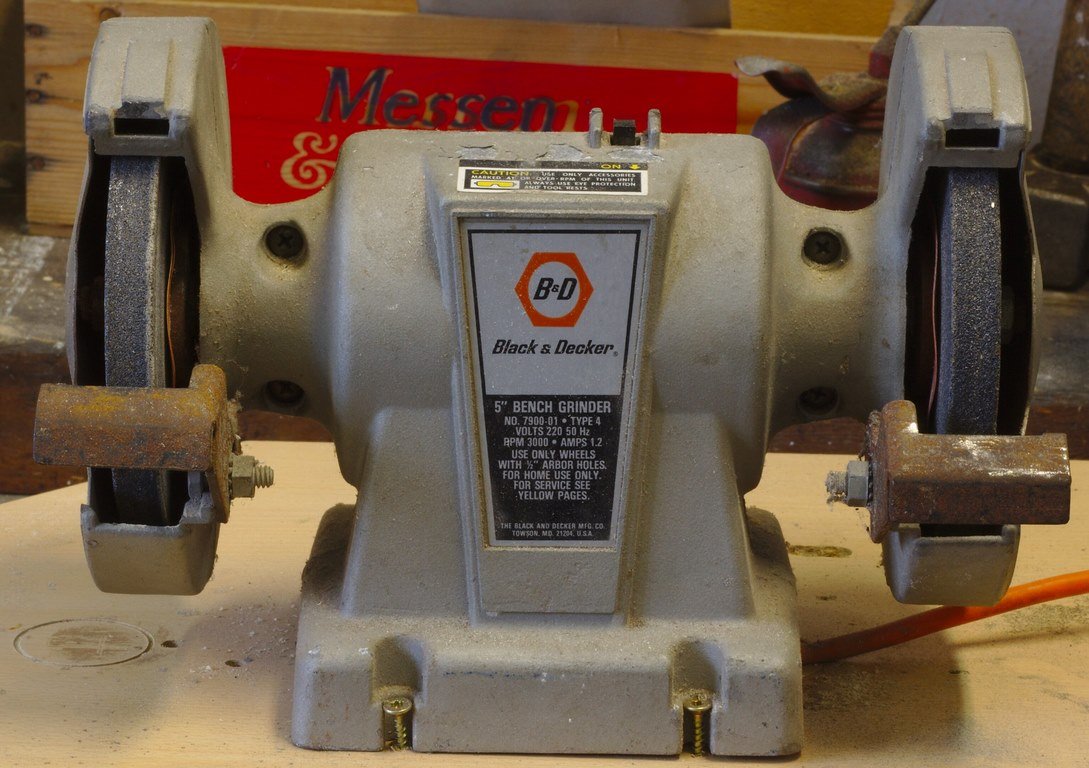
A bench grinder can be a great asset for DIY enthusiasts and professionals alike. Whether you’re looking to keep your tools as sharp as can be or you need to shape metal pieces, a grinder is a tool for you.
Here’s our guide to why you need one, and what to look out for when buying a bench grinder:
Why get a Bench Grinder at All?
Bench grinders are mainly used for keeping tools and blades sharp. Whether you’re trying to get the best cut from your lawnmower, you want your cleaver to chop meat better or you need scissors to cut through fabrics smoothly, sharpness is key.
A good quality bench grinder can quickly pay for itself when you compare its purchase price to the cost of replacing blades and tools or getting a professional sharpener in to do the job for you.
They can be very easy to use as well, with very little training required to get up to speed.
Finish
There are three different grades of finish when you’re bench grinding:
- Fettling is a very rough finish, mainly used for removing larger burrs and rough edges
- Deburring is a much finer finish, typically used after filing or hacksaw work
- Shaping is even finer, allowing you to shape metals smoothly
Whichever finish you need will inform the kind of grind wheel you choose. Popular grinder types are:
Twin Wheel
These grinders have two wheels on the same axle (so both wheels spin at the same speed), enabling you to have one type of grinding disc on one wheel and a different type on the other a great option, if you need to switch between grind, finishes frequently.
Read Also:
- Piano Benches: Accessorizing Your Piano with Benches & Lamps
- How to Make Bench Cushions the Easy Way, in 3 Easy Steps
- 4 Simple Yet Comfortable DIY Bench Ideas
- Benefits of Using Grinder for Weed
Multi-Function
This kind of grinder also has two different wheels, but they operate at different speeds.
This allows you to combine different grinds for the job you are working on (grinding/dry sharpening, shaping/polishing, deburring/brushing, etc).
Sharpener
Sharpening grinders are designed for one job and one job only sharpening. These grinders will have specially designed sharpening discs and usually only operate at one fixed speed.
Grinding Discs
The discs used for your grinding work are color-coded for ease of use.
- Brown grinding discs are for fettling
- Grey grinding discs are for steel grinding
- White grinding discs are for sharpening
- Green grinding discs are for super-fine sharpening – blades, drill bits, and carbide tools, for example
Making sure you use the correct disc will make your finished product much better and make the process of grinding significantly easier for you.
The size of your disc is also something to think about. Occasional DIY users will usually opt for a 125mm diameter disc, whereas frequent users or professionals will likely need a longer-lasting larger diameter (200mm or 250mm).
Stay Safe
As with any tool used for any DIY endeavor, safety is paramount. You need eye protection, like metal filings and burrs flying into your eyes can be catastrophic.
You can also invest in spark deflectors, to protect yourself from burns. Lastly, a good pair of gloves can protect you from both the blades you are sharpening and accidental brushes with the spinning grinder.
Author Bio:
First Mats started life as a safety matting specialist but has since expanded to become a complete industrial and commercial supplies company. The focus of First Mats is to provide safety-focused products that improve the wellbeing of staff through quality-approved products, backed up by extensive knowledge. www.firstmats.co.uk